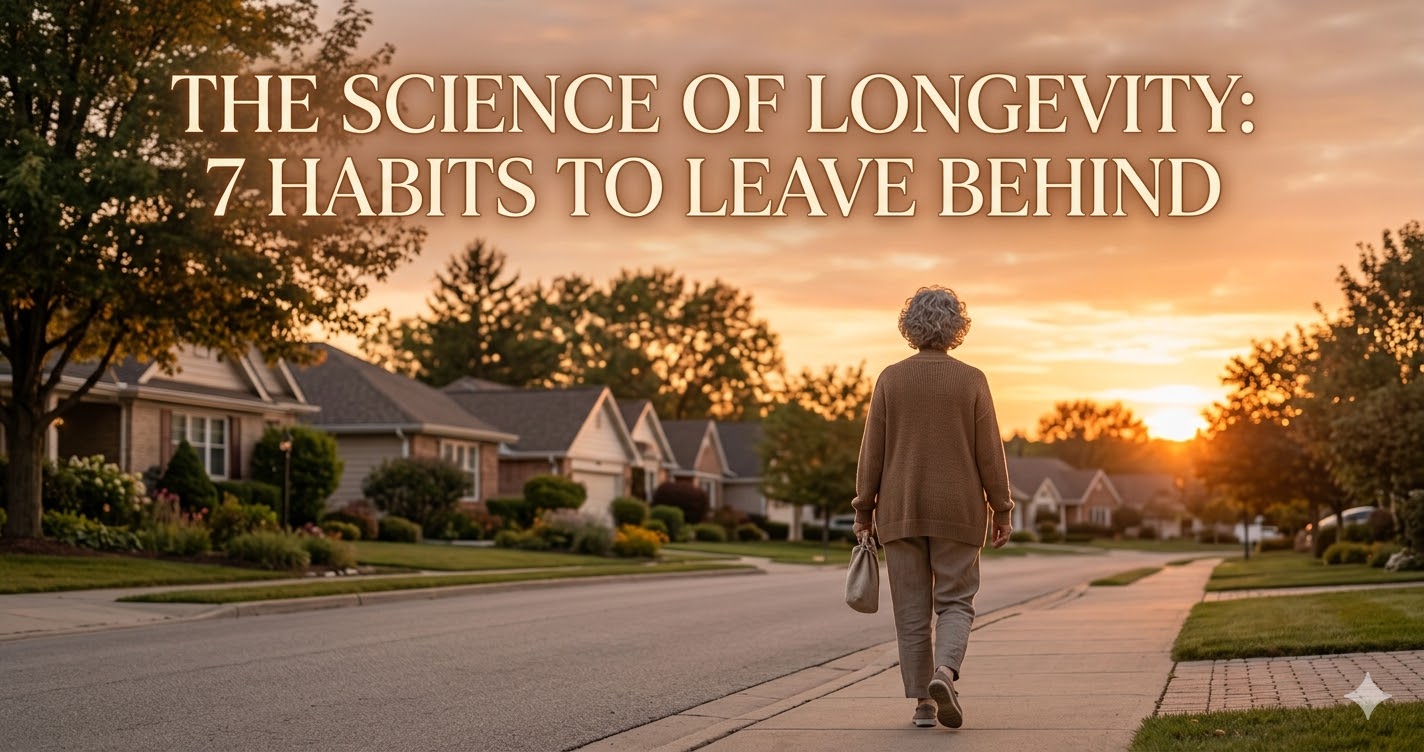
We spend so much of our lives accumulating things—new diets, new exercise routines, new supplements, and new responsibilities. We are constantly told that the secret to a long, vibrant life is about adding more to our daily plates. However, true longevity and wellness often come from a place of subtraction. The secret to a long life isn’t always about what you start doing; it is profoundly tied to what you stop doing.
Living in California, I’ve seen countless wellness trends come and go, from trendy green juices to high-tech fitness gadgets, yet the most vibrant, energetic seniors I encounter in my community are those who have mastered the quiet art of letting go. Recently, the profound words of a 94-year-old woman named Opel June resonated deeply within the senior wellness community. Having outlived much of her family and friends, she observed a striking pattern: those who departed early shared common, stubborn habits they simply refused to release. It wasn’t necessarily bad genetics or pure misfortune; it was the heavy burden of daily choices.
If you want to protect your health, preserve your peace, and extend your years, it is time to evaluate the invisible weights you carry. Here are the seven critical things you must stop doing today, backed by both the timeless wisdom of a life well-lived and modern medical science.
1. Stop Eating After the Sun Goes Down
There is an old-fashioned piece of advice that many of our grandparents followed: close the kitchen after supper. For decades, modern convenience encouraged us to enjoy late-night snacks while watching television—a few crackers here, a bowl of ice cream there. It feels harmless in the moment, but the physiological cost is steep.
When you consume food late into the evening, you force your body to divert its energy from cellular repair to digestion. Your body is designed to do its profound healing, detoxifying, and resting during the night. It cannot effectively “clean the house” if it is still busy “cooking dinner.”
The Science of Chronobiology and Digestion
Medical research into chronobiology—the study of our body’s natural circadian rhythms—supports this ancestral wisdom. The digestive system slows down significantly as daylight fades. Late-night eating is closely linked to acid reflux, disrupted sleep architecture, and metabolic syndrome.
Actionable Checklist for Evening Fasting:
- Set a Hard Deadline: Aim to finish your last bite of food by 6:00 PM (or 7:00 PM during longer summer days).
- Switch to Herbal Tea: If you feel the need for an evening ritual, replace snacks with a warm cup of caffeine-free chamomile or peppermint tea.
- Hydrate: Often, late-night cravings are simply masked dehydration. Drink a glass of water before deciding you are truly hungry.
Within just a few weeks of adopting this habit, many seniors report waking up feeling significantly lighter, with less joint stiffness and a clearer mind.
2. Stop Arguing with Fools
We have all been there. Someone makes an ignorant comment, and the immediate biological response is a surge of adrenaline. You feel the absolute need to correct them, to make them see reason, to win the battle of wits. But engaging in chronic, pointless arguments is a fast track to cardiovascular distress.
How Chronic Stress Impacts the Heart
Arguing with people who are committed to misunderstanding you does not change their minds; it only raises your blood pressure. Every time you engage in a heated, fruitless debate, your body releases a flood of stress hormones. Over time, this constant state of hyper-arousal damages your blood vessels, increases your heart rate, and ruins your sleep.
Protecting your peace is not a sign of weakness; it is the ultimate display of wisdom. Your energy is finite, like money in a bank account. Do not spend it on poor investments.
Expert Tip: When confronted with a frustrating conversation, practice the “Smile and Nod” technique. Acknowledge their statement without agreeing or fighting, and physically remove yourself from the environment. Every argument you avoid adds years to your life.

3. Stop Sitting So Much
When we talk about movement, we often picture grueling sessions at the gym. But longevity is rarely about lifting heavy weights; it is about consistent, gentle, and purposeful movement. Sitting for prolonged, uninterrupted periods is one of the most dangerous habits of modern aging.
The Hidden Danger of a Sedentary Lifestyle
The human body is like a creek. When the water keeps moving, it stays crystal clear. When it sits completely still, it becomes murky and stagnant. Prolonged sitting slows down your metabolism, weakens the muscles in your lower body (which are crucial for fall prevention), and negatively impacts blood circulation, leading to swelling and an increased risk of blood clots.
According to the American Heart Association, sedentary behavior is a major risk factor for cardiovascular disease, regardless of whether you do a dedicated workout in the morning.
Daily Movement Strategies (NEAT): Non-Exercise Activity Thermogenesis (NEAT) refers to the energy expended for everything we do that is not sleeping, eating, or sports-like exercise.
- Stand up every time you talk on the telephone.
- Walk to the mailbox instead of driving.
- Putter around the garden or sweep the porch daily.
- Do your own laundry and hang it up to dry. If you are sitting more than you are moving, you are accelerating the aging process unnecessarily.
4. Stop Holding Grudges
Unforgiveness is a heavy, toxic burden. Carrying a grudge for years, or even decades, is often described as drinking poison and waiting for the other person to die. You might refuse to speak to someone who wronged you, believing your silence is punishing them. In reality, they are likely living their lives, completely unaffected, while the resentment slowly eats away at your health.
Cortisol: The Silent Enemy
From a medical perspective, chronic anger and unresolved trauma keep your body in a perpetual “fight or flight” state. This constant low-grade stress keeps cortisol levels artificially high. Elevated cortisol is a silent killer; it suppresses the immune system, exacerbates gastrointestinal issues, and is linked to cognitive decline.
Forgiveness is rarely about excusing the other person’s bad behavior. It is about releasing yourself from the emotional prison. Whether you call them to make peace or simply forgive them quietly in your own heart, let it go. Your body cannot physically heal if your mind refuses to release the past.
5. Stop Watching the News Before Bed
The 24-hour news cycle is meticulously designed to trigger fear, outrage, and anxiety. It is a business model built on capturing your attention through sensationalism. Consuming stories of disasters, crime, and political chaos right before you attempt to sleep is a recipe for insomnia and psychological distress.
Creating a Restful Sleep Sanctuary
Your mind needs a runway of peace to land smoothly into deep, restorative sleep. If you fill your brain with chaos at 9:00 PM, your subconscious will chew on that anxiety all night long. Sleep architecture—specifically the deep REM and slow-wave sleep phases where the brain clears out amyloid plaques associated with Alzheimer’s—is easily disrupted by pre-sleep anxiety.
The Evening Wind-Down Routine:
- Turn off all news broadcasts and political commentary by 5:00 PM.
- Replace screen time with reading a physical book, gentle prayer, or meditation.
- Sit outside on a porch or by a window to listen to the natural sounds of the evening. What you feed your mind before resting is just as vital as what you feed your body.

6. Stop Trying to Please Everybody
For decades, many of us functioned as the ultimate caregivers. We said “yes” to every volunteer request, every family financial need, and every neighbor who needed to vent for three hours. While generosity is a beautiful virtue, chronic people-pleasing is a fast track to profound burnout and resentment.
Setting Healthy Boundaries in Your Senior Years
Saying yes to everyone else inherently means saying no to yourself. It leaves you spread so thin that your own physical and mental health begins to deteriorate. In your senior years, your energy and time are your most precious commodities. You must protect them fiercely.
Learning to say “no” kindly, respectfully, but firmly is a superpower. You will quickly discover a hard truth: the people who genuinely love and respect you will understand your boundaries. The people who become angry when you say no were likely taking advantage of your generosity all along.
7. Stop Waiting to Live
Perhaps the most heartbreaking habit is the continuous postponement of joy. When we are young, we are conditioned to believe that happiness is a destination just around the corner: I will be happy when I retire. I will be happy when the house is paid off. I will take that trip when the time is right.
Then, suddenly, life happens. Health falters, spouses pass away, and the “right time” never materializes. We lose friends and loved ones who waited their whole lives for a “someday” that never came.
Embrace the Present Moment
Tomorrow is not promised to anyone—not at 94, and not at 64. The only time you truly possess is this exact moment.
- If you want to take the trip, book the ticket now.
- If you have a beautiful dress or suit saved for a “special occasion,” wear it to dinner tonight.
- If you love someone, pick up the phone and tell them immediately.
Living a long, healthy life is not complicated, but it requires courage. It requires the daily, conscious choice to stop doing the things that are stealing your time, your peace, and your health. Let go of the late-night eating, the arguments, the grudges, and the endless waiting. Step out onto your porch, feel the sun on your face, and start truly living today.
💡 FAQ :
Q1: How can I stop late-night snacking if I feel genuinely hungry before bed?
A1: If you experience genuine hunger, it is often a sign that you did not consume enough protein or healthy fats during your daytime meals. Ensure your supper is nutrient-dense and satisfying. If you must have something before bed to stabilize blood sugar, opt for a small, easily digestible snack like a handful of almonds or a spoonful of unsweetened yogurt, rather than carbohydrates or sugars. Over time, as your circadian rhythm adjusts, the late-night cravings will naturally subside.
Q2: Is it too late to reverse the effects of a sedentary lifestyle if I am already in my 70s or 80s?
A2: It is absolutely never too late. The human body is remarkably resilient and responds positively to movement at any age. Research shows that even seniors who begin incorporating light daily movement—like walking, gardening, or standing more frequently—experience significant improvements in cardiovascular health, joint mobility, and mental clarity within just a few weeks. Start small and focus on consistency rather than intensity.
Q3: How do I practically stop worrying about the news when there is so much going on in the world?
A3: Setting boundaries with media intake is a practice. Start by limiting your news consumption to one specific, 30-minute window in the morning or early afternoon, preferably from a written source rather than a sensationalized television broadcast. By restricting the time and format, you stay informed without allowing the world’s anxieties to hijack your nervous system, especially during the crucial hours before sleep.
🌿 Weekly wellness, health & beauty insights — straight to your inbox
Free subscription · Cancel anytime