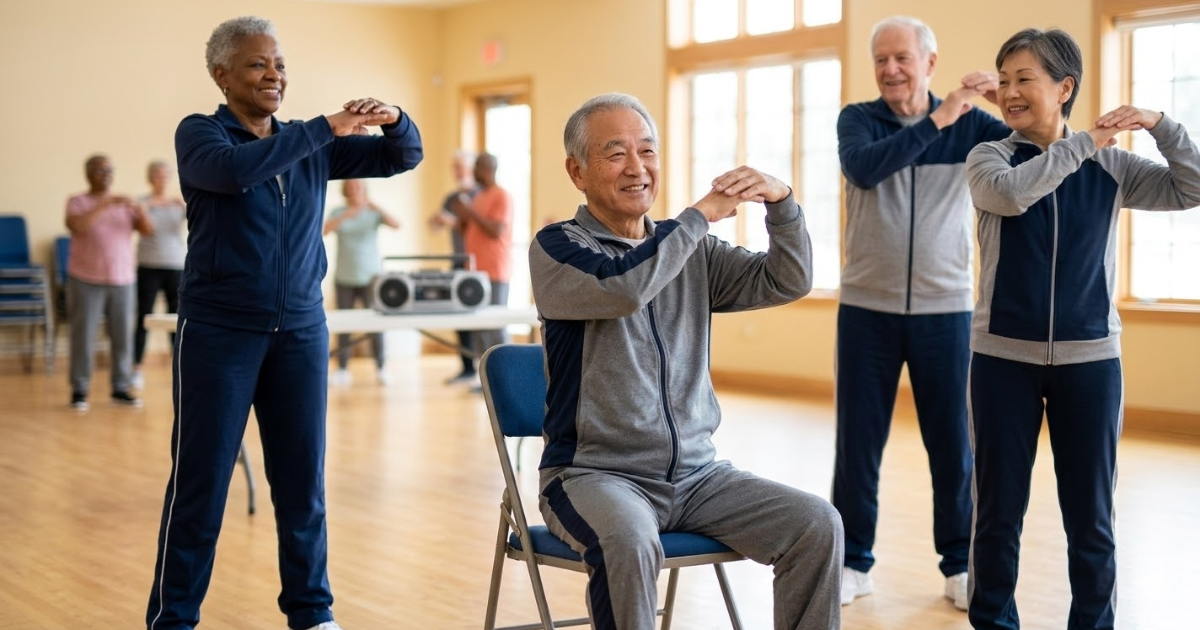
Imagine waking up each morning feeling mentally clear, curious, and fully engaged with life. Imagine walking into a room and remembering exactly why you came. Imagine learning a new skill — a language, an instrument, a craft — and feeling your brain light up with genuine excitement.
This isn’t a fantasy reserved for the young. It’s the documented reality of what neuroscience calls neuroplasticity — your brain’s remarkable, lifelong ability to form new connections, adapt, and grow stronger.
At SeniorJourneyBlog.com, we believe that some of the richest cognitive chapters of your life may still lie ahead. This guide will show you exactly how to unlock them.
💡 Did you know? Up to 90% of age-related cognitive decline is considered preventable through lifestyle choices. Your daily decisions matter more than your genes.
🌱 What Is Neuroplasticity — And Why It Changes Everything
For decades, scientists believed the brain was essentially “fixed” by early adulthood — a hardwired machine that only deteriorated with age. That belief has been overturned completely.
Neuroplasticity is the brain’s ability to reorganize itself by forming new neural pathways — essentially, to rewire itself in response to new experiences, habits, and learning. A landmark study published in Nature Neuroscience confirmed that the adult hippocampus (your brain’s memory center) continues producing new neurons well into old age — a process called neurogenesis.
What this means for you: Every new skill you learn, every puzzle you solve, every meaningful conversation you have is literally reshaping your brain for the better.
“The brain is not a static organ. It is the most dynamic, adaptable system in the known universe — and that includes your brain at 65, 75, or 85.”
— Dr. Michael Merzenich, Pioneer of Brain Plasticity Research
🏆 Why Seniors Actually Have a Cognitive Advantage
Here’s a truth that rarely makes headlines: in several critical areas of mental function, older adults outperform younger people.
Crystallized Intelligence — Accumulated knowledge and wisdom, vocabulary, life expertise, and pattern recognition actually peak in your 60s and 70s. This is a genuine neurological asset that younger brains simply don’t possess.
Emotional Regulation — Older adults consistently show superior ability to manage emotions, reduce stress reactivity, and maintain perspective under pressure.
Pattern Recognition — Decades of experience create rich neural networks for connecting ideas across diverse domains — a form of integrated intelligence that only deepens with the years.
Research from the University of California, Berkeley found that older adults often make better strategic decisions precisely because their brains have learned to filter out irrelevant information. Your experience is not baggage — it is a neurological advantage.
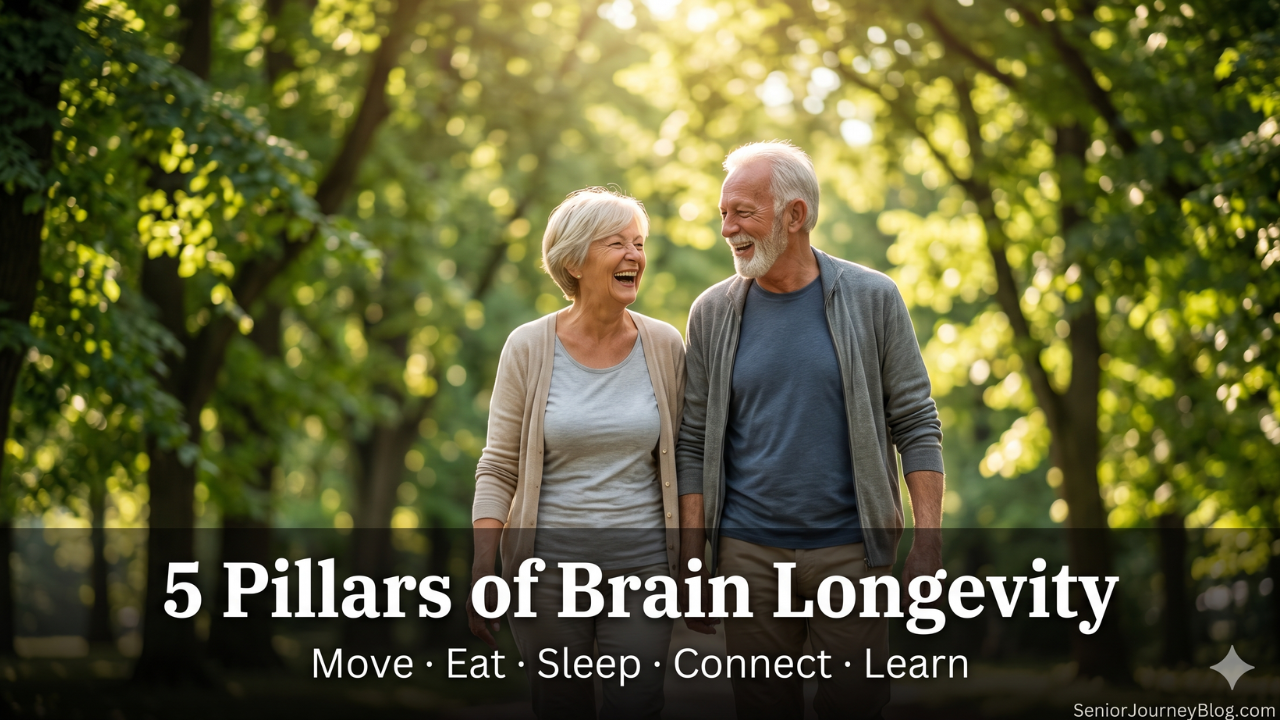
🏛️ The 5 Pillars of Brain Longevity
Evidence-based foundations every senior should know and practice:
🏃 Pillar 1: Physical Movement
Aerobic exercise is the single most powerful brain-boosting intervention known to science. A landmark 2011 study published in PNAS showed that walking 40 minutes three times per week actually increased hippocampus volume by 2% — reversing age-related shrinkage. Even 20-minute daily walks measurably improve memory and executive function. You don’t need to run a marathon. You need to move consistently.
🥦 Pillar 2: Brain-Healthy Nutrition
The MIND Diet has been shown to reduce the risk of Alzheimer’s disease by up to 53% in those who follow it closely. Core foods: leafy greens, blueberries, olive oil, fatty fish, walnuts, beans, and whole grains. Equally important: limit ultra-processed foods, excess sugar, and trans fats — all of which drive inflammation that directly impairs cognitive function.
💤 Pillar 3: Restorative Sleep
Sleep is your brain’s nightly maintenance window. During deep sleep, the glymphatic system flushes out toxic proteins including amyloid-beta, strongly associated with Alzheimer’s disease. Adults over 65 need 7–8 hours of quality sleep per night. Consistent bedtime routines, limiting screens after 8 PM, and keeping your bedroom cool and dark are all evidence-backed strategies.
🤝 Pillar 4: Social Connection
Loneliness is now classified by the U.S. Surgeon General as a public health epidemic. Socially isolated seniors show up to 60% faster cognitive decline. Every meaningful conversation, every group activity, every act of listening and responding — these are genuine cognitive workouts. Connection is medicine.
🎵 Pillar 5: Lifelong Learning & Mental Stimulation
Learning a musical instrument activates more simultaneous brain regions than almost any other activity. A new language, painting, chess, coding, or memoir writing all build “cognitive reserve” — a neurological buffer that protects against dementia. The key: consistent challenge. Once something feels easy, push further.

📋 Your 30-Day Ageless Mind Action Plan
A practical, week-by-week guide — starting today.
Step 1 — Week 1: Establish Your Movement Baseline
Begin with a 20-minute walk every morning. This releases BDNF — “miracle-gro” for neurons — and measurably improves mood, memory, and mental clarity within days. Don’t worry about pace or distance. The mission of Week 1 is simply: show up, and move.
✅ Daily action: 20-minute morning walk + 8 glasses of water
Step 2 — Week 2: Activate Cognitive Stimulation
Choose one new learning activity: Duolingo for a language, a book in a genre you’ve never explored, a YouTube tutorial for a new skill, or joining a local community class. The unfamiliarity itself IS the workout.
✅ Daily action: 15–20 minutes of your chosen learning activity
Step 3 — Week 3: Optimize Sleep & Nutrition
Set a consistent bedtime between 10:00–10:30 PM. Add blueberries and a leafy green to at least one meal daily. Replace one processed snack with walnuts. Limit caffeine after 2 PM.
✅ Daily action: Consistent bedtime + one brain-healthy food swap
Step 4 — Week 4: Deepen Social Connection & Mindfulness
Schedule three meaningful social interactions. Add a 10-minute mindfulness practice. Harvard Medical School research shows regular mindfulness measurably increases grey matter in the prefrontal cortex — improving focus, decision-making, and emotional resilience.
✅ Daily action: 10-min meditation + one scheduled social connection
🔍 5 Brain Aging Myths — Debunked by Science
Myth #1: “You can’t teach an old dog new tricks.”
Truth: Adult learners often show deeper, more durable retention because they bring rich context networks to new information. Age is an asset, not a liability.
Myth #2: “Memory loss is inevitable after 60.”
Truth: Significant memory loss is a disease state, not a natural outcome. The vast majority of seniors who maintain healthy habits retain excellent memory well into their 80s.
Myth #3: “Brain games are the best way to stay sharp.”
Truth: Physical exercise outperforms brain games in every controlled study. Activities combining social, physical, and cognitive elements are most effective of all.
Myth #4: “Genetics determine your cognitive fate.”
Truth: Lifestyle factors account for up to 70% of dementia risk. Genetics load the gun, but your daily choices pull the trigger — in either direction.
Myth #5: “It’s too late to make a difference.”
Truth: Studies show measurable cognitive improvements in adults who begin healthy habits at 70, 80, and even 90. It is genuinely never too late.
🧘 Stress: The Silent Cognitive Saboteur
Chronic stress floods the brain with cortisol — a hormone that, in high sustained doses, literally shrinks hippocampal volume over time. A Harvard Medical School study found that individuals with persistently elevated stress showed significantly faster cognitive decline over a decade.
The good news: the same practices that reduce stress also directly build brain tissue and cognitive reserve.
🌿 Nature walks — 20 minutes reduces cortisol by ~21% · ✍️ Journaling — reduces rumination, boosts working memory · 🎨 Creative arts — activates reward pathways · 🙏 Gratitude practice — increases dopamine and serotonin naturally
Affiliate Disclosure
This post contains affiliate links. If you purchase through these links, I may earn a small commission at no extra cost to you. I only recommend products I genuinely believe in.
🛒 Our Top Brain Health Supplement Picks
Evidence-backed supplements available on iHerb — trusted by millions worldwide.
California Gold Nutrition — Omega-3 Premium Fish Oil
1,100mg · Best Seller · 4.8★ · Supports brain, heart & joint health
Doctor’s Best — High Absorption Magnesium Glycinate
100mg · 240 tablets · Supports deep sleep, relaxation & cognitive function
Now Foods — Lion’s Mane 500mg
60 Veg Capsules · Supports memory, focus & nerve growth factor
Micro Ingredients — Vitamin D3 + K2
300 Softgels · Brain health, mood support & immune function
Garden of Life — Vitamin Code Raw B-Complex
60 Vegan Capsules · Energy, memory & nervous system support
Your Best Mental Years May Still Be Ahead
The most important thing to understand about your brain is this: it is not done with you. And you are not done with it.
Every morning walk, every new conversation, every chapter you read, every new dish you cook is an investment in the most sophisticated — and most resilient — organ in the known universe. The returns compound with time.
You don’t need to overhaul your entire life this week. You need to take one step. Then another. The brain you build through consistent, caring effort will serve you, delight you, and surprise you — at every age.
Health Disclaimer: The information in this article is for general educational purposes only and does not constitute medical advice. Always consult your physician before making significant changes to your diet, exercise routine, or supplement regimen. SeniorJourneyBlog.com does not diagnose, treat, or prevent any medical condition.
💡 Frequently Asked Questions
Want to Go Deeper on This Topic?
Practical tips, expert insights, and real stories — made specifically for seniors who want to live better at any age.
Subscribe to The Smart Life Guide on YouTube and be the first to know when new videos drop!
🌿 Weekly wellness, health & beauty insights — straight to your inbox
Free subscription · Cancel anytime