Have you seriously thought about where you will be living in your 70s, 80s, and beyond? It is one of the most important questions you will ever answer. Your golden years should be characterized by freedom, joy, and peace of mind, not stress about home maintenance or isolation. Living in a vibrant active adult community here in California, I’ve had a front-row seat to how the right environment can completely revitalize a person’s lifestyle.
Today, we are going to explore four specific plans for senior living. I firmly believe that eventually, almost all of us will transition into one of these four categories. If you approach this decision proactively, each of these paths can lead to a fulfilling, active, and deeply rewarding lifestyle.
Let’s dive into real-life examples, expert tips, and actionable strategies to make your chosen plan incredibly successful. As you read through, think about which option resonates most with your personal vision for the future.
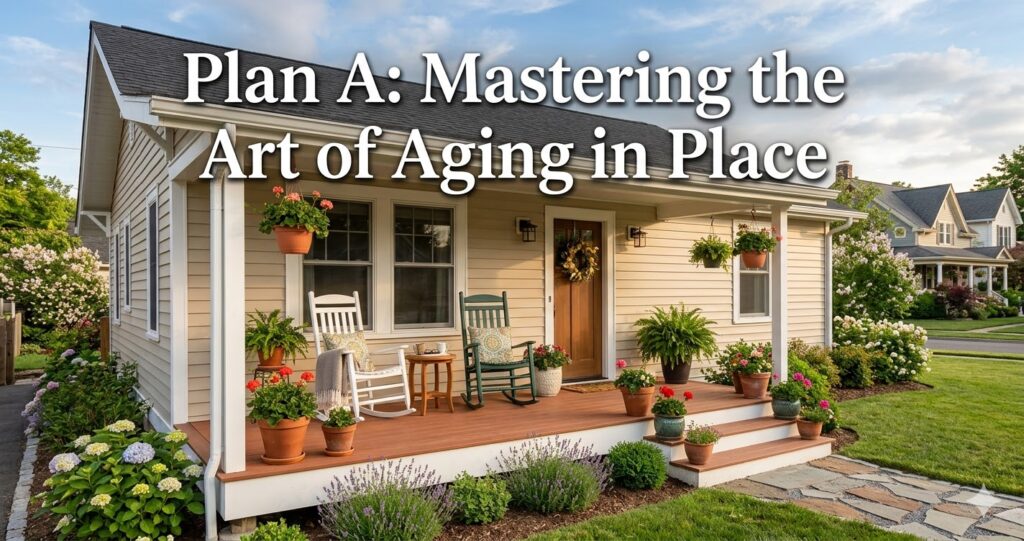
Plan A: The Classic Choice of Aging in Place
Plan A is overwhelmingly the most common choice, and it is simply to “age in place.” You stay right in the home you know and love. According to recent surveys, the vast majority of people in their 70s own their homes and express a strong desire to stay there. If you have fantastic neighbors, deeply love your community, and your house is highly livable, this is a beautiful plan.
However, successfully aging in place requires more than just staying put; it requires proactive adaptation. Here are crucial factors to evaluate to ensure your home remains your sanctuary.
1. Evaluate Your Neighborhood’s Trajectory
Take an objective look at your surroundings. Is your neighborhood improving, or is it slowly declining? If you have lived in your home for 30 or 40 years, the area has likely changed. Sometimes, neighborhoods age poorly—properties aren’t maintained, and safety can become a concern. I have known several families who grew deeply worried about their parents aging in place in a declining area. If your neighborhood is no longer the safe, vibrant place it once was, it might be time to look for greener pastures.
2. Assess the Condition and Layout of Your Home
Is your home heavily dependent on constant maintenance? More importantly, how suitable is the layout for an aging body? If you love your location, you might significantly benefit from investing in home improvements to accommodate the aging process.
For instance, two-story homes often become problematic. Stairs can go from being a slight nuisance to a serious hazard. I remember when we lived in a large, beautiful four-bedroom house where all the bedrooms were upstairs. One day, my wife experienced a minor health scare that made navigating stairs impossible. That was our wake-up call. If your home isn’t conducive to single-level living, you must either remodel or relocate.
### Actionable Checklist for Aging in Place:
- Install Grab Bars: Place them strategically in bathrooms near the toilet and inside the shower.
- Upgrade Lighting: Ensure all hallways, staircases, and exterior walkways are brightly lit to prevent falls.
- Embrace Smart Home Tech: Voice-activated thermostats, security cameras, and smart locks can add immense convenience and safety.
- Connect with Local Resources: Search for your neighborhood senior center and check your county’s aging services website for valuable local support programs.
Plan B: Moving Closer to Your Adult Children
Plan B is one I have witnessed extensively: relocating to be closer to adult children and grandchildren. In the 55+ community where I live, well over half the residents moved here specifically to be within a short drive of their families.
The Power of Proximity
Moving near family offers profound emotional and practical benefits. You get to be an active participant in your grandchildren’s lives—attending soccer games, school plays, and family dinners without the hassle of a cross-country flight.
But there is a practical side to this, too. As residents who moved here in their early 70s transition into their 80s, medical hiccups inevitably occur. When a friend of ours recently underwent a hip replacement, his son was able to drive over immediately, spend a few days with him, and help him safely navigate getting in and out of the car. Having family nearby provides a crucial safety net.
The Golden Rule: Move Sooner Rather Than Later
The smartest way to execute Plan B is to make the move while you still have abundant energy. Do not wait until you need help to move near your kids. Move early so you have the vitality to genuinely enjoy building memories with your grandchildren. Build your own social life in your new town so you aren’t entirely dependent on your children for entertainment.

Plan C: Reconnecting and Relocating Near Siblings
Have you noticed yourself growing closer to your brothers or sisters as the years go by? We all go our separate ways to build careers and families, sometimes losing touch. But in our 70s, a beautiful reunion often happens.
The Rise of Sibling Co-Housing
I have noticed a rising trend of seniors moving to be closer to their siblings. In my own family, two of my brothers—both of whom found themselves single later in life—decided to team up. One brother moved specifically to be closer to the other, and they now share an apartment.
They split the cooking, the grocery shopping, the utility bills, and the household chores. Financially, it makes incredible sense. Emotionally, it completely eliminates the risk of isolation. You don’t necessarily have to live under the exact same roof; simply buying a condo in the same complex or a house on the same street allows you to easily look out for one another and share life’s daily joys.
Plan D: The Active Retirement Community & CCRC
This brings us to Plan D, the path my wife and I chose, and I cannot recommend it highly enough. We moved to a 55+ active adult community a decade ago when we were 67. Now, at 77, I can honestly say we are having the time of our lives.
The 55+ Active Adult Lifestyle
Moving to a dedicated retirement community provides instant access to a rich social life. There are endless activities, fitness classes, hobby clubs, and a neighborhood filled with peers who are in the exact same stage of life. It keeps you moving, engaged, and mentally sharp.
Transitioning to a CCRC (Continuing Care Retirement Community)
While you can absolutely age in place within a 55+ community (often by hiring in-home health care if needed), the ultimate long-term strategy is the CCRC.
A Continuing Care Retirement Community is a tiered approach to aging. You move in while you are completely active and independent, often living in a beautiful, standalone villa or a luxury apartment on the campus. The magic of the CCRC is that as your needs change, your address doesn’t have to. If you eventually require assisted living, memory care, or palliative care, it is all provided right there on the premises.
Timing is Everything: Don’t Wait Too Long
CCRCs are a significant financial investment, but they offer the ultimate peace of mind. The critical tip here is timing. Most people transition into assisted living in their late 80s. Therefore, the smart move is to enter the independent living phase of a CCRC in your early 80s.
Do not wait until you are sick to move into one of these vibrant communities. You want to move in while you can still enjoy the wellness programs, the gourmet dining rooms, and the social events. If you wait until you are in crisis, the transition is much harder, and some communities may not even accept you if your health has already severely declined.

Wrap-Up: The Power of Planning Ahead
Whether you choose Plan A, B, C, or D, each can be a tremendously positive choice. The “best” plan depends entirely on your family dynamics, your financial situation, and what lifestyle brings you the most joy.
The single most important takeaway is this: Do not wait until a health crisis forces you to move. Proactive planning gives you options, preserves your control over your own life, and guarantees a much smoother transition into your next great adventure.
Take stock of your life today. Which of these plans looks like the best option for you? If you are already in your 70s or 80s, which path did you choose, and how is it working out? Your shared experiences might just give someone else the clarity they need to make a life-changing decision.
💡 Frequently Asked Questions (FAQ)
Q1: What are the primary safety modifications I should prioritize if I decide to age in place?
A1: If you choose to age in place, prioritize fall prevention. Install sturdy grab bars in all bathrooms, replace standard bathtubs with walk-in showers if possible, and ensure all rugs are securely taped down to prevent tripping. Additionally, maximize lighting in hallways and stairwells, and consider moving your primary bedroom to the ground floor to eliminate the daily risk of navigating stairs.
Q2: How do I know when it is the right time to move into a Continuing Care Retirement Community (CCRC)?
A2: The best time to move into a CCRC is while you are still highly active and completely independent, typically in your late 70s or early 80s. Moving early allows you to fully integrate into the community, build strong friendships, and enjoy the amenities and wellness programs. Waiting until you have a medical crisis limits your options, makes the physical move much more stressful, and may even disqualify you from entering certain communities.
Q3: Are there realistic ways to stay physically active and socially engaged if I move to a new town to be closer to my adult children?
A3: Absolutely. When relocating to be near family, it is crucial to build your own independent routine so you remain active. Immediately join the local senior center, sign up for group fitness classes like water aerobics or specialized yoga, and explore volunteer opportunities in your new community. This ensures you maintain a robust social circle and high energy levels, rather than solely relying on your children for social interaction.