Ready to feel more energetic, steady on your feet, and confident in your daily movements? Welcome to day nine of our comprehensive 60-day senior fitness series. If you’ve been with us since day one, you’re already witnessing the transformative power of consistency. For those joining us today, a very warm welcome—I encourage you to go back and complete days one through eight to build your foundation. Our mission here is clear: to maintain and build the strength that keeps us independent and active for years to come.
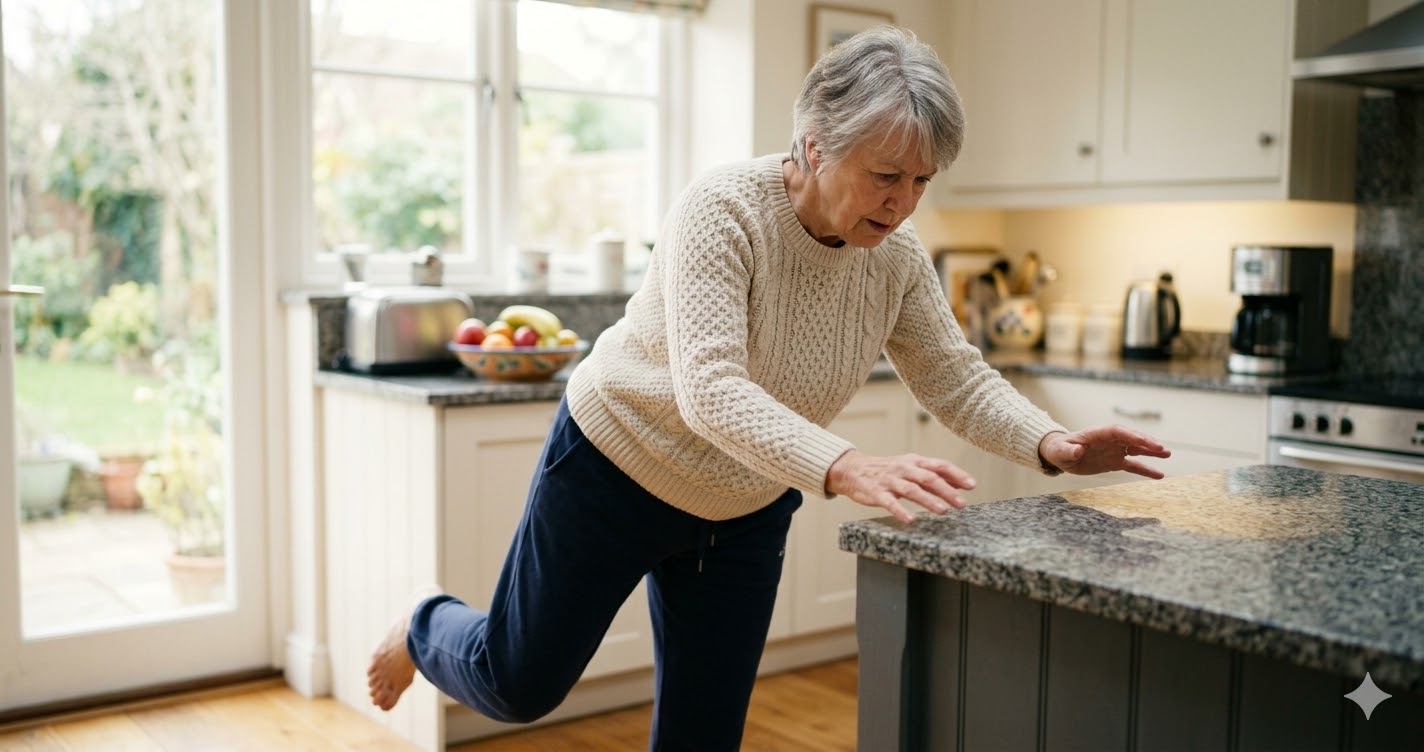
Today’s focus is entirely on your lower body. Leg strength is the undeniable cornerstore of senior mobility, balance, and fall prevention. In fact, numerous studies (including those referenced by the CDC) indicate that lowering limb strengthening exercises are critical for seniors aiming to reduce their risk of falls by up to 30%. Your legs support your entire skeletal system; strong quadriceps, hamstrings, and calves act as shock absorbers for your knees and hips. By keeping these muscles engaged, we are actively protecting our joints and enhancing our posture.
So, let’s keep this amazing momentum going. Grab a sturdy chair (we will be using it for both support and as an active tool) and let’s start our specialized senior leg workout.
The Foundation of Independence: Why Lower Body Strength Matters
Before we dive into the exercises, let’s take a moment to understand why we are focusing so heavily on our legs today. As we age, we naturally experience sarcopenia, which is the gradual loss of muscle mass. This loss often occurs more rapidly in the lower body. When our legs weaken, our balance deteriorates, our walking gait becomes unsteady, and our confidence in moving freely begins to fade. We become more dependent on assistive devices or avoid activities we once loved.
This 60-day journey is designed specifically to counteract that process. Today, we are targeting three main areas: the large muscles of your thighs and hips (for power and stability), the smaller stabilizer muscles around the knee (for joint protection), and the calves (for circulation and vital “push-off” power when walking). Strengthening these areas directly results in better stability, reduced joint pain, and an improved ability to climb stairs, get up from a seated position, and walk longer distances with ease.
H2: Exercise One: The Chair Sit and Stand (50 Repetitions)
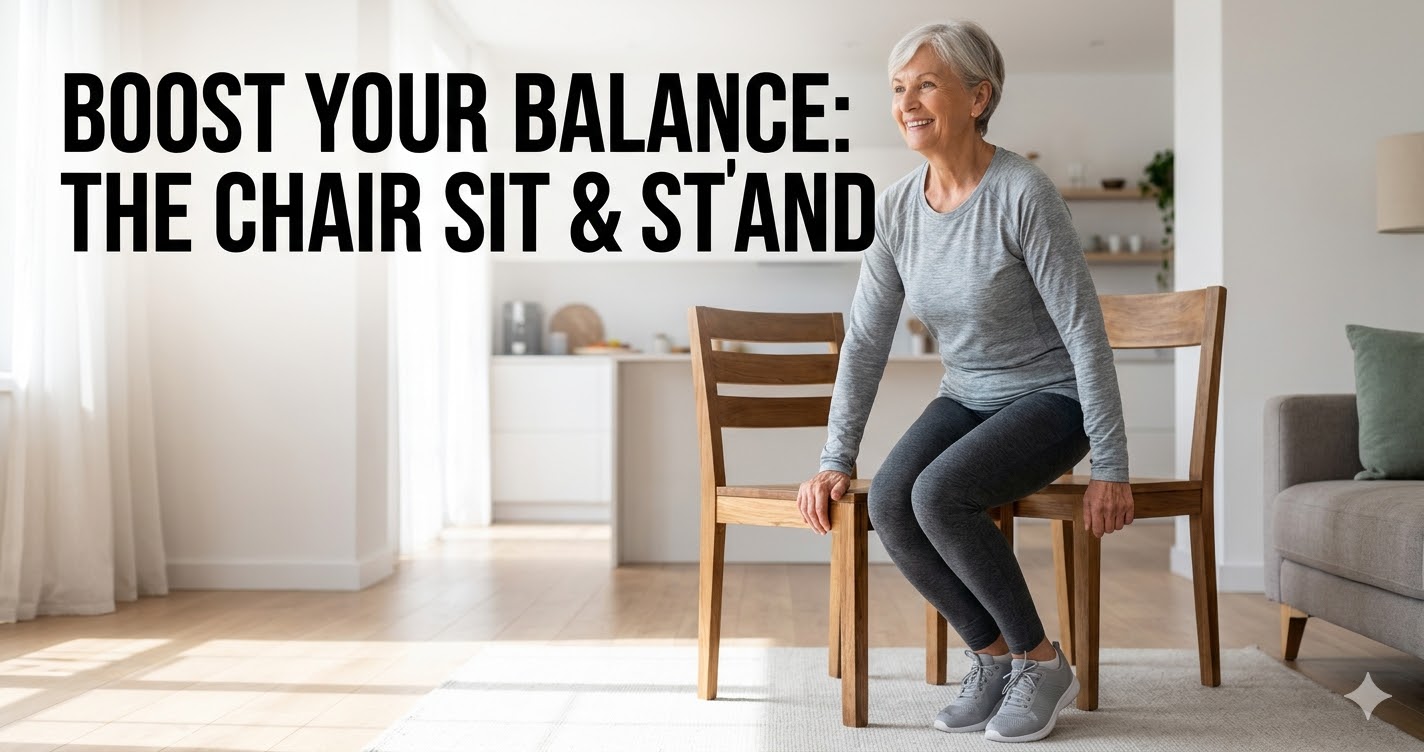
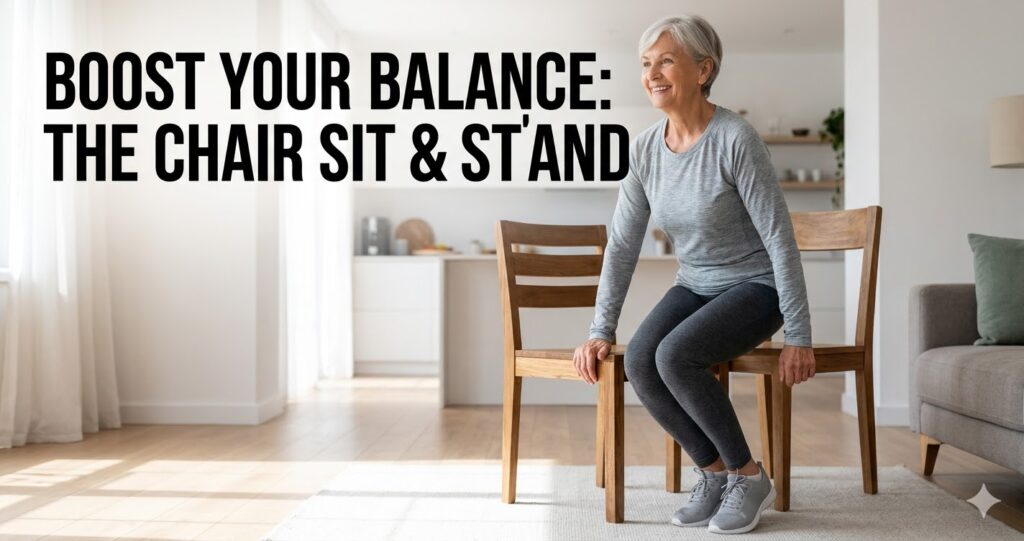
All right, my strong seniors, it is time for our first exercise of the day: the chair sit and stand. This exercise is one of the most effective ways to strengthen your large quadriceps (front of the thighs), hamstrings (back of the thighs), knees, and hips. Think of this as the foundation of lower body mobility. Every single time you sit down or stand up throughout your day, you are engaging these key muscles. This single movement, done correctly, can significantly improve your daily stability and make your legs feel more robust when walking.
Before we begin, please ensure your setup is safe.
H3: Correct Form and Execution
Find a sturdy chair that does not move or slip (like a heavy dining chair, not a rolling office chair). Place it against a wall if you feel unstable. Standing directly in front of the chair, keep your feet shoulder-width apart and your shoulders relaxed. This exercise is designed to be slow, controlled, and intentional—avoid rushing, as we want your muscles (not inertia) to do the work. Let’s do 50 repetitions together.
- Stand Straight: Begin by standing tall with proper posture. Relax your shoulders.
- Slowly Sit Down: Feel your weight moving gently down as you bend your knees and push your hips slightly back, as if sitting in slow motion. Control this descent.
- Pause: Once you reach the seat, pause for a second.
- Stand Up Strong: Push through your heels to stand up straight, engaging your quadriceps and glutes. That is one complete repetition.
H3: The Power of 50 Repetitions
You might wonder why we aim for 50 repetitions. By increasing the repetitions, we are focusing on muscular endurance—the ability of your muscles to perform work over time without fatigue. Endurance in your legs is critical for activities like grocery shopping, walking a pet, or climbing stairs. As you get stronger over this 60-day journey, you will find yourself feeling lighter and more capable throughout the day.
We will count from 1 to 50 together. If you need a short break, simply pause, take a deep breath, and rejoin us when you are ready. The goal is consistency, not speed.
(Perform counts 1 to 50)
H2: Pro-Tips for Maximum Benefit:
- Keep Your Back Straight: Maintain a neutral spine; avoid slouching or looking down at your feet.
- Engage Your Core: Gently tighten your abdominal muscles throughout the movement to stabilize your upper body.
- Avoid Rushing: If 50 repetitions feel like too much today, that’s okay! Do 20 well and slowly add more repetitions each week.
- Pre-Exercise Safety Checklist:
- [x] Sturdy chair confirmed (no wheels)?
- [x] Non-slip flooring?
- [x] Hydration nearby?
- [x] Comfortable athletic shoes?
Great job completing those 50 sit and stands! This is not an easy exercise, but you did it with strength and focus.
H2: Exercise Two: Seated Leg Lifts (50 Repetitions Each Leg)
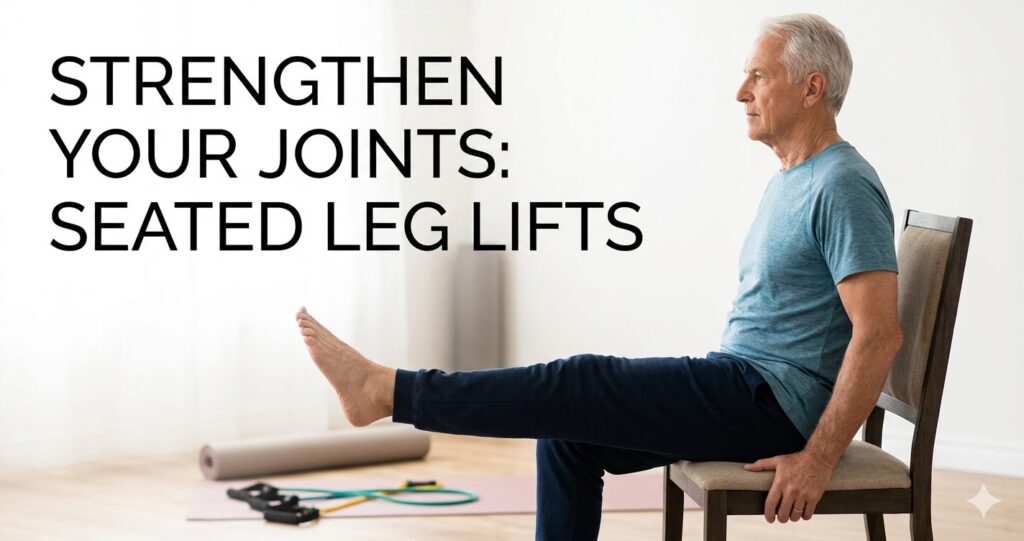
All right, my strong seniors! Now we move to our second exercise: the seated leg lifts. This movement is perfect for strengthening your quadriceps and hip joints, directly targeting the muscles that protect your knees from excessive wear and tear. It also improves your overall walking stability and helps you maintain better balance in daily life. If you have been following our series, you will notice that your legs already feel firmer and more flexible by day nine.
H3: Correct Form and Execution
Sit comfortably on your sturdy chair (this time, it is fully your seat). Your back must remain straight, and your core is lightly engaged for upper body stability. Keep your hands resting gently on the sides of the chair for support. Now, slowly lift your right leg up. Hold it in the air for one second and then lower it down slowly.
- Controlled Lift: Do not swing your leg. Keep the movement smooth and controlled. This ensures the muscles are working properly, rather than being propelled by momentum.
- Pause and Lower: Pause for a second at the top of the movement, then lower with control. That is one repetition. We will complete 50 repetitions on the right leg first, and then we will repeat the same on the left leg.
H3: Muscular Endurance in Action
Again, we are performing 50 repetitions per leg. This builds the specialized stamina in the quadriceps needed for continuous movements, such as walking a full block or standing for extended periods in line. By focusing on both legs with this higher count, you develop balanced strength on both sides, which is essential for proper gait and fall prevention.
Let us begin counting together one by one out loud.
- Right leg: (Count 1 to 50)
- Left leg: (Count 1 to 50)
Wonderful job. Fantastic effort on those leg lifts. You have completed 50 repetitions on each leg. Take a moment to feel that gentle burn in your thighs and knees. That is your strength growing. Keep showing up every day and share this video with your senior friends so they can build strength right along with you.
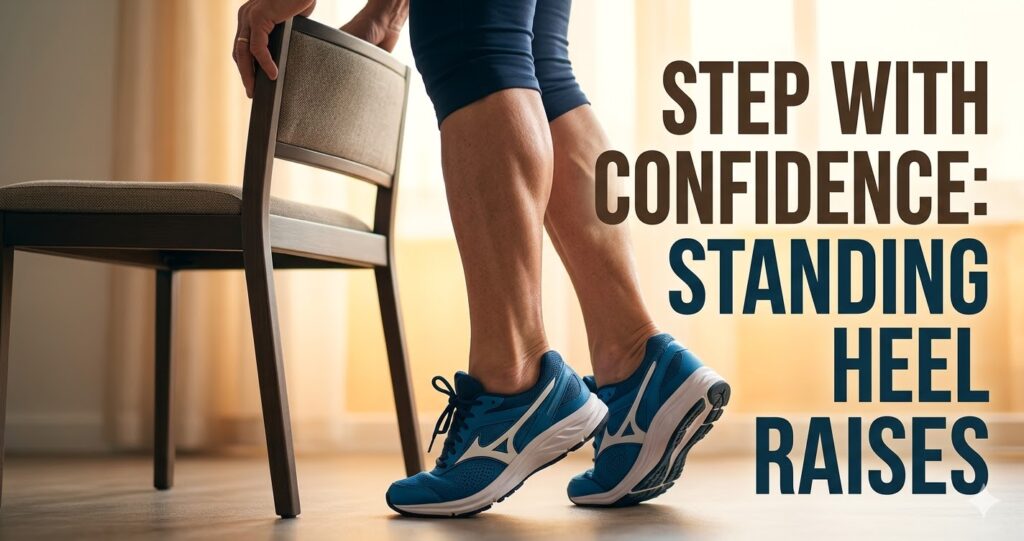
H2: Exercise Three: Standing Heel Raises (50 Repetitions)
All right, my strong seniors, it is time for our final and very important exercise of the day: the standing heel raises. This exercise is excellent for strengthening your calf muscles (gastrocnemius and soleus), which is the primary “engine” that pushes your foot off the floor with every step. Improving blood circulation in your legs is also a key benefit of this movement, helping to reduce swelling and leg fatigue that often occurs as we age. It is especially helpful for preventing leg stiffness.
H3: Correct Form and Execution
Please stand tall behind your sturdy chair and gently hold the backrest for balance (not as your primary support). Keep your feet shoulder-width apart, your spine straight, and your shoulders relaxed. This is a very targeted movement, so focus on the muscles being worked.
- Stand Tall: Maintain your upright posture.
- Slowly Lift Heels: Slowly lift your heels off the ground and stand on your toes, feeling your calf muscles tighten. Hold that position for 1 second.
- Lower with Control: Lower your heels back down to the floor with control. That is one repetition. We are going to do 50 repetitions together.
H3: The Power of 50 Repetitions
You’ve probably seen the pattern now—50 repetitions. By using higher repetition counts on your calves, you are building endurance that helps you walk longer distances with confidence. Stronger calves directly translate into a more confident push-off when walking or climbing stairs, which prevents that “shuffling” gait often seen in seniors with weak lower leg muscles. By doing this exercise daily, your calves will become stronger and you will feel lighter and more stable.
We will count together. (Count 1 to 50)
Fantastic job! You did it. 50 repetitions completed. Take a deep breath and feel that warmth in your calves. That is your circulation improving, and your muscles are thanking you. Every day you show up, your strength improves, your energy rises, and your confidence grows.
FAQ :
Q1: 50 repetitions seem like a lot for one exercise. Is this safe for seniors?
A1: Yes, 50 repetitions is a challenging number, but it is specifically designed to build muscular endurance, not just power. The key is to perform them slowly and with controlled movement. If 50 repetitions feel like too much today, simply do as many as you can with good form—for example, start with 20 per day. Your goal is consistency. Each week you will find yourself able to complete more repetitions safely.
Q2: I have knee arthritis. Should I still do these exercises?
A2: Generally, strengthening the muscles around the knee (quadriceps and calves) is one of the best ways to reduce knee pain associated with arthritis. However, you should always consult with your doctor or physical therapist before starting a new exercise routine. When performing the sit and stand or leg lifts, go only as low as feels comfortable for you. Listen to your body and avoid any sharp pain.
Q3: How long will it take before I notice a difference in my balance?
A3: Noticeable results come from consistency. Most seniors begin to feel early neurological changes—less stiffness, feeling more “connected” to the ground—within the first two weeks of daily practice (like by Day 9). Significant strength gains and improved balance are usually reported around the 4 to 6-week mark of consistent exercise. Show up every day, and the results will come.