Medicare Home Health Benefits: The Fine Print That Gets Seniors Denied
A few years ago, I sat at a kitchen table with a family who had just been told their mother’s Medicare home health request was denied. She’d just come home from a fall, she could barely make it to the mailbox, and yet the letter said she didn’t qualify. Nobody had explained the rules to them before they needed them — and by the time they found out, they’d already lost weeks of care they were entitled to. That conversation is the reason I write guides like this one. Medicare’s home health benefit is genuinely generous — for most covered services, you pay nothing at all — but it comes wrapped in fine print that trips up good, careful families every single day.

Roughly 3.5 million Medicare beneficiaries use this benefit every year, and for people who meet the rules, it can mean skilled nursing, physical therapy, and even help with bathing and dressing — delivered right in the living room, at no out-of-pocket cost under Original Medicare. But “meeting the rules” is exactly where things go wrong. Let’s walk through what Medicare actually covers, why so many requests get denied, and the concrete steps you can take this week to protect your coverage — or your parent’s.
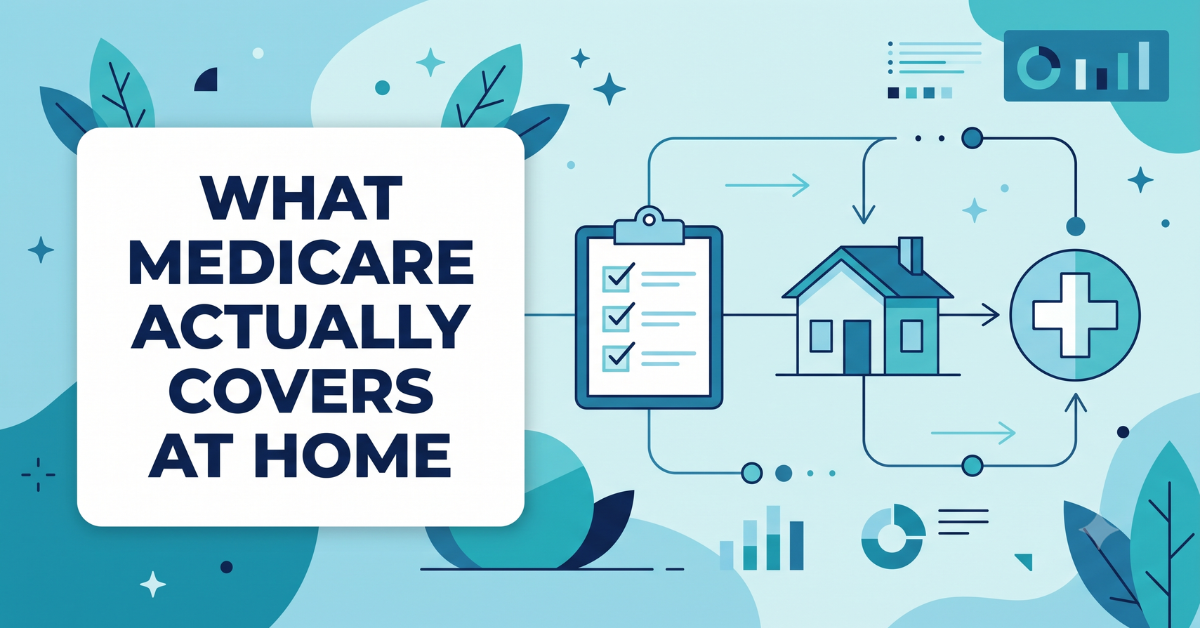
What Medicare Home Health Actually Covers
Original Medicare (Part A and Part B together) pays for medically necessary home health services with no deductible and no coinsurance for the covered visits. That is one of the very few corners of Medicare where you truly pay nothing. But the benefit is built around skilled care — not general assistance around the house.
Skilled nursing care
Wound care, injections, monitoring a health condition, catheter care, and patient/caregiver education all qualify, as long as the care is intermittent — meaning fewer than seven days a week, and generally under eight hours a day.
Physical, occupational, and speech therapy
These are covered when a licensed therapist determines the services are necessary. Importantly, a 2013 legal settlement (Jimmo v. Sebelius) confirmed that Medicare cannot deny this care just because a person isn’t expected to improve. Maintenance therapy — care that simply prevents decline — is covered too. This single fact surprises more families than almost anything else I explain.
Home health aide services
This is the one that causes the most heartbreak. A home health aide can help with bathing, dressing, grooming, and toileting — but only as part of a plan of care that also includes skilled nursing or therapy. If personal care is the only need, Medicare will not pay for an aide on its own. Families often assume that needing help with hygiene is enough by itself. It isn’t, and that misunderstanding is where a lot of denials begin.
Prescription costs eating into your budget?
A huge share of the seniors I talk with are surprised how much they can save on Medicare-related prescription costs simply by knowing where to look. If out-of-pocket medication costs have been weighing on you, it’s worth five minutes to see what discounts you may already qualify for — and take some of that financial pressure off your shoulders.
See If You Qualify for Prescription Savings →
The Four-Part Test That Trips Everyone Up
Every home health claim has to clear all four of the following at the same time. Miss even one, and the whole request can be denied — no matter how badly the care is needed.
- You must be homebound. This does not mean confined to bed or unable to leave the house entirely. It means leaving home takes “a considerable and taxing effort” because of illness, injury, or disability — think needing a walker, a wheelchair, or someone’s help just to get out the door. Occasional trips to church, the doctor, or a family event do not disqualify you.
- You must need skilled care. Nursing or therapy, ordered as medically necessary — not just help around the house.
- A doctor must certify your plan of care after a face-to-face visit, and that certification has to be renewed periodically.
- You must use a Medicare-certified home health agency. Not every home care company qualifies, even if they advertise “Medicare accepted.”
Why Denials Happen — The Fine Print
In my experience, denials rarely come from Medicare being unreasonable. They come from paperwork gaps and misunderstandings that were entirely preventable. The most common culprits I see, again and again:
- The doctor’s documentation doesn’t clearly explain why leaving home is a taxing effort — it just says “patient is homebound” without detail.
- The plan of care wasn’t signed and certified before services started, or it lapsed and wasn’t renewed on time.
- The family requested an aide without any accompanying skilled service.
- The agency used wasn’t Medicare-certified, even though it looked legitimate.
- The care requested was for convenience or general supervision, rather than a documented medical need.
Your Step-by-Step Action Plan
If you or a loved one may need home health care soon, here is the plan I walk families through, step by step.
Step 1: Ask your doctor to document the “why,” not just the “what”
Before your next appointment, write down specifically why leaving home is difficult — the walker, the shortness of breath after ten steps, the fall risk. Bring that list. Vague notes get denied; specific, functional detail gets approved.
Step 2: Confirm the agency is Medicare-certified
Ask directly, and verify through Medicare’s official home health compare tool. Don’t assume from a company’s advertising alone.
Step 3: Get the plan of care signed before services begin
Services can be denied retroactively if certification comes after the fact. Confirm the paperwork is complete first.
Step 4: Track renewal dates
Certifications need periodic renewal. Put a reminder on the calendar 30 days before it lapses so care never has a gap.
Step 5: If you’re denied, appeal — don’t assume it’s final
A denial letter explains your appeal rights and deadline. Many denials are overturned simply because the original paperwork was incomplete, not because the care wasn’t needed. Ask the agency to help you gather the missing documentation.
For Caregivers: One More Thing to Watch For
While you’re managing paperwork, appointments, and phone calls with agencies, you’re also sharing a lot of personal and financial information online — Social Security numbers, Medicare numbers, insurance details. Scammers know this, and they specifically target families dealing with a health crisis, often posing as “Medicare representatives” over the phone or through fake websites. It’s a pattern worth being alert to, especially if you’re managing things from a phone on public WiFi at a hospital, pharmacy, or clinic.
Protect the personal details behind your care plan
Seniors are disproportionately targeted by phishing and scam attempts, and public WiFi — the kind used in hospital waiting rooms, pharmacies, and clinics — is often not secure. A VPN encrypts your connection so the sensitive information you’re sending, like Medicare numbers or account logins, is much harder for scammers to intercept. It’s a simple layer of protection for the moments when you’re managing care on the go.
Protect Your Information Online →
Quick Checklist Before You Apply
- ☐ Documented, specific reason for homebound status (not just a checkbox)
- ☐ A skilled nursing or therapy need identified alongside any aide request
- ☐ Face-to-face doctor visit completed and plan of care signed
- ☐ Agency confirmed as Medicare-certified
- ☐ Calendar reminder set for certification renewal
A note on this guide: This article is intended for general educational purposes and reflects publicly available Medicare guidance current as of 2026. It is not a substitute for personalized medical or financial advice. Medicare rules can vary by individual circumstance — always confirm your specific situation with your doctor, your home health agency, or by calling 1-800-MEDICARE.
Navigating Medicare’s fine print is rarely simple, but it doesn’t have to feel overwhelming either. If you found this helpful, our SeoulcastUSA YouTube channel walks through guides just like this one in video form — plan to check it out if you’d like a more visual, step-by-step version of what we covered today.
💡 Frequently Asked Questions (FAQ)
—Q1. Do I need a hospital stay before Medicare will cover home health care?
No. That rule applies to skilled nursing facilities, not home health. You can qualify for home health care directly from your doctor’s office if you meet the four eligibility criteria.
—Q2. Does “homebound” mean I can never leave the house?
No. Medicare allows infrequent, short absences — medical appointments, religious services, adult day care, or special family events — without affecting your homebound status.
—Q3. Can Medicare deny coverage just because I’m not expected to improve?
No. Under the Jimmo v. Sebelius settlement, Medicare must cover skilled maintenance care that prevents decline, even without an expectation of improvement.
—Q4. Will Medicare pay for a home health aide by itself, with no nursing or therapy?
No. Aide services (bathing, dressing, grooming) are only covered when they accompany a skilled nursing or therapy need in the same plan of care.
—Q5. What should I do if my home health request is denied?
Read the denial letter for your appeal rights and deadline, and ask your home health agency to help you gather any missing documentation. Many denials are overturned on appeal when paperwork gaps are corrected.
### Recommended Tags
Medicare Home Health, Senior Caregiving, Medicare Eligibility 2026, Homebound Requirement, Medicare Denial Appeal
🌿 Weekly wellness, health & beauty insights — straight to your inbox
Free subscription · Cancel anytime