
The Ultimate Guide to a High-Protein Breakfast for Muscle Retention in Seniors
Medically-informed nutrition guidance for the SeniorJourney community — written with warmth, respect, and real, usable steps.

A high protein breakfast for muscle retention in seniors may be one of the simplest, most overlooked tools for staying strong and independent after 60. There is a quiet kind of worry that creeps in sometime after 60. It isn’t loud, and it doesn’t announce itself. It shows up as a jar lid that suddenly feels tighter than it used to, a flight of stairs that asks a little more of your knees, or a grocery bag that seems heavier on the walk from the car. Many people brush this off as “just getting older.” But here is something worth knowing: a meaningful part of that change has a name, a cause, and — encouragingly — a solution you can start tomorrow morning at your own kitchen table.
That solution begins with breakfast. Specifically, it begins with protein.
In this guide, we will walk through exactly why a high protein breakfast for muscle retention in seniors is so important after 60, how much protein you actually need, which breakfast foods deliver the most muscle-protecting value, and a full seven-day plan you can follow without stress or complicated shopping lists. We will also talk about staying safe — both physically and financially — because a strong body and a protected nest egg go hand in hand in a well-lived retirement.
Grab a cup of coffee or tea, get comfortable, and let’s walk through this together.
A High Protein Breakfast for Muscle Retention in Seniors: Why It Matters After 60
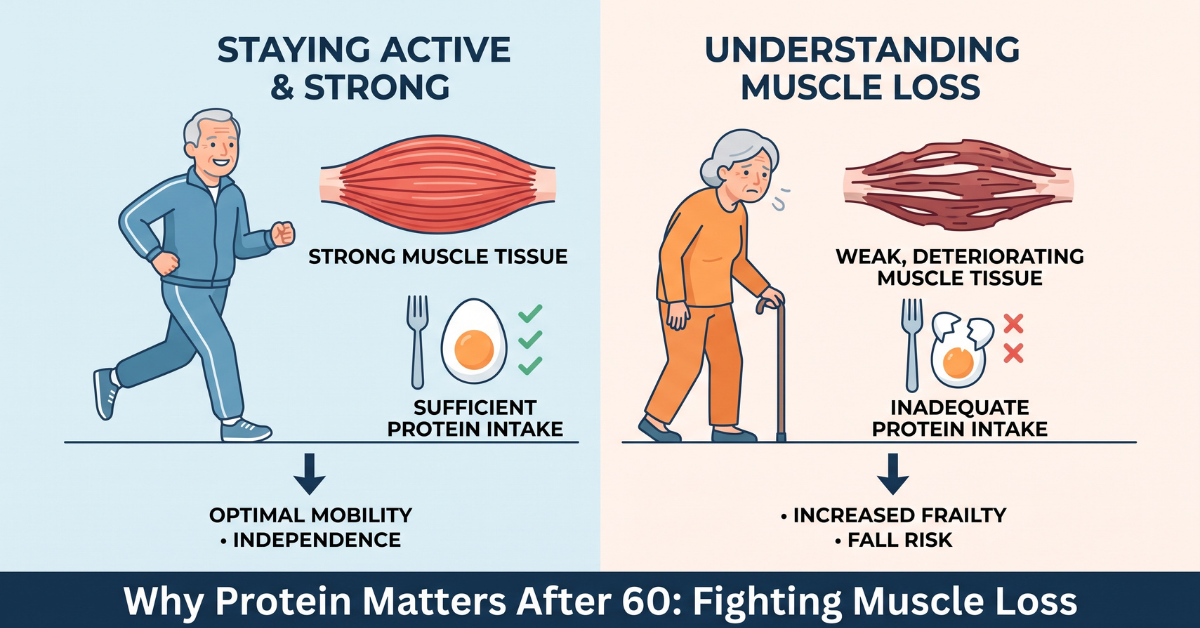
What Is Age-Related Muscle Loss?
The medical community uses a specific term for the gradual loss of muscle mass and strength that comes with aging: sarcopenia. It is a natural process, but “natural” does not mean “unavoidable” or “unmanageable.” Research in the field of geriatric nutrition has consistently pointed to two major contributors: reduced physical activity and a decline in how efficiently the body uses dietary protein to build and repair muscle tissue.
Here is the part that matters most for your morning routine: as we age, our muscles become somewhat less responsive to smaller amounts of protein. Nutrition researchers often refer to this as “anabolic resistance.” In practical terms, it means that a serving of protein that may have been sufficient to support muscle maintenance at age 35 may simply not be enough to do the same job at age 68. Your body needs a bigger, more concentrated protein signal at each meal to keep the muscle-building machinery running.
Why Breakfast Specifically?
Most of us grew up with a breakfast built around cereal, toast, or a pastry — foods that are heavy in carbohydrates and very light in protein. For decades, this didn’t seem to matter much. But for adults over 55, this pattern quietly works against muscle health.
Think of your day as three opportunities to give your muscles the raw material they need. If breakfast delivers only 5 to 8 grams of protein — which is typical of a bowl of cereal or a slice of buttered toast — you are essentially skipping one-third of your daily muscle-support windows. By the time dinner arrives with a protein-rich meal, the day’s damage may already be done. Spreading adequate protein evenly across all three meals, starting with breakfast, appears to be far more effective for maintaining strength than loading it all into one meal at night.
The Real-World Consequences of Ignoring This
Muscle isn’t just about appearance or athletic performance. For older adults, muscle mass is directly tied to:
- Balance and fall prevention — stronger legs and core muscles reduce the risk of a fall, which remains one of the leading causes of serious injury among seniors.
- Independence — the ability to carry groceries, climb stairs, get up from a low chair, or garden without assistance.
- Metabolic health — muscle tissue plays an important role in regulating blood sugar, which matters for those managing or hoping to avoid type 2 diabetes.
- Recovery from illness or surgery — individuals with more muscle reserve tend to bounce back faster from hospital stays.
The encouraging news is this: multiple studies on older adults have shown that a combination of adequate protein intake and regular resistance-type movement (even light activities like walking with hand weights or gardening) can meaningfully slow, and in some cases partially reverse, age-related muscle loss.
💡 A Gentle Reminder: This article is for general educational purposes and is not a substitute for personalized medical or dietary advice. Please consult your physician or a registered dietitian before making significant changes to your diet, especially if you manage a chronic condition such as kidney disease, diabetes, or are on blood-thinning medication.
How Much Protein Do Seniors Actually Need?
The standard Recommended Dietary Allowance (RDA) for protein — 0.8 grams per kilogram of body weight — was established decades ago using data from younger adults. A growing body of geriatric nutrition research now suggests this figure is too low for most people over 65.
Many nutrition experts and organizations specializing in aging now recommend that older adults aim for approximately 1.0 to 1.2 grams of protein per kilogram of body weight per day — and for those recovering from illness, surgery, or managing existing muscle loss, some guidance goes as high as 1.2 to 1.5 grams per kilogram, under medical supervision.
To put this in everyday terms:
- A person weighing 150 pounds (about 68 kg) would aim for roughly 68 to 82 grams of protein per day.
- A person weighing 180 pounds (about 82 kg) would aim for roughly 82 to 98 grams of protein per day.
Rather than trying to calculate exact grams at every meal, a simpler mental model works well: aim for at least 25 to 35 grams of protein at each of your three main meals. This “even distribution” approach has been shown in research to support muscle protein synthesis more effectively than a small breakfast, a light lunch, and a protein-heavy dinner.
Top Protein-Rich Breakfast Foods for Seniors

Not all breakfast proteins are created equal — and for seniors, ease of chewing, digestibility, and nutrient density all matter alongside protein content. Building a truly effective high protein breakfast for muscle retention in seniors starts with choosing the right foods. Here are the ones we recommend building your mornings around:
| Food | Serving Size | Approx. Protein |
|---|---|---|
| Eggs | 2 large eggs | 12–13 g |
| Greek yogurt (plain) | 1 cup (200g) | 20–23 g |
| Cottage cheese | 1 cup | 24–28 g |
| Smoked salmon | 3 oz (85g) | 17–19 g |
| Whey or plant protein powder | 1 scoop (~30g) | 20–25 g |
| Almonds or walnuts | 1/4 cup | 6–7 g |
| Chia seeds | 2 tbsp | 4–5 g |
Notice a pattern here? None of these require a chef’s skill. They are pantry staples, easy to chew and digest, and — importantly — easy to combine into meals that don’t feel like “diet food.”
🌿 A Note on Supporting Muscle Function Beyond Protein
While protein is the primary building block for muscle, certain minerals like magnesium play a supporting role in muscle contraction, relaxation, and overall nerve-muscle communication. Many older adults fall short of their daily magnesium needs through diet alone. If this is a concern for you, it may be worth discussing a high-absorption magnesium supplement, such as Doctor’s Best High Absorption Magnesium (Lysinate Glycinate Chelate), with your healthcare provider.
3 Easy High-Protein Breakfast Recipes for Muscle Health
Let’s move from theory to your kitchen counter. Below are three simple, senior-friendly recipes, each delivering 20 grams of protein or more, using ingredients you can find at any grocery store.
Recipe 1: Veggie Scrambled Eggs with Whole Grain Toast

Approximate Protein: 22 grams
Ingredients: 3 large eggs, a handful of fresh spinach, ¼ cup diced tomato, a slice of whole grain toast, a small pat of olive oil or butter.
Method: Warm the olive oil in a nonstick pan over medium-low heat. Add spinach and tomato and soften for one minute. Whisk the eggs separately with a pinch of salt and pepper, then pour into the pan. Gently fold the eggs as they set — low, slow heat keeps them soft and easy to chew. Serve alongside a slice of toasted whole grain bread.
Why it works: Eggs provide complete, high-quality protein with all nine essential amino acids your body needs for muscle repair, while the vegetables add fiber and antioxidants.
Recipe 2: High-Protein Greek Yogurt Bowl

Approximate Protein: 26 grams
Ingredients: 1 cup plain Greek yogurt, a small handful of walnuts, 1 tablespoon chia seeds, ½ cup fresh blueberries, a light drizzle of honey (optional).
Method: This one truly could not be simpler. Spoon the yogurt into a bowl, top with berries, walnuts, and chia seeds, and finish with a light drizzle of honey if you like a touch of sweetness. No cooking required — perfect for busy mornings or warmer months.
Why it works: Greek yogurt is naturally strained to concentrate its protein content, making it one of the most efficient protein sources per calorie. The berries and walnuts add heart-healthy fats and antioxidants.
Recipe 3: Muscle-Boosting Breakfast Smoothie
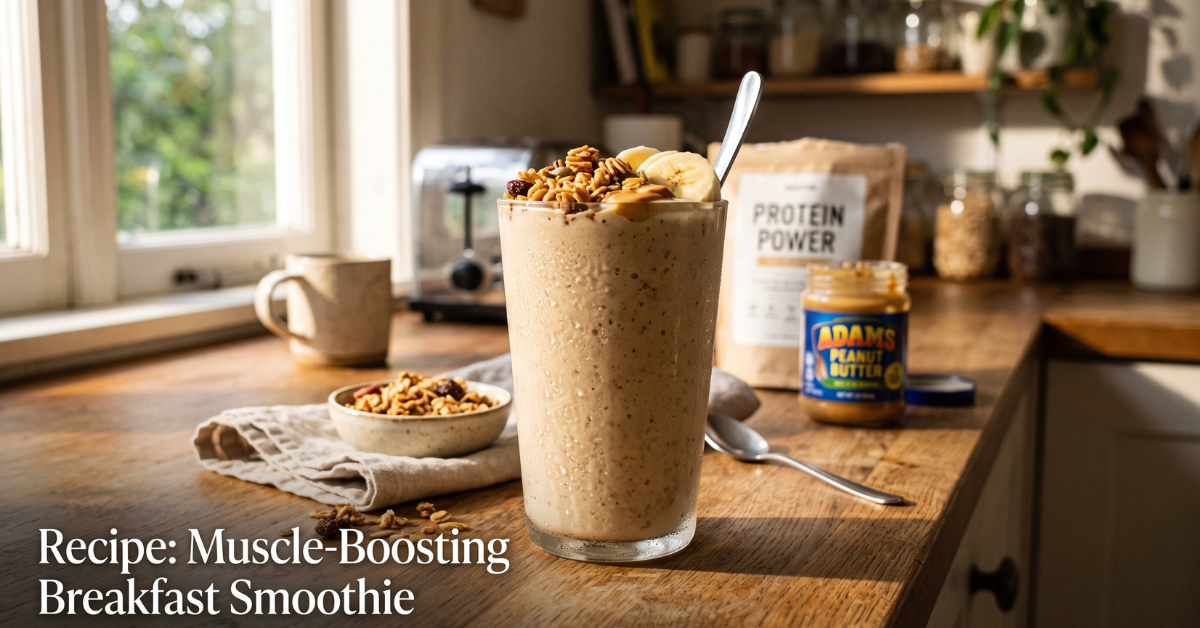
Approximate Protein: 28–30 grams
Ingredients: 1 scoop whey or plant-based protein powder, 1 small banana, 1 tablespoon natural peanut butter, 1 cup milk of choice (dairy or fortified plant milk), a few ice cubes.
Method: Combine all ingredients in a blender and blend until smooth, about 30 to 45 seconds. This recipe is especially helpful on mornings when chewing feels tiring, appetite is low, or you are short on time before a doctor’s appointment or grandchild’s visit.
Why it works: Smoothies are one of the easiest ways to hit a high protein target without needing a large appetite, since the liquid form is often easier to consume fully compared to solid food.
Your Action Plan: A Step-by-Step Guide to Building the Habit
Knowing the “why” is only half the journey. Real, lasting change comes from a simple, repeatable system. Here is a five-step action plan for turning a high protein breakfast for muscle retention in seniors into a habit that sticks, one we recommend to every member of our community.
Step 1: Calculate Your Personal Protein Target
Take your body weight in pounds, divide by 2.2 to get kilograms, then multiply by 1.0 to 1.2. That range is your daily protein goal in grams. Write it on a sticky note and place it on your refrigerator.
Step 2: Stock Your Kitchen With “Protein Anchors”
Keep at least three of the following on hand at all times: eggs, plain Greek yogurt, cottage cheese, protein powder, and a source of nuts or seeds. When these staples are always available, building a high-protein breakfast becomes automatic rather than a daily decision.
Step 3: Pick Two “Go-To” Recipes and Rotate Them
You do not need seven different breakfasts. Choose two of the recipes above that fit your taste and schedule, and rotate between them. Simplicity is what makes a habit last — not variety.
Step 4: Pair Protein With Gentle Movement
Protein alone builds the raw material for muscle, but movement is what tells your body to actually use it. A 15 to 20 minute walk, some light stretching, or a set of chair exercises shortly after breakfast can meaningfully improve how your body uses the protein you just ate.
Step 5: Track for Two Weeks, Then Reassess
Use a simple notebook or a notes app to jot down what you ate for breakfast each day for two weeks. At the end, ask yourself: Do I have more energy? Has my grip strength or stair-climbing felt any easier? This isn’t about perfection — it’s about noticing small, real improvements.
A Simple 7-Day High-Protein Breakfast Plan
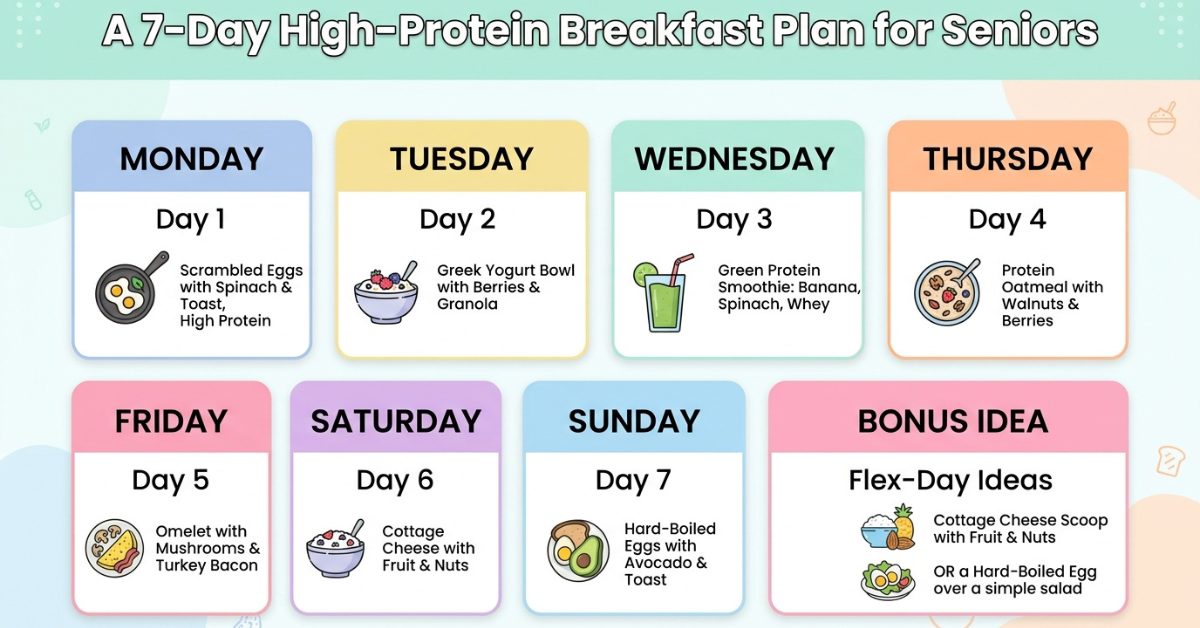
To take all the guesswork out of your mornings, here is a full week’s worth of a high protein breakfast for muscle retention in seniors, each averaging 25 grams of protein or more:
| Day | Breakfast | Protein |
|---|---|---|
| Monday | Veggie Scrambled Eggs + Toast | 22g |
| Tuesday | Greek Yogurt Bowl with Berries | 26g |
| Wednesday | Muscle-Boosting Smoothie | 28g |
| Thursday | Cottage Cheese with Sliced Peaches | 25g |
| Friday | Smoked Salmon on Whole Grain Toast | 24g |
| Saturday | Two Eggs + Greek Yogurt Side | 30g |
| Sunday | Oatmeal made with milk + protein powder | 27g |
Feel free to print this table and keep it on your refrigerator. There is real power in removing daily decision fatigue — when the plan is already made, all that’s left to do is follow it.
🩺 A Note for Medicare Advantage Members
Did you know that many Medicare Advantage plans include an over-the-counter (OTC) benefit specifically for purchasing pharmacy items and everyday health products — including protein supplements, vitamins, and nutrition drinks? If you’re not sure whether you have unused OTC credits, it’s worth checking a service like MyOTC, which helps Medicare Advantage members track and use these benefits before they expire.
Staying Safe While You Shop, Browse, and Bank Online

As you start ordering groceries online, researching supplements, or checking your OTC benefits through a website, it’s worth pausing on a topic that doesn’t get talked about enough: digital safety.
Reports from consumer protection agencies have repeatedly highlighted that older adults are disproportionately targeted by online scams and phishing attempts — often because they are perceived as having more savings, retirement funds, and pension income sitting in accounts. That steady monthly deposit you’ve worked your whole life for is, unfortunately, exactly what scammers are hoping to access.
This is especially risky when using public Wi-Fi at a coffee shop, library, or while traveling — networks that are far easier for bad actors to intercept than your home connection. A phone or laptop connected to public Wi-Fi without protection can expose your passwords, banking details, and personal information to people looking to exploit exactly that vulnerability.
One practical, affordable safeguard is a Virtual Private Network (VPN), which encrypts your internet connection so that your data isn’t easily visible to others on the same network. A service like NordVPN can help add a meaningful layer of protection to the devices you use most — your phone, tablet, or laptop — especially when you’re out and about managing your health, shopping, or banking on the go.
Precautions and When to Talk to Your Doctor
Before making any significant increase to your protein intake, please keep the following in mind:
- Kidney function: Individuals with chronic kidney disease often need a restricted protein intake. Please consult your doctor before increasing protein if you have any kidney concerns.
- Medication interactions: Certain supplements, including some protein powders with added vitamins or minerals, may interact with blood thinners or other medications. Always check with your pharmacist.
- Hydration: Higher protein intake increases the importance of drinking enough water throughout the day.
- Start gradually: If your current breakfast is very low in protein, increase your intake gradually over a week or two rather than all at once, to allow your digestive system to adjust comfortably.
Bringing It All Together
Building a high protein breakfast for muscle retention in seniors isn’t about chasing a younger version of yourself — it’s about protecting the independence, confidence, and comfort you deserve for decades to come. The wonderful thing about the plan laid out in this guide is that it doesn’t ask for extra hours in your day or an expensive grocery budget. It simply asks you to make one meal — the very first one of your day — count a little more than it used to.
Start tomorrow with one recipe from this guide. Notice how you feel. Then build from there, one steady morning at a time — because a consistent high protein breakfast for muscle retention in seniors is one of the easiest wins you can give yourself this year.
Want more practical, video-based guides like this one?
Join us over on our YouTube channel, SeoulcastUSA, where we bring these same senior wellness, lifestyle, and retirement topics to life in easy-to-follow videos. We’d love to have you as part of our growing community there.
💡 Frequently Asked Questions (FAQ)
Q1: How quickly can I expect to notice a difference from eating more protein at breakfast?
Most people report subtle improvements in energy and satiety (feeling full longer) within one to two weeks of starting a high protein breakfast for muscle retention in seniors. Measurable changes in strength typically take four to eight weeks and are best supported when combined with light physical activity.
—Q2: I have trouble chewing meat and eggs sometimes. What are my best options?
Greek yogurt, cottage cheese, protein smoothies, and protein powder mixed into oatmeal are all excellent choices that require little to no chewing while still delivering 20+ grams of protein per serving.
—Q3: Can I get enough protein from a plant-based breakfast?
Yes. Plant-based protein powders, tofu scrambles, chia seeds, nuts, and fortified plant milks can all contribute meaningfully to your daily protein goal, though you may need slightly larger portions compared to animal-based sources to reach the same protein total.
—Q4: Is it safe to take a protein supplement if I have high blood pressure?
Generally, plain protein powders are considered safe for most people with high blood pressure, but please check the ingredient label for added sodium and consult your physician, especially if you are on blood pressure medication.
—Q5: Will eating more protein help me lose weight as well as retain muscle?
Protein is known to be more satiating than carbohydrates or fat, which can naturally help reduce overall calorie intake. However, weight management involves many factors, and this guide focuses specifically on muscle retention rather than weight loss.
🌿 Weekly wellness, health & beauty insights — straight to your inbox
Free subscription · Cancel anytime