Health Disclaimer: This article is for informational purposes only and is not medical advice. It is not a substitute for a diagnosis or treatment from your own doctor. Please talk with your healthcare provider before changing your exercise, diet, medications, or supplements.
Affiliate Disclosure: Some links in this article are affiliate or sponsored links. If you make a purchase through them, I may earn a small commission at no extra cost to you. I only share resources that fit the topic.
As an Amazon Associate, I earn from qualifying purchases.
If you’ve been wondering how to sleep better after 60, you’re far from alone — and the good news is that small, natural changes can make a real difference.
Living in California, I’ve seen so many friends and neighbors in their 60s and 70s talk about the same thing over morning coffee: “I fall asleep fine, but I’m wide awake at 3 a.m.” Or, “I’m in bed by nine and up before the sun.” It’s one of the most common conversations I hear, and it usually ends with someone asking whether a sleeping pill is the only answer.
🌿 Weekly wellness, health & beauty insights — straight to your inbox
Free subscription · Cancel anytime
For many people, it isn’t. In this guide, we’ll walk through seven natural, medication-free habits backed by trusted sources like the National Institute on Aging (NIA) and the CDC. You’ll also get a simple step-by-step action plan, a quick comparison table, and clear signs that it’s time to talk with your doctor.
Quick Answer: The 7 Natural Ways
- Keep the same sleep and wake time every day
- Get bright morning daylight
- Make your bedroom cool, dark, quiet, and safe
- Build a screen-free wind-down routine
- Move your body during the day
- Make smart choices about caffeine, alcohol, meals, and fluids
- Calm your mind with breathing and relaxation
Why It’s Harder to Sleep Better After 60 (And Why It’s Not Hopeless)
Let’s clear up a common myth first. Many people believe older adults simply need less sleep. That’s not quite true. The National Institute on Aging says older adults need about the same amount of sleep as other adults: roughly 7 to 9 hours a night. The CDC breaks it down a little further: 7 to 9 hours for adults ages 61 to 64, and 7 to 8 hours for adults 65 and older (CDC and NIA guidance, as of October 2026).
What does change is the way we sleep. According to the NIA, as we age, we tend to go to bed earlier and wake up earlier. Sleep often becomes lighter, and it’s more common to wake up several times during the night.
Common reasons sleep gets harder with age
- A shifting body clock. Your internal “timer” may move earlier, so you feel sleepy in the early evening and wake before dawn.
- Lighter sleep. Less time in deep sleep means small noises or discomfort wake you more easily.
- Health conditions and pain. Arthritis, heartburn, and breathing problems can interrupt rest.
- Medications. Some blood pressure medicines, water pills (diuretics), antihistamines, and antidepressants can affect sleep. Never stop a medication on your own — ask your doctor or pharmacist instead.
- Nighttime bathroom trips. Waking up to urinate is very common and can break up your sleep.
- Life changes. Retirement, loss of a loved one, or caregiving can change daily routines and add worry.
Here’s the encouraging part: many of these factors respond well to daily habits. And when they don’t, there are effective treatments that don’t start with a pill. In fact, the American College of Physicians recommends a structured, non-drug program called CBT-I (cognitive behavioral therapy for insomnia — a short coaching program that retrains sleep habits and thoughts) as the first treatment for adults with long-term insomnia. We’ll come back to that later.
Sponsored Resource
Have a Medicare Advantage OTC Allowance?
If your Medicare Advantage plan includes an over-the-counter allowance, the My OTC app by Chapter can help you check your balance, see which items your plan covers, and order online before your credits expire.
Original Medicare does not include an OTC allowance. Benefit amounts and eligible items vary by plan, and not every plan is supported. Chapter is a private company and is not affiliated with Medicare or any government agency. This is an affiliate link; I may earn a commission at no extra cost to you.
Check My OTC Benefit →Why good sleep matters so much after 60
Good sleep isn’t just about feeling rested. According to the NIA, poor sleep in older adults can be linked with daytime sleepiness, memory and focus problems, low mood, and more falls or accidents. Fatigue and slower reaction time are a real safety concern when you’re walking down the stairs at night or driving to the store. Sleep is when your body and brain do important repair work — so protecting it is one of the kindest things you can do for your future self.
Sponsored Resource
Curious About Brain Wellness Support?
If memory, focus, and brain health are on your mind, you may want to learn about this brain wellness supplement designed to support memory, focus, and nerve health. Supplements are not a replacement for good sleep or medical care, and they can interact with medications — please talk with your doctor before trying any new supplement.
Learn More About Brain Wellness1. Keep the Same Sleep and Wake Time Every Day
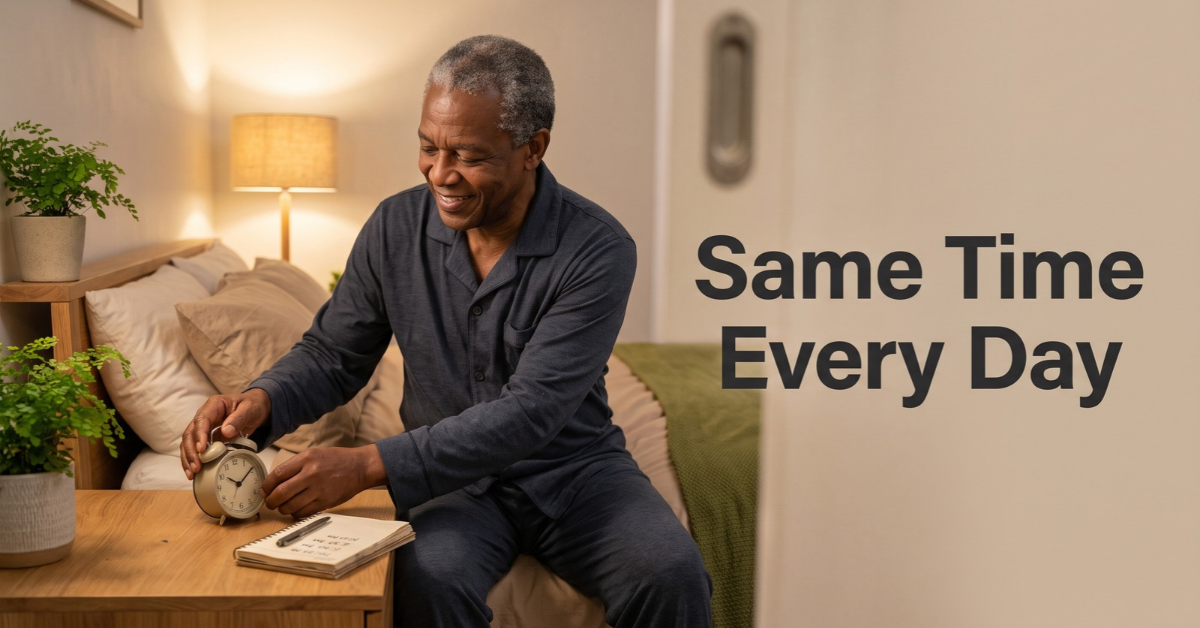
If you only change one thing, make it this. The NIA’s first tip for older adults is to go to bed and get up at the same time every day — even on weekends.
Your body runs on an internal clock. When you wake up at 6:30 one day and 9:00 the next, that clock gets confused, a bit like jet lag without the travel. A steady routine teaches your body when to feel sleepy and when to feel alert.
How to make it work
- Pick your wake-up time first. It’s easier to control when you get up than when you fall asleep. Set an alarm and get out of bed at that time, even after a rough night.
- Go to bed when you’re sleepy, not just tired. Sleepy means heavy eyelids and nodding off. Lying in bed wide awake can train your brain to link the bed with frustration.
- Use the “20-minute” guideline. Many sleep specialists suggest that if you can’t fall asleep after about 20 minutes, get up, go to another room, and do something calm in dim light until you feel sleepy again.
- Be smart about naps. The NIA advises avoiding long naps (over 30 minutes) in the late afternoon or evening. A short, early-afternoon rest is usually fine for many people.
Tip for early risers: If you’re falling asleep at 8 p.m. and waking at 4 a.m., try moving your bedtime later by 15 minutes every few days. Pair it with evening light (see Way #2) to gently shift your clock.
2. Get Bright Morning Daylight

Light is the strongest signal your body clock receives. Daylight tells your brain, “It’s daytime — be alert.” That message also helps set the timing for when you’ll feel sleepy later. The NIA encourages older adults to get some natural sunlight every day.
Many of us spend more time indoors after retiring. Indoor lighting is much dimmer than daylight, even on a cloudy day, so your body may never get a clear “morning” signal.
Easy ways to get more daylight
- Take your morning coffee or tea outside on the porch or patio.
- Walk around the block within an hour or two of waking.
- Sit by a bright window while you read the news or do a puzzle.
- Open all your curtains and blinds as soon as you get up.
If you wake too early: Some people find that getting light in the late afternoon or early evening — instead of very early morning — helps them stay up a little later. If your sleep timing has shifted very early, this is a good topic to raise with your doctor.
Safety note: Protect your skin and eyes with sunscreen, a hat, and sunglasses as needed. Never look directly at the sun. If you have an eye condition, ask your eye doctor what’s right for you.
3. Make Your Bedroom Cool, Dark, Quiet — and Safe
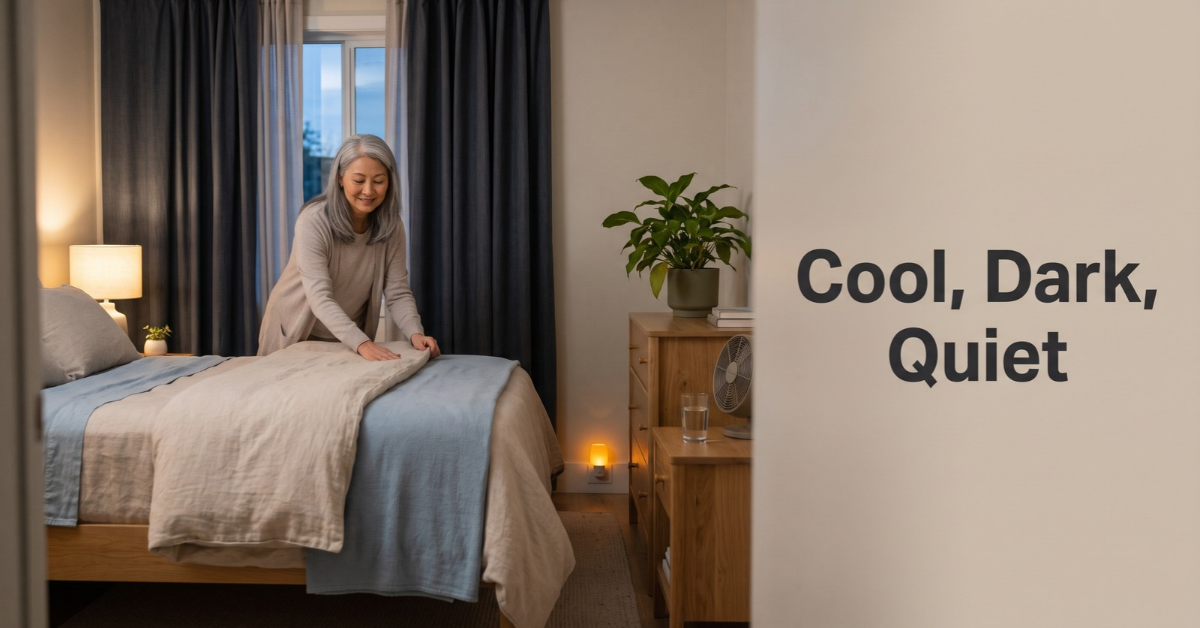
Because sleep often becomes lighter with age, your bedroom matters more than ever. Little things — a streetlight through the curtains, a ticking clock, a stuffy room — can be enough to wake you. The NIA recommends a bedroom that is comfortable, quiet, and not too hot or too cold.
Bedroom checklist
☐ Cool: Many people sleep best in a slightly cool room. Adjust bedding and pajamas so you’re comfortable without overheating.
☐ Dark: Use blackout curtains or a comfortable sleep mask. Cover bright lights on electronics.
☐ Quiet: A fan or white-noise machine can cover sudden sounds.
☐ Comfortable: A supportive mattress and pillow that suit your body, especially if you have neck, back, or hip pain.
☐ Safe: A lamp within reach of the bed and a dim night light along the path to the bathroom.
☐ Clear path: No rugs, cords, or clutter between the bed and the door.
That last point is important. The NIA suggests keeping a lamp near your bed so you can see and move safely at night. Many nighttime falls happen on the way to the bathroom in the dark. A low, warm-colored night light gives you enough light to walk safely without fully waking your brain.
Sharing a bed? If a partner’s snoring or different schedule keeps you awake, earplugs, a sleep mask, or quiet audio can help. Some couples also find that separate blankets make a surprising difference.
Helpful for This Step
A Sleep Mask Made for Side Sleepers
If light or noise wakes you up, a soft sleep mask with thin built-in Bluetooth headphones lets you block light and listen to calm music, white noise, or a sleep story — designed to stay comfortable even when you sleep on your side.
Check Price on Amazon4. Build a Screen-Free Wind-Down Routine

Your brain doesn’t have an on/off switch. It needs a “dimmer” — a gentle transition from the busy day to rest. A calming routine, done in the same order each night, becomes a signal that sleep is coming.
The NIA suggests avoiding TVs, phones, and computers in the bedroom and finding ways to relax before bed each night. Bright screens keep your mind engaged, and news or emails can stir up worry right when you want to settle down.
A sample 60-minute wind-down
| Time Before Bed | What to Do |
|---|---|
| 60 minutes | Turn off the TV and put your phone on its charger outside the bedroom. Dim the lights in the house. |
| 45 minutes | Take a warm (not hot) shower or bath. Change into comfortable sleepwear. |
| 30 minutes | Read a paper book, listen to soft music, or sip a warm caffeine-free herbal tea (small cup). |
| 15 minutes | Write tomorrow’s to-do list or three good things from today, then do slow breathing (see Way #7). |
| Lights out | Get into bed only when you feel sleepy. |
The “worry list” trick: If your mind races at night, keep a small notepad by the bed — or better yet, in the living room. Writing down what’s on your mind before bed tells your brain, “This is handled for now. We’ll deal with it tomorrow.”
Love reading before bed? A paper book or e-reader without a bright backlight is a better choice than a tablet. Choose something pleasant rather than a page-turning thriller that keeps you up “just one more chapter.”
Sponsored Resource
Explore More on Sleep and Dreams
Looking for more bedtime reading? Browse this collection of health and fitness resources focused on sleep and dreams — a gentle way to keep learning as part of your evening routine.
Browse Sleep Resources5. Move Your Body During the Day

Think of daytime activity as “earning” your sleep. When your body has been active, it’s more ready to rest. The NIA recommends exercising at regular times each day, but not within 3 hours of bedtime, since a late workout can leave you feeling too energized to settle down.
You don’t need a gym membership or intense workouts. Gentle, regular movement counts.
Sleep-friendly activities to try
- Walking: A morning walk gives you exercise and daylight at the same time — a double win for sleep.
- Tai chi or gentle yoga: Slow, flowing movements that also support balance and relaxation.
- Water exercise: Easy on the joints if you have arthritis.
- Gardening and housework: Yes, these count as movement too.
- Group classes: Senior centers and community programs add social connection, which also supports mood and wellbeing.
Safety first: Please talk with your doctor before starting a new exercise routine, especially if you have heart disease, diabetes, joint problems, or balance concerns. Start slowly, wear supportive shoes, and stop if you feel dizzy, short of breath, or have chest pain. If you have chest pain that doesn’t go away, call 911.
6. Make Smart Choices About Caffeine, Alcohol, Meals, and Fluids

What you eat and drink in the afternoon and evening can quietly steal your sleep. The good news: these are some of the easiest habits to adjust.
Caffeine: watch the hidden sources
The NIA advises avoiding caffeine late in the day. Caffeine can stay in your system for hours, and many people become more sensitive to it with age. Remember that coffee isn’t the only source — black and green tea, soda, energy drinks, chocolate, and some pain relievers can contain caffeine too. Try switching to decaf or herbal tea after lunch and see how you feel after a week or two.
Alcohol: not the sleep aid it seems
A glass of wine might make you drowsy at first, but the NIA notes that alcohol won’t help you sleep — even small amounts can make it harder to stay asleep. It’s a common reason for those 2 a.m. wake-ups. If you drink, try having it earlier in the evening and keeping it light, or skip it on nights when sleep matters most.
Meals: lighter and earlier
The NIA suggests avoiding large meals within two to three hours of bedtime. A big, rich, or spicy dinner can cause heartburn when you lie down. If you get hungry later, a small snack — like a few whole-grain crackers or a banana — is usually gentler than a full meal. If you have diabetes or another condition, follow your doctor’s guidance on evening eating.
Fluids: front-load your day
Waking up to use the bathroom is one of the biggest sleep disruptors after 60. The NIA suggests avoiding large amounts of liquid late in the day. That doesn’t mean drinking less overall — staying hydrated matters. Instead, try drinking most of your fluids earlier in the day and taking smaller sips in the evening. Always use the bathroom right before bed.
Important: If you wake up to urinate two or more times a night on a regular basis, mention it to your doctor. It can be a sign of a treatable condition, and some medications (like water pills) can be timed differently — but only your doctor should make that change.
Sponsored Resource
Have an OTC Allowance Through Your Medicare Plan?
Some Medicare Advantage plans include an over-the-counter (OTC) allowance. Benefits vary by plan, so check your plan’s details first. This store offers first aid and pharmacy items, diet and nutrition products, and personal care essentials for Medicare members.
Explore OTC Essentials7. Calm Your Mind With Breathing and Relaxation

For many people, the problem isn’t the body — it’s the mind. Thoughts about health, family, money, or the day’s events seem to get louder the moment the lights go off. The NIA notes that worrying about not sleeping can itself make it harder to fall asleep and stay asleep.
Relaxation techniques give your mind something calm to focus on. They’re free, safe for most people, and you can do them right in bed.
Try slow belly breathing
- Lie on your back or sit comfortably. Place one hand on your chest and one on your belly.
- Breathe in slowly through your nose for a count of 4. Let your belly rise while your chest stays mostly still.
- Breathe out gently through your mouth for a count of 6.
- Repeat for 5 to 10 breaths. If you feel lightheaded, return to normal breathing.
Try gentle muscle relaxation
Starting with your toes, gently tighten a muscle group for about 5 seconds, then let it go and notice the feeling of release. Move slowly up your body — feet, calves, thighs, hands, arms, shoulders, face. Skip any area that hurts, and don’t squeeze hard if you have arthritis or muscle cramps.
Other calming ideas
- Listen to soft music, nature sounds, or a guided relaxation recording.
- Picture a peaceful place in detail — a beach, a garden, a favorite trip.
- Say a short prayer or practice gratitude for three things from your day.
- Try a gentle stretching routine designed for bedtime.
Music connected to happy memories can be especially soothing. Many older adults find that a familiar song brings a sense of comfort and calm at the end of the day.
Sponsored Resource
Turn Your Memories Into a Personal Song
Imagine winding down with a song made just for you. This service turns your memories and feelings into a unique, professionally produced song in a few easy steps — a thoughtful keepsake for yourself or a meaningful gift for a parent or grandparent.
Create Your Memory SongSleep Helpers vs. Sleep Stealers: A Quick Comparison
Here’s an easy side-by-side view of habits that help you sleep better after 60 and habits that tend to work against it. Print it out or keep it on the fridge.
| Area | ✅ Sleep Helper | ⚠️ Sleep Stealer |
|---|---|---|
| Schedule | Same wake time daily | Sleeping in on weekends |
| Light | Morning daylight, dim evenings | Dark days, bright screens at night |
| Naps | Short and early | Long naps in late afternoon or evening |
| Exercise | Regular daytime movement | Workouts within 3 hours of bed |
| Drinks | Decaf or herbal tea after lunch | Caffeine or alcohol late in the day |
| Dinner | Lighter meal 2–3 hours before bed | Large, spicy meal right before bed |
| Mind | Breathing, reading, worry list | News, email, clock-watching |
When Natural Tips Aren’t Enough: Signs to Talk With Your Doctor
Natural habits help many people, but they aren’t a cure-all. According to the NIA, waking up tired every day is a sign that you’re not getting the rest you need — and sleep problems like insomnia, sleep apnea, and restless legs are common in older adults and often treatable.
Make an appointment if you notice:
- Trouble falling or staying asleep most nights for several weeks
- Loud snoring, gasping, choking, or pauses in breathing during sleep (a partner may notice this first)
- Strong daytime sleepiness, or dozing off while reading, watching TV, or driving
- An uncomfortable urge to move your legs in the evening or at night
- Acting out dreams — kicking, punching, or shouting in your sleep
- Waking up with headaches or a very dry mouth
- Sleep problems that started after a new medication
Ask about CBT-I — the non-drug first choice
If you’ve had insomnia for a long time, ask your doctor about CBT-I. The American College of Physicians recommends it as the first treatment for adults with chronic insomnia. It usually involves a few weeks of sessions — in person, by phone, online, or through self-help programs — and focuses on resetting sleep habits and calming unhelpful thoughts about sleep. Ask your doctor and insurance plan what options are available to you.
A word about over-the-counter sleep aids and supplements
Some over-the-counter sleep products contain ingredients that can cause next-day grogginess, confusion, or dizziness in older adults, which may raise the risk of falls. Supplements such as melatonin can also interact with other medicines. Please check with your doctor or pharmacist before taking any sleep aid or supplement, even a “natural” one.
Snoring deserves attention
Occasional, light snoring is common. But loud, frequent snoring — especially with gasping or pauses in breathing — can be a sign of sleep apnea, a condition where breathing repeatedly stops and starts during sleep. It’s worth getting checked, because it’s treatable. For mild, everyday snoring that your doctor isn’t concerned about, some people explore simple comfort products.
Helpful for This Step
Options for Everyday Snoring
Explore a popular product designed to help with occasional snoring and support more comfortable sleep. It’s not a treatment for sleep apnea — if you notice gasping or pauses in breathing, please see your doctor first.
See It on Amazon🚨 When to Call 911
Call 911 right away if you or a loved one wakes up with chest pain or pressure, sudden severe shortness of breath, or signs of a stroke: face drooping, arm or leg weakness, trouble speaking, sudden confusion, or a sudden severe headache. Don’t wait to see if it passes.
Your 4-Week Action Plan to Sleep Better After 60
Trying to change everything at once can feel overwhelming — and stress is the opposite of what you want. Instead, add one or two habits each week. Small steps, done consistently, add up.
Step 1 — Week 1: Set Your Anchor
- Choose one wake-up time and stick to it all 7 days.
- Start a simple sleep diary: bedtime, wake time, naps, caffeine, and how rested you feel (1–5).
- Get 15–30 minutes of daylight within a couple of hours of waking.
Step 2 — Week 2: Fix Your Bedroom
- Go through the bedroom checklist: cool, dark, quiet, comfortable.
- Add a bedside lamp and a dim night light on the path to the bathroom.
- Move the TV and phone charger out of the bedroom if you can.
Step 3 — Week 3: Adjust Your Daytime Habits
- Switch to decaf or herbal tea after lunch.
- Add a daily walk or gentle class (with your doctor’s okay), finishing at least 3 hours before bed.
- Eat dinner 2–3 hours before bedtime and sip fluids lightly in the evening.
Step 4 — Week 4: Build Your Wind-Down
- Start a 60-minute screen-free routine each night.
- Practice slow belly breathing for 5 minutes in bed.
- Use the 20-minute rule if you can’t fall asleep.
Step 5 — After 4 Weeks: Review and Reach Out
Look back at your sleep diary. What improved? What’s still hard? Bring the diary to your next doctor’s visit — it gives your doctor real information to work with, especially if you want to ask about CBT-I or a sleep evaluation.
For Family Caregivers: Helping a Parent Sleep Better
If you’re caring for a mom, dad, or loved one, poor sleep can affect the whole household. A few gentle ideas:
- Make the routine a shared one. Invite them on a morning walk or set a regular “tea and reading” time in the evening.
- Check the path at night. Add night lights, remove rugs, and make sure the bathroom is easy to reach.
- Bring a medication list to appointments. Ask the doctor or pharmacist if any medicines could be affecting sleep.
- Notice changes. New confusion at night, loud snoring, or sudden changes in sleep are worth reporting to their doctor.
- Protect your own rest too. Caregivers need sleep to stay healthy and patient. Ask for help when you need it.
Keep Exploring Healthy Living
- Find more everyday wellness ideas at WellbeingPrime.
- Browse health and wellness essentials at GMartUS.
- Discover more guides and stories at DannyWrites.
Frequently Asked Questions
Is it normal to wake up at 3 or 4 a.m. after 60?
Waking more often during the night and getting up earlier are common changes with age, according to the National Institute on Aging. But feeling tired every day is not something you just have to accept. A steady wake time, daylight, and limiting evening caffeine and alcohol often help. If early waking continues and leaves you exhausted, talk with your doctor.
How can I get up safely at night to use the bathroom?
Keep a lamp within reach of your bed, use dim night lights along the path, and remove rugs, cords, and clutter. Sit on the edge of the bed for a moment before standing to avoid dizziness, and wear non-slip slippers. If you’re getting up two or more times every night, mention it to your doctor.
Are over-the-counter sleep aids safe for seniors?
Some over-the-counter sleep products can cause next-day grogginess, confusion, or dizziness in older adults, which may raise the risk of falls, and supplements like melatonin can interact with other medicines. Always check with your doctor or pharmacist before using any sleep aid. For long-term insomnia, ask your doctor about CBT-I, a non-drug treatment recommended as a first step.
A Gentle Closing Thought
Learning to sleep better after 60 isn’t about forcing yourself to sleep. It’s about creating the conditions where sleep can find you: a steady rhythm, bright days, calm evenings, and a bedroom that feels like a safe, peaceful place to rest.
Be patient with yourself. Some nights will still be restless, and that’s okay. Pick one habit from this guide to start tonight — maybe it’s setting tomorrow’s wake-up time, or putting your phone on the kitchen counter before bed. Then build from there, one small step at a time.
You deserve to wake up feeling rested, clear-headed, and ready to enjoy your day. Here’s to many peaceful nights ahead. 🌙
Join Journeygram 🌿
A friendly community for adults 50+.
Share stories, photos, and tips with people who get it.
Grandkids · Travel · Health · Skin Care · Money · New Friends