Published on SeniorJourneyBlog.com
If you’ve ever sat across from a parent or grandparent and watched the lights slowly dim behind their eyes, you already know: dementia is one of the most heartbreaking realities of aging. It’s also one of the most frightening prospects for anyone navigating life after 50. But here’s something genuinely encouraging — something researchers at Rush University, Harvard, and institutions around the world have been quietly proving for over a decade: what you eat has a profound influence on whether, and when, cognitive decline takes hold.
Welcome to your complete 2026 guide to the MIND Diet — a science-backed, senior-friendly eating plan that was purpose-built to protect the aging brain. This isn’t a fad diet. It isn’t about restriction or deprivation. It’s about discovering that some of the most delicious foods on earth are also, quite literally, brain medicine.
Let’s dig in.
What Exactly Is the MIND Diet?
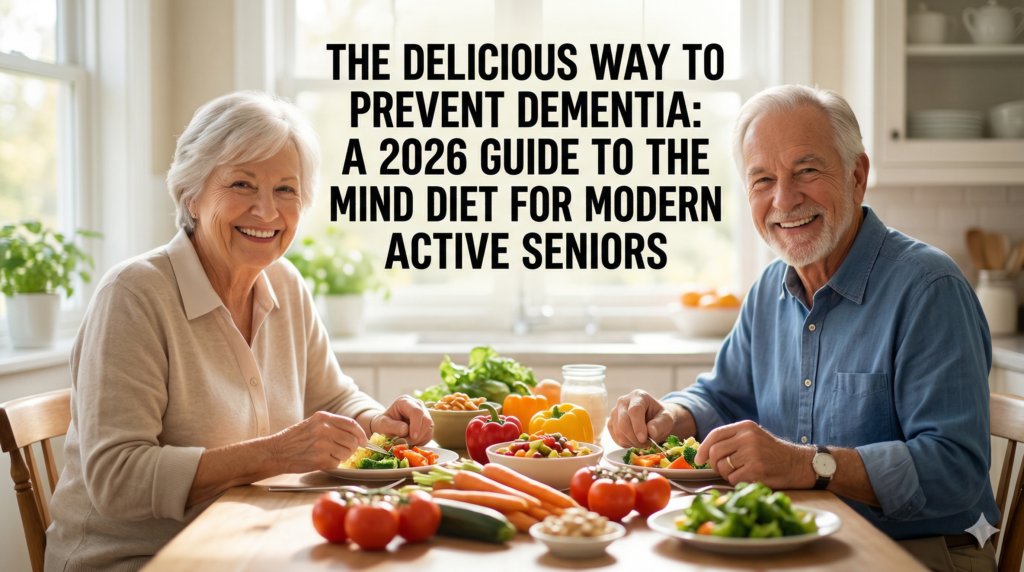
The MIND Diet stands for the Mediterranean-DASH Intervention for Neurodegenerative Delay. It was developed in 2015 by Dr. Martha Clare Morris and her team at Rush University Medical Center and the Harvard Chan School of Public Health, and it combines the best cognitive-protection elements of two already-celebrated eating plans: the Mediterranean diet and the DASH (Dietary Approaches to Stop Hypertension) diet.
The MIND diet targets the health of the aging brain, and dementia is the sixth leading cause of death in the United States — driving millions of Americans to search for ways to prevent cognitive decline. The Nutrition Source
What makes it different from its parent diets? Specificity. Rather than simply recommending “eat more vegetables,” the MIND diet identifies the specific foods and nutrients that research has linked most strongly to brain protection. It zeroes in on compounds like flavonoids, polyphenols, and omega-3 fatty acids that actively reduce inflammation and oxidative stress in the brain — two processes scientists now believe are central drivers of Alzheimer’s disease and other dementias.
The MIND diet blends Mediterranean and DASH diet elements with the specific aim of slowing cognitive decline and reducing dementia risk. PubMed
The Science Is Genuinely Compelling
You might be wondering: is this just another trendy nutrition claim, or is there real evidence? The good news is that the research base for the MIND diet is substantial — and it keeps growing.
A comprehensive systematic review found that 14 out of 19 studies examining MIND diet adherence and global cognitive function showed positive results, and 10 out of 11 studies investigating MIND diet adherence and dementia or Alzheimer’s risk showed positive associations. ScienceDirect
One of the most encouraging pieces of recent news comes from a 2025 multiethnic study presented at the American Society for Nutrition’s flagship annual meeting. Research unveiled at NUTRITION 2025 demonstrated that following the MIND diet may help reduce dementia and Alzheimer’s risk even when begun later in life — and those who identified as White, Latino, or African American benefited the most from these advantages. Alzra
Think about what that means: it is never too late to start. Whether you’re 55, 65, or 75, the food choices you make starting today can meaningfully protect your brain.
On the structural side, a 2026 study from the Framingham Heart Study tracked brain changes over a decade and found that higher adherence to the MIND diet was linked to favorable longitudinal brain structural changes — a direct window into how food shapes the physical architecture of our most vital organ.
Most studies indicate that the MIND diet preserves the cognitive function of older adults, with some showing associations with improved cognitive resilience and the prevention of early-onset dementia. PubMed Central
The 10 Brain-Healthy Foods at the Heart of the MIND Diet
Here is the core of the plan — ten categories of foods that the research consistently identifies as your brain’s best allies. These aren’t obscure superfoods from a specialty health store. You’ll find most of them at any grocery store or farmers market.
1. Green Leafy Vegetables — At least 6 servings per week. Spinach, kale, collard greens, arugula, romaine. These are packed with folate, vitamin K, and lutein, all of which are associated with slower cognitive decline.
2. Other Vegetables — At least 1 serving per day. Broccoli, carrots, bell peppers, beets, tomatoes. The more colorful the plate, the more varied the brain-protective antioxidants.
3. Berries — At least 2 servings per week. Blueberries and strawberries have particularly strong evidence. Their rich flavonoid content helps neutralize free radicals that damage brain cells.
4. Nuts — At least 5 servings per week. Walnuts, almonds, pistachios, and pecans provide healthy fats, vitamin E, and anti-inflammatory compounds.
5. Olive Oil — Use extra-virgin olive oil (EVOO) as your primary cooking fat. It’s loaded with oleocanthal, a natural anti-inflammatory compound that some researchers believe may help clear amyloid plaques — the hallmark proteins associated with Alzheimer’s disease.
6. Whole Grains — At least 3 servings per day. Oatmeal, brown rice, whole-wheat bread and pasta, quinoa. These stabilize blood sugar and support cardiovascular health, which in turn protects the brain.
7. Fish — At least 1 serving per week. Salmon, sardines, trout, mackerel, and herring are the gold-standard choices, rich in DHA omega-3 fatty acids that are structural building blocks of brain cell membranes.
8. Beans and Legumes — At least 4 meals per week. Lentils, black beans, chickpeas, and kidney beans deliver protein, fiber, and B vitamins — all important for sustained brain energy.
9. Poultry — At least 2 servings per week. Chicken and turkey provide lean protein without the saturated fat associated with red meat.
10. Wine (optional and moderate) — Up to 1 glass per day for those without contraindications. Red wine contains resveratrol, a polyphenol with potential anti-inflammatory brain benefits. Always check with your physician first, especially if you are on medications.
The 5 Foods to Limit (Your Brain Will Thank You)
Equally important is knowing what to pull back from. The MIND diet identifies five categories of foods that are associated with increased cognitive risk:
Red meat — limit to fewer than 4 servings per week. Butter and stick margarine — less than 1 tablespoon per day. Cheese — less than 1 serving per week. Pastries and sweets — fewer than 5 servings per week. Fried or fast food — less than 1 serving per week.
These foods are high in saturated fats and trans fats, which promote inflammation and cardiovascular disease — the same processes that damage the delicate blood vessels feeding the brain.
Your Step-by-Step MIND Diet Action Plan
Changing how you eat can feel overwhelming. That’s why we’ve broken this down into a practical, manageable action plan you can start this week — no overhaul required.
Step 1: Audit Your Plate for One Week
Before changing anything, simply observe. For seven days, keep a relaxed food journal — a notepad on the fridge, or a note on your phone. Note which of the 10 brain-healthy food categories you’re already eating (you may be closer than you think) and which of the 5 to-limit categories show up most often.
This isn’t about guilt. It’s about awareness. Most people discover they’re already doing 4 or 5 things right and only need to make 2 or 3 targeted shifts.
Quick win to try this week: Add a handful of blueberries (fresh or frozen) to your morning oatmeal. You’ve just hit two MIND diet food categories before 9 AM.
Step 2: Build Your Brain-Healthy Grocery List
Using your food audit from Step 1, build a simple weekly shopping list anchored in MIND diet principles. Here is a starter template:
Produce section: Spinach or kale (large bag), blueberries, strawberries (fresh or frozen are equally good), broccoli, carrots, tomatoes.
Proteins: Salmon fillets or a can of sardines, one rotisserie chicken, two cans of black beans or lentils.
Pantry: Extra-virgin olive oil, a bag of walnuts, whole-grain bread, brown rice or quinoa, rolled oats.
A brain-healthy grocery run does not need to be expensive. Frozen berries, canned beans, and canned fish are budget-friendly and just as nutritious as fresh options. Many seniors on fixed incomes find the MIND diet surprisingly affordable compared to their previous eating habits.
Step 3: Build Your Brain-Healthy Weekly Meal Template
Rather than following a rigid plan, create a flexible weekly template. Here’s a practical example:
Monday through Friday breakfasts: Oatmeal with walnuts and blueberries, or a spinach and egg scramble cooked in olive oil.
Lunch rotation: Large leafy green salad with chickpeas and olive oil dressing; whole-grain wrap with grilled chicken and roasted vegetables; lentil soup with a whole-grain roll.
Dinner rotation: Baked salmon with roasted broccoli and brown rice (at least once a week); chicken stir-fry over quinoa with bell peppers and kale; black bean tacos with avocado and tomato salsa.
Snacks: A small handful of mixed nuts, apple slices with almond butter, or a bowl of mixed berries.
Within two to three weeks, most people find this template feels natural — and they notice improvements in energy and mental clarity that motivate them to keep going.
Step 4: Make Social Eating Work for You
One of the most common concerns among seniors is: “What do I do at restaurants, family dinners, or social events?” The answer is: the MIND diet is flexible enough to navigate virtually any social setting.
At restaurants, default to grilled fish, salads with olive oil dressing, or a Mediterranean-style dish. At family dinners, load your plate with vegetable sides first, then add a modest portion of whatever protein is being served. Nobody needs to know you’re following a brain health protocol — you’re simply eating in a way that makes you feel your best.
How the MIND Diet Compares to Other Brain Health Strategies
The MIND diet doesn’t operate in isolation. Researchers are increasingly finding that dietary changes work synergistically with other lifestyle factors. Healthy dietary habits have shown promise for maintaining cognitive function over time and for slowing the progression of mild cognitive impairment and dementia in later life. Wiley
For maximum brain protection, consider pairing MIND diet principles with regular moderate exercise (even 30-minute daily walks have documented cognitive benefits), quality sleep (7 to 8 hours for most adults), staying socially connected, and managing cardiovascular risk factors like blood pressure and blood sugar.
The brain is a deeply interconnected organ, and it responds best to a lifestyle that supports it from multiple directions at once. Think of the MIND diet as the nutritional foundation of that lifestyle — the easiest, most enjoyable part of your brain health strategy.
A Note on the 2023 NEJM Clinical Trial (And Why It Doesn’t Undermine the Evidence)
Some readers may have heard about a 2023 randomized controlled trial published in the New England Journal of Medicine that found the MIND diet did not significantly outperform a healthy control diet in improving cognitive test scores over three years among participants who were already eating reasonably well.
This result deserves honest discussion. While observational studies strongly advocate for the MIND diet’s inclusion in clinical guidelines to prevent and manage Alzheimer’s disease and dementia, results from randomized controlled trials are mixed, suggesting further investigation is needed. PubMed
The most important context: the study enrolled adults who were already eating reasonably well — meaning the “gap” between the MIND diet group and the control group was narrow from the start. The population most likely to benefit is people currently eating a poor or average Western diet. Additionally, three years may not be a long enough window to see prevention effects, since dementia develops over decades.
The overall body of research — including long-term observational studies across tens of thousands of participants spanning up to 24 years — continues to support the MIND diet as one of the most evidence-based dietary strategies available for brain health. No reputable researcher is walking that back.
Practical Tips for Seniors With Specific Health Considerations
If you have diabetes or prediabetes: The MIND diet is generally excellent for blood sugar control because of its emphasis on fiber, whole grains, and healthy fats. However, portion sizes of whole grains matter. Discuss specifics with your doctor or a registered dietitian.
If you have kidney disease: Some MIND diet staples — like beans, leafy greens, and certain fish — are high in potassium or phosphorus. Work with your nephrologist before making major dietary changes.
If you take blood thinners (like warfarin): Leafy greens are rich in vitamin K, which can affect how blood thinners work. Don’t eliminate them entirely (they’re too valuable), but aim for consistency in your intake rather than wild swings. Inform your prescribing physician.
If you have difficulty chewing or swallowing: Soft-cooked fish, smoothies packed with spinach and berries, lentil soups, and nut butters all deliver MIND diet nutrition in easy-to-eat forms.
If you’re on a fixed budget: Canned salmon, frozen spinach, frozen blueberries, dried lentils, and rolled oats are among the most affordable items in any grocery store. A brain-healthy diet can cost no more — and often less — than a typical American diet heavy in processed foods.
A Sample Day on the MIND Diet
Here’s what a typical, delicious MIND diet day might look like in 2026:
Breakfast: Steel-cut oatmeal with a generous handful of frozen blueberries (microwaved into the oats), a tablespoon of chopped walnuts, and a drizzle of honey. Coffee or green tea on the side.
Mid-morning snack: A small handful of mixed nuts (almonds, walnuts, pecans).
Lunch: A large bowl of spinach salad topped with cherry tomatoes, sliced carrots, chickpeas, and a dressing of extra-virgin olive oil, lemon juice, and Dijon mustard. Whole-grain crackers on the side.
Afternoon snack: A bowl of fresh strawberries.
Dinner: Baked salmon fillet seasoned with herbs and a drizzle of EVOO, alongside roasted broccoli and a serving of brown rice or farro.
Evening (optional): A small glass of red wine, or herbal tea with a square of dark chocolate (70% or higher cacao).
That’s a genuinely satisfying, flavorful day. No deprivation. No unusual ingredients. Just food that loves your brain back.
Your Brain at Every Decade: Why Starting Now Matters
One of the most empowering messages from the 2025 research landscape is that the MIND diet offers benefits regardless of when you begin. Prior research has indicated that adhering to the MIND diet may lower an individual’s risk for dementia and mortality, and a recent multiethnic study demonstrated these benefits may apply even for people who begin following the diet later in life. Alzra
Your brain has remarkable neuroplasticity — the ability to form new connections and adapt — at every age. The hippocampus, the brain region most responsible for forming new memories, responds positively to anti-inflammatory dietary patterns. You are not locked into any cognitive trajectory. The choices you make at the breakfast table this week are writing chapters of your cognitive story that haven’t been finished yet.
Closing Thoughts: Feed Your Brain, Cherish Your Future
The MIND diet isn’t a cure. It isn’t a guarantee. And it isn’t meant to replace conversations with your doctor or a registered dietitian who knows your full health picture. What it is, at its core, is one of the most practical and pleasurable investments you can make in your own future — in the version of yourself that, ten or twenty years from now, still remembers your grandchildren’s names, still drives yourself to book club, still follows the plot of a good novel.
Every bowl of blueberries, every piece of baked salmon, every salad dressed with that golden olive oil is a small act of self-care that compounds over time — just like a retirement account, the earlier and more consistently you contribute, the richer the returns.
You deserve to age with your mind intact and your spirit bright. The MIND diet is one delicious way to help make that happen.
💡 Frequently Asked Questions (FAQ)
Q: What is the MIND diet and how is it different from the Mediterranean diet?
A: The MIND diet (Mediterranean-DASH Intervention for Neurodegenerative Delay) is a hybrid of the Mediterranean and DASH diets, specifically engineered to target brain health and reduce dementia risk. While the Mediterranean diet is broadly heart-healthy, the MIND diet zeroes in on 10 specific brain-protective food groups — like leafy greens, berries, fish, and walnuts — and 5 food groups to limit. It was developed by researchers at Rush University Medical Center in 2015 and has been validated by numerous large-scale studies.
Q: Can the MIND diet actually prevent Alzheimer’s disease?
A: No diet can guarantee prevention of Alzheimer’s disease, but the scientific evidence supporting the MIND diet’s ability to reduce risk and slow cognitive decline is substantial. Multiple large observational studies involving tens of thousands of participants have found associations between higher MIND diet adherence and lower rates of Alzheimer’s disease and cognitive decline. A 2025 study presented at the American Society for Nutrition’s annual meeting found these benefits may apply even to people who begin following the diet later in life. Researchers recommend thinking of it as one important layer of a multi-pronged brain health strategy, alongside exercise, quality sleep, social engagement, and cardiovascular health management.
Q: Is the MIND diet safe for seniors with diabetes, kidney disease, or who take blood thinners?
A: The MIND diet is generally very compatible with conditions like diabetes and prediabetes due to its emphasis on fiber and whole grains. However, seniors with kidney disease should exercise caution because some MIND diet staples (beans, leafy greens, certain fish) are high in potassium or phosphorus — always consult your nephrologist before major dietary changes. Seniors on blood thinners like warfarin should maintain consistent — not dramatically increased — intake of vitamin-K-rich leafy greens, and inform their prescribing physician. As with any significant dietary change, a conversation with your doctor or a registered dietitian is always the recommended first step.
🌿 Weekly wellness, health & beauty insights — straight to your inbox
Free subscription · Cancel anytime