5 Nervous System Regulation Techniques for Seniors (No Equipment Needed)
I still remember the evening it hit me. I’d been sitting in my kitchen, jaw clenched, shoulders up near my ears, replaying a phone call I’d had earlier that day. My hands were actually shaking a little when I reached for my tea cup. I was sixty-eight years old, and I realized I had absolutely no idea how to calm myself down anymore. Somewhere along the way, between raising a family, working for decades, and now navigating retirement, I had lost the instinct my body used to have for settling itself.
That night sent me down a path of learning everything I could about the nervous system — not the textbook version, but the practical, “what do I actually do right now” version. What I found changed the way I move through my days, and I want to walk you through it exactly the way I learned it myself.
Why Your Nervous System Needs Extra Care After 60
Here’s something nobody told me until I started digging: as we age, our nervous system’s “brake pedal” — the parasympathetic system that pulls us back into calm after stress — tends to respond more slowly. Add in things like retirement transitions, health changes, or the loss of loved ones, and it’s no wonder so many of us find ourselves living in a low hum of tension without a clear reason why.
The encouraging part is this: the nervous system responds to simple, repeatable signals. You don’t need special equipment, a gym membership, or a complicated app. You need about five minutes and a willingness to try something new. Below are the five techniques that made the biggest difference for me, in the order I’d suggest trying them.
A quick note before we start: This article is for general educational purposes and reflects personal experience, not medical advice. If you have a heart condition, high blood pressure, anxiety disorder, or any chronic health condition, please check with your doctor before starting new relaxation practices.
Technique 1: Diaphragmatic Breathing
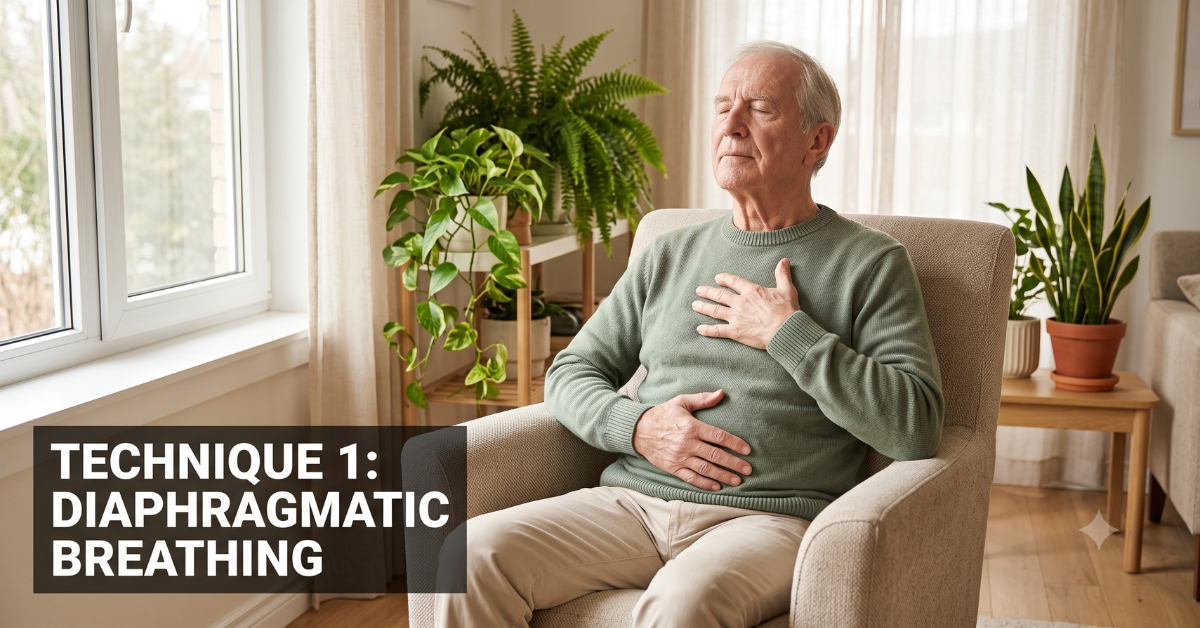
This was the very first thing I tried, mostly because it required nothing but a chair. I sat down, placed one hand on my chest and one on my belly, and breathed slowly through my nose, letting my belly hand rise more than my chest hand. It felt strange at first — most of us have spent decades breathing shallow, high in the chest, especially if we’ve dealt with stress for years.
How I do it
Sit comfortably with your feet flat on the floor. Inhale slowly through your nose for a count of four, feeling your belly expand. Hold gently for a count of two. Exhale slowly through your mouth for a count of six. I repeat this for about five rounds, usually first thing in the morning and again before bed.
Why it works
Slow, deep breathing signals the vagus nerve — the main highway between your brain and your body’s calming system — that it’s safe to relax. A longer exhale than inhale is particularly effective at nudging the body out of “alert mode” and into rest.
Technique 2: Humming for Vagus Nerve Activation

This one felt almost silly to me at first — sitting alone in my living room, humming to myself like I was fifty years younger. But it quickly became my favorite technique, especially in the late afternoon when my energy would dip and my patience would run thin.
The vagus nerve runs right past your vocal cords, and the vibration from humming physically stimulates it. I simply hum a low, steady note — no particular tune — for about thirty seconds at a time, three or four rounds, pausing to breathe normally in between. Some days I do it while doing dishes. Nobody has to know.
A Supplement I Started Pairing With This Routine
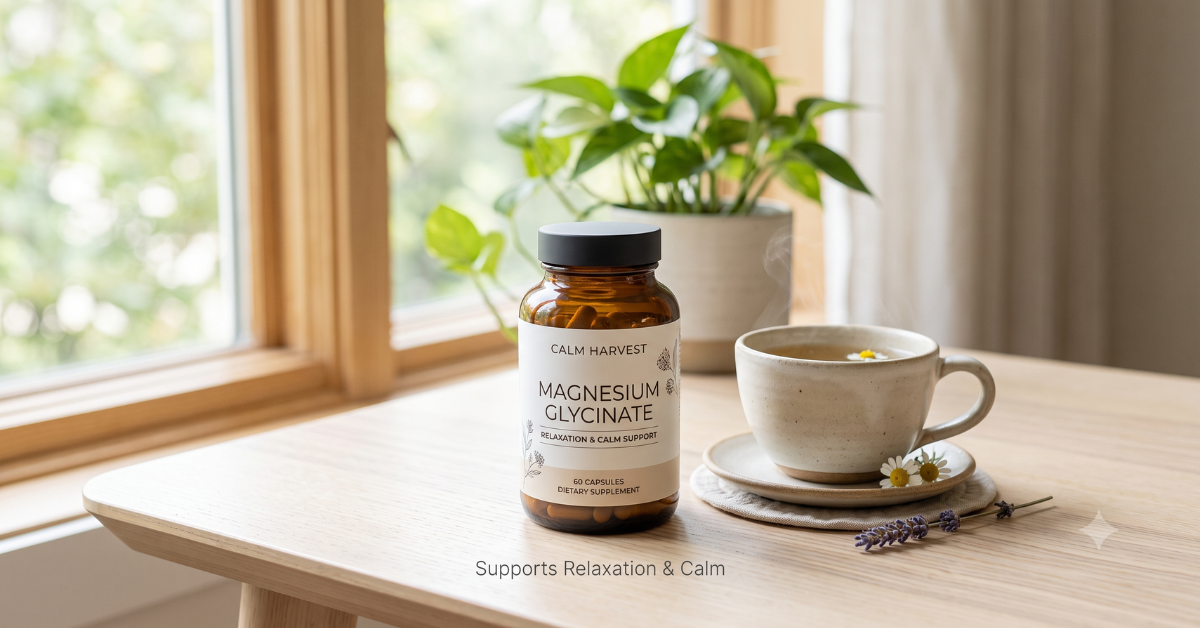
A few months into practicing these techniques, I started reading about magnesium’s role in nerve and muscle relaxation, and I decided to try NOW Foods Magnesium Glycinate (100 mg per Tablet, 180 Tablets). I take mine in the evening with dinner. It’s a gentle, well-absorbed form of magnesium that many people use specifically to support calm and muscle relaxation, which paired naturally with my humming and breathing routine. It hasn’t replaced any of these techniques — I still think the practices themselves do the heavy lifting — but it’s become a small, supportive part of my evening wind-down.
As always, talk to your doctor before adding any new supplement, especially if you take other medications.
👉 View Magnesium Glycinate on iHerb
Technique 3: The Cold Water Reset
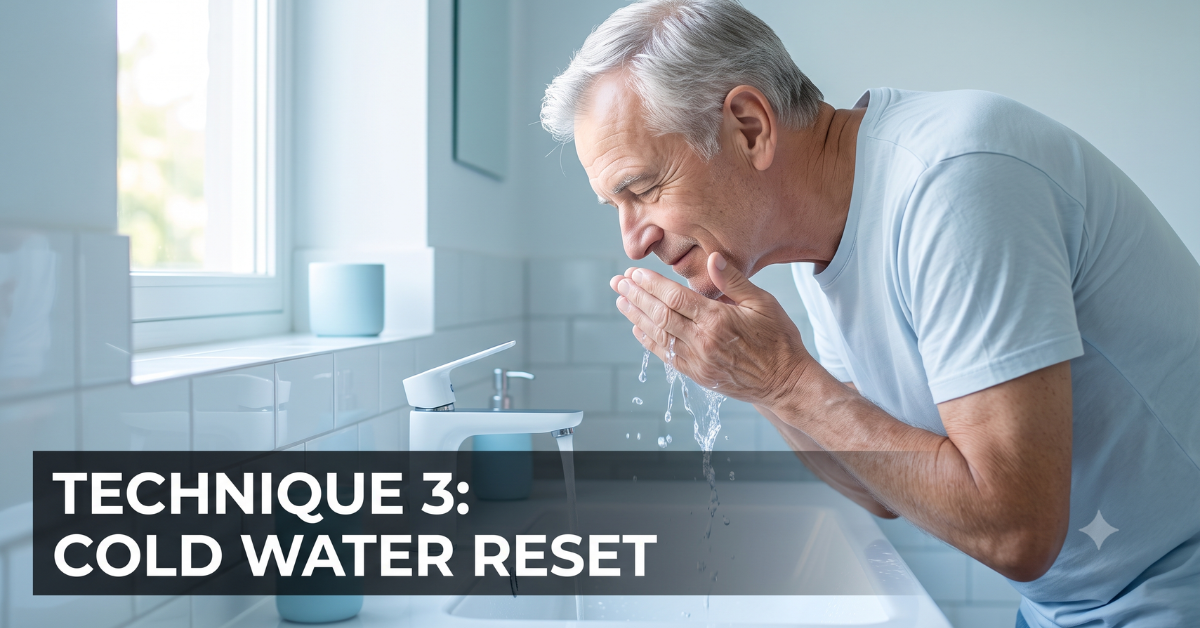
On mornings when I woke up already anxious about the day ahead — a doctor’s appointment, a difficult conversation waiting for me — I found that splashing cool water on my face and wrists worked almost instantly to interrupt the spiral. It sounds too simple to be real, but there’s real physiology behind it.
Cool water on the face triggers what’s sometimes called the “dive reflex,” which naturally slows the heart rate. I simply run cool (not ice-cold) water over my wrists for about twenty seconds, then gently splash a little on my cheeks and forehead. I keep it gentle — this isn’t about shocking the system, just giving it a clear, calming signal.
Technique 4: The 5-4-3-2-1 Grounding Method
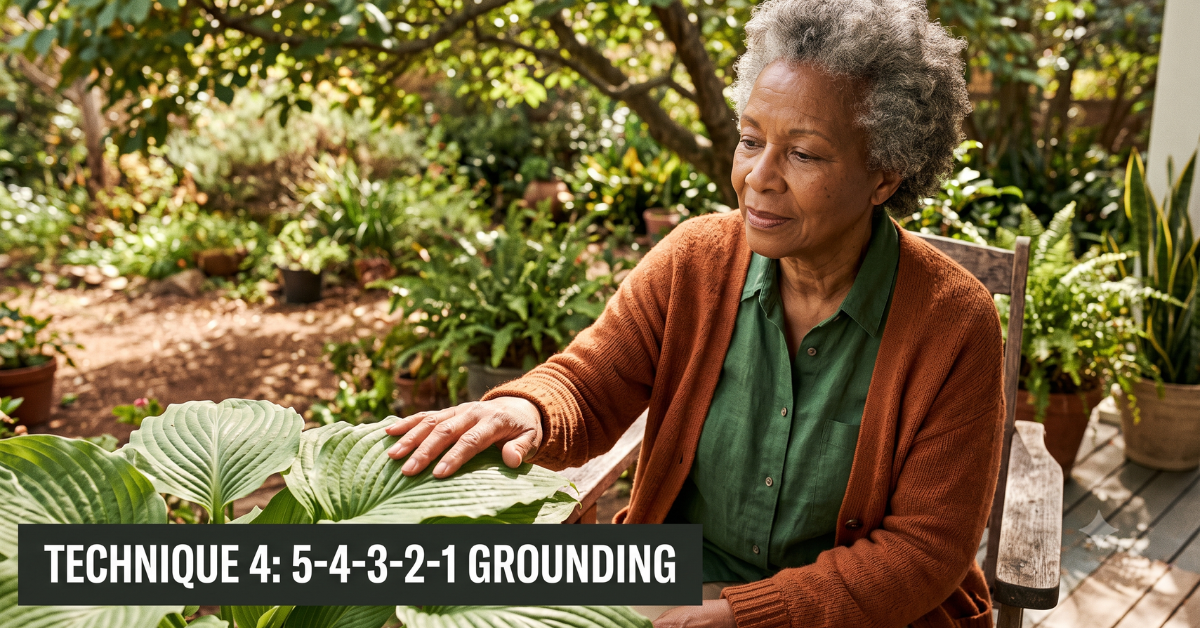
This became my go-to on the days when my mind was racing about things I couldn’t control — old regrets, future worries, health concerns. A dear friend who used to be a hospice volunteer taught me this one, and I lean on it more than any other technique on this list.
How it works
Wherever you are, pause and notice: five things you can see, four things you can physically feel (the texture of your chair, the temperature of the air), three things you can hear, two things you can smell, and one thing you can taste. It takes less than two minutes, and it gently pulls your attention out of anxious thoughts and back into the present moment, where your body actually is.
Technique 5: Progressive Muscle Relaxation
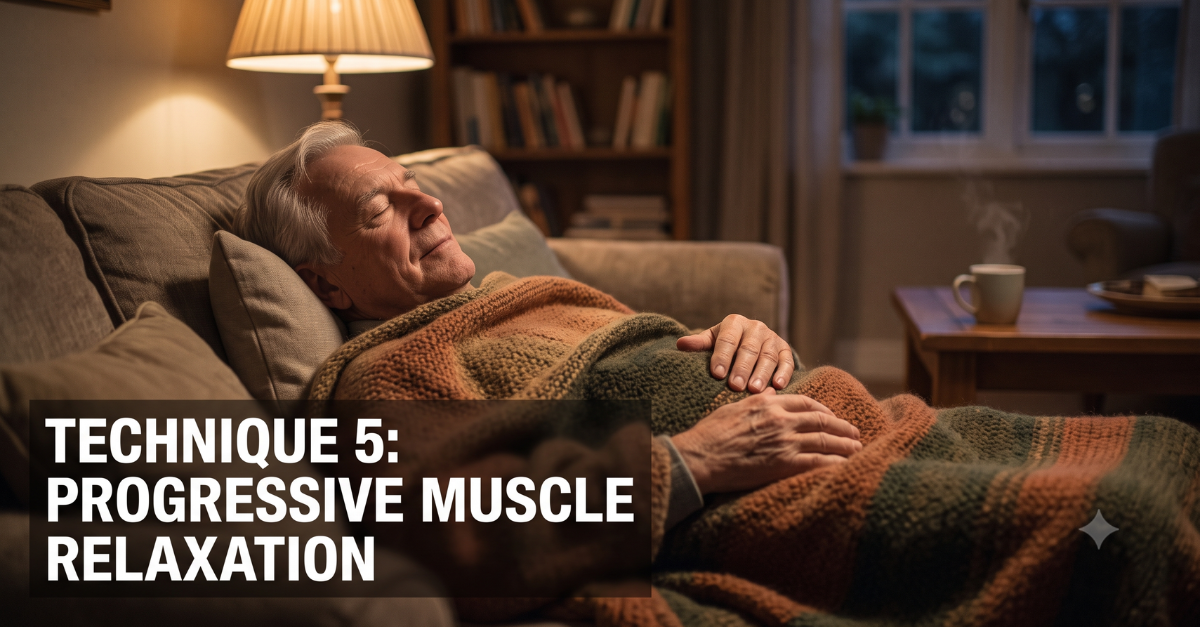
This is the one I save for evenings, usually lying on the couch or in bed. Progressive muscle relaxation involves gently tensing and then releasing each muscle group, working through the body. I start at my feet — curling my toes tightly for five seconds, then releasing completely — and move slowly upward through my calves, thighs, stomach, hands, shoulders, and finally my face.
By the time I reach the top of my head, I genuinely feel different — heavier, looser, calmer. It’s become part of my nightly routine, and I’ve noticed I fall asleep faster on the nights I do it.
A Small Addition That Helped My Evenings
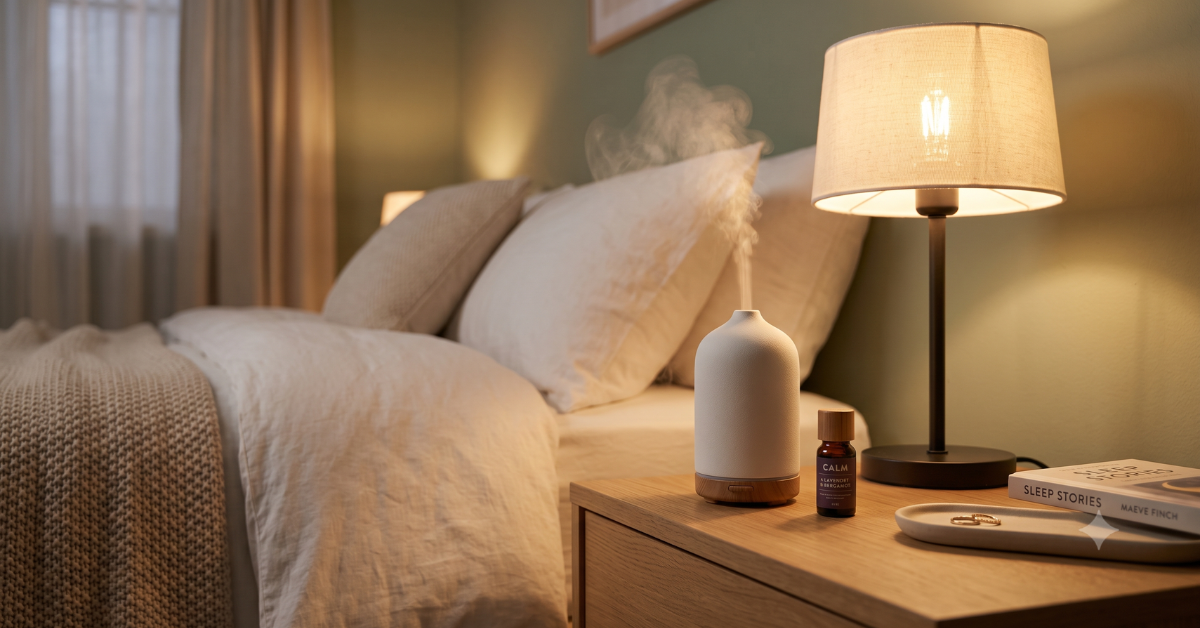
I picked up an ultrasonic essential oil diffuser for my bedside table, and I run it with a bit of lavender oil while I do my muscle relaxation practice. It’s a simple, quiet device with a soft light and an auto shut-off feature, so I don’t have to think about it once it’s running. It’s not a requirement for any of these techniques — you truly need no equipment for this list — but for me, the gentle scent and soft glow became a helpful cue that told my body, “it’s time to wind down now.”
Your 7-Day Action Plan to a Calmer Nervous System
If five new techniques feel like a lot at once, here’s exactly how I’d suggest easing in — the same way I approached it myself.
Step 1: Pick One Technique and Practice It Daily for 3 Days
Don’t try to do all five at once. Choose whichever one felt the most approachable as you read — for most people, it’s diaphragmatic breathing or the 5-4-3-2-1 method. Practice it once a day for three days so it starts to feel familiar rather than forced.
Step 2: Add a Second Technique for Days 4–6
Once the first one feels natural, layer in a second technique — perhaps pairing morning breathing with an evening progressive muscle relaxation. This is when most people I’ve talked to start noticing a real shift in their baseline stress level.
Step 3: Build Your Personal “Calm Toolkit” by Day 7
By the end of the week, you’ll likely know which techniques work best for you in which situations — cold water for sudden anxiety, humming for afternoon slumps, grounding for racing thoughts. Keep a small note on your fridge or nightstand listing your go-to two or three, so they’re there the moment you need them.
Learning to calm my own nervous system in my late sixties has honestly felt like getting reacquainted with an old friend — the calmer version of myself I hadn’t seen in years. I hope one of these five techniques becomes as useful to you as it has been to me.
💡 Frequently Asked Questions (FAQ)
Q1: Are these techniques safe for seniors with heart conditions?
Most of these techniques, especially slow breathing and grounding, are generally considered gentle and low-risk. However, cold water exposure can affect heart rate, so anyone with a heart condition or blood pressure concerns should check with their doctor before trying the cold water reset specifically.
Q2: How long does it take to notice a difference?
Many people notice some calming effect the very first time they try a technique like breathing or humming. A more lasting shift in your overall baseline stress level tends to build over one to two weeks of consistent daily practice.
Q3: Can I do these techniques while sitting in a wheelchair or with limited mobility?
Yes. All five techniques — breathing, humming, cold water, grounding, and progressive muscle relaxation — can be adapted to a seated position and require no standing, walking, or special equipment.
If you’d like to see these techniques demonstrated step by step, come join us over on our SeoulcastUSA YouTube channel, where we walk through routines like this one together, every week. 🌿
🌿 Weekly wellness, health & beauty insights — straight to your inbox
Free subscription · Cancel anytime