Seasonal Affective Disorder in Seniors: A Complete Guide to Beating the Winter Blues After 60
By the SeniorJourney Editorial Team · Health & Wellness · About a 35-minute read
There is a particular kind of quiet that settles over a home in late autumn. The sun slips behind the rooftops before supper. The morning paper is read under a lamp instead of by the window. The garden goes still, the phone rings a little less, and somewhere along the way, the things that used to bring you joy start to feel like chores.
If that sounds familiar, you are far from alone. Every year, as the days grow shorter, millions of Americans notice a shift in their energy, their sleep, and their mood. For some, it is a mild case of the “winter blues” that passes with a few good habits. For others, it is something more persistent and more serious: seasonal affective disorder, often called SAD.
Here is what many people do not realize. Seasonal affective disorder in seniors is often overlooked, misread, or quietly accepted as “just part of getting older.” Family members may assume Grandpa is simply tired. Doctors may focus on blood pressure and cholesterol during a short visit. And many older adults, raised in a generation that did not talk openly about feelings, simply keep going and say nothing.
That silence comes at a cost. Low mood in winter can lead to less movement, poorer eating, disrupted sleep, more isolation, and a higher risk of falls and illness. The good news is just as important: SAD is one of the most treatable mood conditions there is. With the right knowledge and a clear plan, you can walk into this winter feeling prepared instead of dreading it.
In this guide to seasonal affective disorder in seniors, we will walk through everything you need to know, in plain language. You will learn what SAD actually is, why our bodies become more sensitive to darkness as we age, how to tell the difference between the winter blues and something that deserves a doctor’s attention, and exactly what you can do about it. We will cover light therapy, daylight habits, food, sleep, friendship, professional treatment, and a step-by-step action plan you can start this week.
Pour yourself a warm drink, settle into a comfortable chair, and let’s get you ready for a brighter winter.
At a Glance: What You Will Learn
- Why aging eyes, less time outdoors, and retirement routines raise the risk of seasonal depression
- The warning signs, and how SAD differs from ordinary winter tiredness
- How to use a light therapy box safely, including important precautions for older eyes
- Food, vitamin D, movement, and sleep habits that support a steadier mood
- How to prepare for the end of Daylight Saving Time on Sunday, November 1, 2026
- What Medicare covers, when to call your doctor, and how family caregivers can help
- A practical 7-step Winter Wellness Action Plan
What Is Seasonal Affective Disorder?
Seasonal affective disorder is a type of depression that follows the calendar. It tends to arrive in late fall or early winter, linger through the darkest months, and lift as spring returns. Doctors today describe it as major depression with a seasonal pattern. In other words, it is not a separate, lesser condition. It is real depression that happens to keep a schedule.
According to the National Institute of Mental Health, the key feature is the pattern. Symptoms come back at about the same time each year and fade at about the same time each year. A single rough winter after a hard loss is not necessarily SAD. A low mood that shows up every November and leaves every April is a clue worth paying attention to.
Most people with SAD experience the winter form. A smaller number have a summer pattern, which tends to bring restlessness, poor appetite, and trouble sleeping instead. In this guide, we focus on the winter pattern, since that is what most older Americans face as the clocks fall back.
Your Body Runs on Light
To understand SAD, it helps to think of your body as having an internal clock. Scientists call it the circadian rhythm. This clock tells you when to feel alert, when to feel hungry, and when to feel sleepy. And the single most powerful signal that sets this clock each day is light, especially bright morning light entering your eyes.
When the days shorten, your clock gets a weaker, later signal. It can drift out of step with your actual daily schedule. You might feel groggy at 9 a.m. and wide awake at midnight. Your body may feel like it is living in a different time zone from the one on your kitchen clock. Over weeks, that mismatch wears on your mood, your appetite, and your energy.
The Chemistry of Darker Days
Two natural brain chemicals play a big role in this story. The first is serotonin, a messenger that helps regulate mood. Research suggests that people with SAD may have more trouble keeping serotonin activity balanced during the darker months.
The second is melatonin, the hormone that tells your body it is time to sleep. Darkness triggers melatonin. When darkness comes earlier and lasts longer, some people produce more melatonin or produce it at the wrong time, which can leave them feeling sluggish and sleepy during the day.
Vitamin D may also be part of the picture. Your skin makes vitamin D when sunlight touches it, and vitamin D is involved in many processes in the body, including some linked to mood. In winter, especially in northern states, there is often not enough sunlight strength to make much vitamin D at all. We will talk more about this in the nutrition section.
How Common Is It?
Estimates vary, but health organizations commonly report that around 5 percent of adults in the United States experience SAD in a given year, and many more experience a milder version often called “subsyndromal SAD” or simply the winter blues. Rates tend to be higher the farther north you live. A retiree in Minnesota, Maine, or Washington State faces many more dark afternoons than one in Florida or Arizona.
Historically, SAD was thought to begin mostly in young adulthood. But seasonal affective disorder in seniors is far from rare. In fact, as we are about to see, aging brings several changes that can make the darker months harder to handle, and that can make depression easier to miss.
Why Seniors Face a Higher Risk in Winter
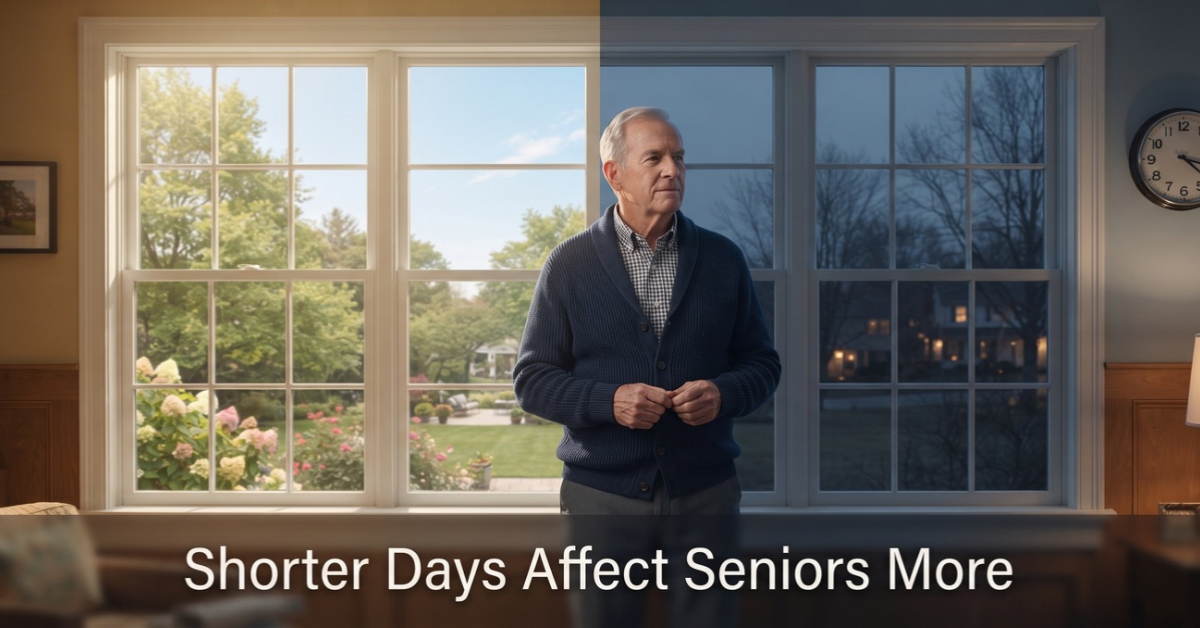
Getting older brings wisdom, perspective, and often a more relaxed pace of life. It also brings some quiet physical and social changes that can leave us more vulnerable when the light fades. Understanding these factors is not about worrying. It is about knowing where to put your energy.
1. Aging Eyes Let In Less Light
This is one of the most important and least discussed factors. As we age, the lens inside the eye naturally thickens and turns slightly yellow. The pupil also tends to become smaller. Together, these changes mean that far less light reaches the back of the eye in an older adult than in a young person standing in the very same room.
Why does that matter? Because the light-sensing cells that set your body clock live at the back of the eye, and they are especially sensitive to the blue part of daylight, which is exactly the part that a yellowing lens filters out. So a 72-year-old sitting by a window may receive a much weaker “good morning” signal than a 30-year-old in the same seat. Cataracts can reduce that signal even further.
The practical lesson is simple: older adults often need more light exposure, not less, to get the same benefit. Keep up with your eye exams, and if you have been putting off cataract surgery, ask your eye doctor whether it might help not only your vision but your overall well-being.
2. Less Time Outdoors
When the sidewalks are icy and the wind is sharp, staying inside feels like the sensible choice. For seniors, it often is the safe choice on the worst days. But over an entire season, all those indoor days add up. Typical indoor lighting is many times dimmer than outdoor daylight, even on a cloudy afternoon. Your living room lamp simply cannot send your brain the same message as the open sky.
Limited mobility, arthritis, balance concerns, and no longer driving after dark can all shrink the circle of daily life even more. Fewer errands, fewer walks, and fewer reasons to step outside all mean fewer chances to catch the daylight your body needs.
3. Retirement Removes the Daily Anchor
For decades, a work schedule quietly kept your body clock in line. You woke at the same hour, stepped outside for the commute, and followed a predictable rhythm. Retirement is a wonderful reward, but it can also remove that structure. Without an alarm clock and a reason to be out the door, it becomes easy to sleep later, stay in longer, and let days blur together, which is precisely the pattern that worsens winter mood.
4. Loneliness Deepens in the Dark Months
Many older adults live alone, especially after losing a spouse. Friends may move closer to grandchildren or to warmer states. Winter weather cancels the coffee meetups and church suppers that fill the calendar in warmer months. The holidays, meant to be joyful, can sharpen the ache of absent loved ones. Loneliness and depression feed each other, and winter gives both of them more room to grow.
5. Health Conditions and Medications
Chronic conditions such as heart disease, diabetes, chronic pain, and Parkinson’s disease are linked with higher rates of depression. Some common medications can affect mood, energy, or sleep as side effects. And conditions like an underactive thyroid or low vitamin B12 can produce fatigue and low mood that look a lot like depression. This is one reason a doctor’s visit is so valuable: the right blood tests can rule out causes that are easy to fix.
6. Your Skin Makes Less Vitamin D
Older skin is less efficient at producing vitamin D from sunlight than younger skin. Combine that with more time indoors and weaker winter sun, and many seniors end the winter with low vitamin D levels. Low vitamin D is also connected to bone weakness and muscle weakness, which can raise fall risk, so it is worth checking for more than one reason.
The encouraging truth: Nearly every one of these risk factors has a practical answer. More light, more structure, more connection, and a good conversation with your doctor can change how this winter feels. You do not need to fix everything at once. You only need to start.
Signs and Symptoms: Is It the Winter Blues or Something More?
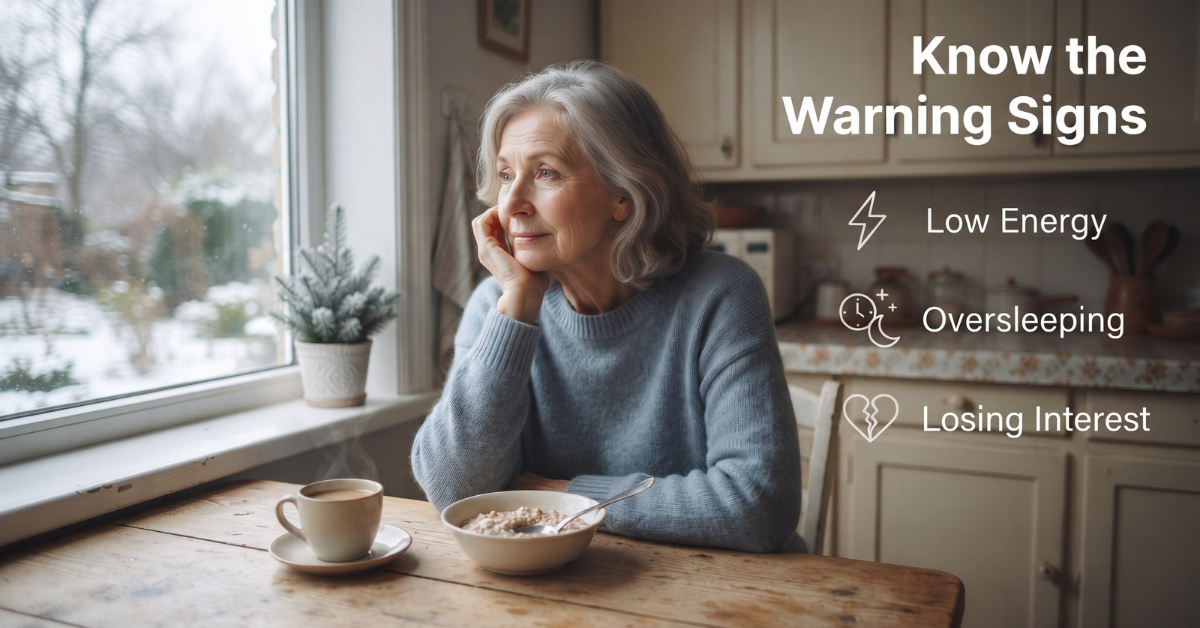
Almost everyone feels a little slower when it is dark at 5 p.m. That is normal. The question is how much it affects your life, and how long it lasts. Seasonal affective disorder in seniors is not simply preferring the couch to a cold walk. It is a persistent change that makes ordinary days feel heavy.
Common Signs of Winter-Pattern SAD
Watch for symptoms that show up most days, for at least two weeks, during the darker months:
- Low energy and heaviness: a feeling that your arms and legs are weighted down, even after rest.
- Oversleeping: sleeping much longer than usual, yet still waking up tired.
- Carbohydrate cravings: a strong pull toward bread, pasta, sweets, and comfort foods, sometimes with weight gain.
- Loss of interest: hobbies, visits, phone calls, or church activities that once felt good now feel like effort.
- Withdrawal: a strong urge to “hibernate,” skip gatherings, and let calls go to voicemail.
- Trouble concentrating: losing track of a book, a TV program, or a conversation more often than usual.
- Persistent sadness or irritability: feeling flat, hopeless, short-tempered, or tearful.
- Feelings of worthlessness or guilt that seem out of proportion.
Winter Blues vs. SAD vs. Year-Round Depression
This simple comparison can help you sort out what you are noticing. It is a guide for conversation, not a diagnosis.
| Feature | Winter Blues | Seasonal Affective Disorder | Year-Round Depression |
|---|---|---|---|
| Timing | Comes and goes during winter | Returns about the same time each year, lifts in spring | No clear seasonal pattern |
| Daily life | Mostly unaffected | Noticeably harder; plans and chores slip | Noticeably harder in any season |
| Duration | A few days at a time | Most days for weeks or months | Most days for two weeks or more |
| Best first step | Daylight, movement, connection | Talk to your doctor; ask about light therapy | Talk to your doctor promptly |
How Depression Hides in Older Adults
Depression in later life often wears a disguise. Instead of saying “I feel sad,” an older adult might say “I’m just tired,” “My back is acting up,” or “I don’t have much of an appetite these days.” Physical complaints such as aches, stomach trouble, and poor sleep are sometimes the main way low mood shows itself.
Depression can also look like memory trouble. Poor concentration, slowed thinking, and forgetfulness are common in depression, and they can be mistaken for the early stages of dementia. The reverse is also true: memory changes can come with low mood. That overlap is precisely why it is so important not to guess. A doctor can help sort out what is happening, and if depression is part of the picture, treating it often brings clearer thinking back.
Other conditions that can mimic winter depression include an underactive thyroid, anemia, low vitamin B12, low vitamin D, sleep apnea, and medication side effects. Bring a list of everything you take, including over-the-counter pills and supplements, to your appointment.
If You Are Struggling Right Now
If you or someone you love is having thoughts of self-harm or feels unable to go on, please reach out immediately. In the United States, you can call or text 988 to reach the 988 Suicide & Crisis Lifeline, any time of day or night. If there is immediate danger, call 911. Reaching out is a sign of strength, not weakness.
A Gentle Self-Check You Can Do at Home
Take a quiet moment and answer these questions honestly. Write the answers in a notebook so you can bring them to your doctor.
- Over the last two weeks, have I felt down, flat, or hopeless on most days?
- Have I lost interest or pleasure in things I usually enjoy?
- Am I sleeping much more, or much less, than usual?
- Have my eating habits or weight changed noticeably?
- Did I feel this way around the same time last year, or the year before?
- Is this making it harder to take care of my home, my health, or my relationships?
If you answered “yes” to the first two questions, or to several of the others, it is time to schedule a visit. That is not a failure. It is wise, practical self-care, the same as getting a flu shot before winter.
Many seniors also notice that “foggy” feeling during long gray stretches, when focus slips and the mind feels slow. Keeping the brain gently engaged with puzzles, reading aloud, music, and conversation is a healthy habit all year round, and some people like to add calming audio programs to their daily routine.
SPONSORED · AFFILIATE LINK
A Brain-Focused Audio Program With Nothing to Swallow
Because The Brain Song is an audio program rather than a pill, there is nothing extra to swallow, which some seniors who already manage several daily medications find appealing. Some listeners find that a short daily listening routine may support a calmer, more focused frame of mind during gray winter days. It is not a treatment for depression, so please keep your doctor in the loop.
Learn More About The Brain Song →Light Therapy for Seniors: Bringing the Sunrise Indoors
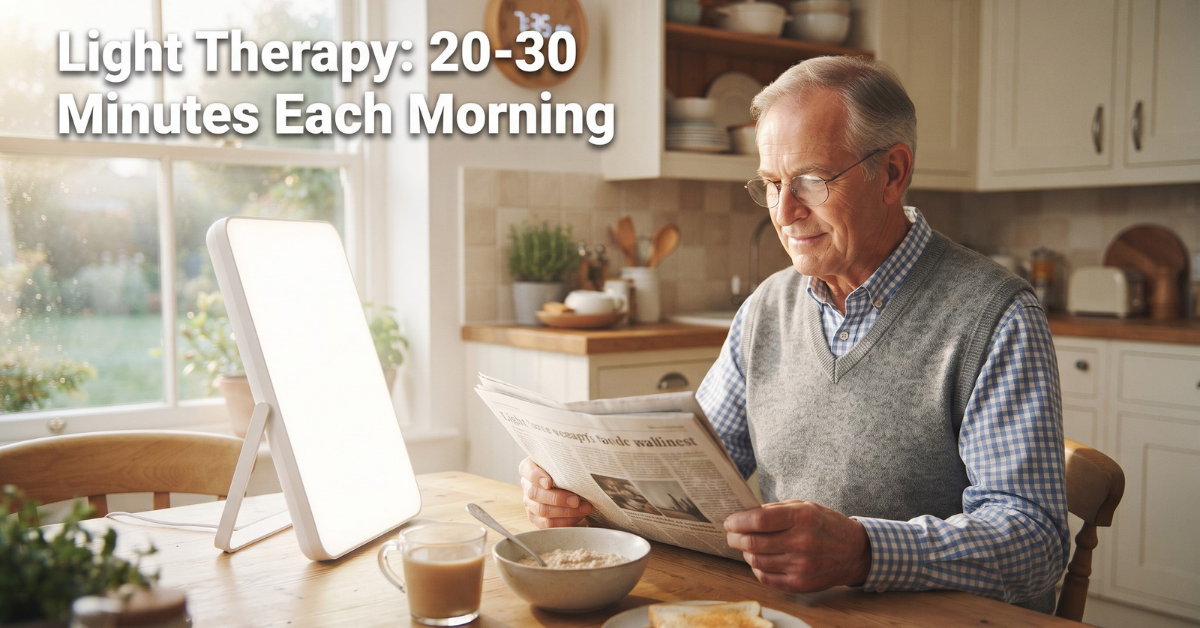
If there is one tool that has earned its place in the fight against winter depression, it is bright light therapy. The idea is wonderfully simple. If shorter days are sending your body clock a weak signal, you give it a strong one, every morning, from a special lamp designed for the purpose.
Light therapy has been studied for decades and is widely considered a first-line treatment for winter-pattern SAD, including seasonal affective disorder in seniors. Many people notice improvement within one to two weeks of consistent use. It does not involve medication, it fits into a breakfast routine, and it can be combined with other approaches.
How Light Therapy Works
A light therapy box gives off very bright, diffused white light, typically rated at 10,000 lux at a recommended distance. For comparison, ordinary living room lighting is often only a few hundred lux. You do not stare into the light. You simply sit near it with your eyes open while you read, eat, or sip your coffee, and the light enters your eyes from the side and above.
That morning burst of bright light helps reset your internal clock, signals your brain that the day has truly begun, and is believed to help balance the brain chemistry involved in mood and sleep. Think of it as a sunrise you can switch on, even when the real one is hiding behind clouds.
Choosing a Light Box: What to Look For
- 10,000 lux brightness at a clearly stated distance, usually around 16 to 24 inches.
- UV-filtered light. The box should block ultraviolet rays, which you do not need and which can harm skin and eyes.
- A generous screen size. Larger panels give you more freedom to move your head while reading without losing the benefit.
- Glare control and an adjustable angle, so the light shines down toward your eyes the way the sun does, rather than straight into them.
- Easy controls. Large buttons and a simple on/off switch matter, especially for hands affected by arthritis.
- A product designed for SAD, not a decorative lamp or a “full spectrum” bulb with no lux rating.
If you would like to browse senior-friendly wellness essentials for the winter months, you can explore the selections at WellbeingPrime.com and GmartUS.com. Whatever you choose, check the specifications above before you buy.
How to Use It: A Simple Morning Routine
- Use it early. Most guidance recommends using the light within the first hour after you wake up. Morning use works best for the winter pattern.
- Start with 20 to 30 minutes at 10,000 lux, unless your doctor suggests otherwise. Lower-intensity lights require longer sessions.
- Position it correctly. Place it at the distance the manufacturer specifies, slightly above eye level and off to the side, angled down.
- Keep your eyes open, but do not stare. Read the paper, do a crossword, enjoy breakfast, or chat on the phone.
- Be consistent. Use it every day, including weekends, from fall until spring. Benefits often fade within days if you stop.
- Avoid evening use unless your doctor recommends it, since late-day bright light can make it harder to fall asleep.
Important Safety Notes for Older Adults
Light therapy is generally considered safe, but older adults should check with a doctor first, especially in these situations:
- Eye conditions such as macular degeneration, glaucoma, cataracts, or diabetic retinopathy. Ask your eye doctor before starting.
- Light-sensitizing medications, which can include certain antibiotics, anti-inflammatory drugs, some heart and psychiatric medications, and supplements such as St. John’s wort. Your pharmacist can review your list.
- A history of bipolar disorder or past episodes of very high, racing mood. Bright light can trigger these episodes and should only be used under medical supervision.
- Skin conditions that react to light.
Mild side effects can include eye strain, headache, or feeling a little “wired.” These usually ease by sitting a bit farther away or shortening the session. If they persist, stop and talk to your doctor.
Dawn Simulators: A Gentler Wake-Up
A dawn simulator is a bedside lamp or alarm clock that gradually brightens your bedroom over 30 minutes or so before you wake, mimicking a natural sunrise. Some people find this makes winter mornings much easier, especially if they struggle to get out of bed in the dark. It is not as strong as a light box, but many seniors enjoy using both: the dawn simulator to wake up gently, and the light box at breakfast. As a bonus, a softly lit bedroom can make that first trip to the bathroom safer.
Daily Daylight and Gentle Movement
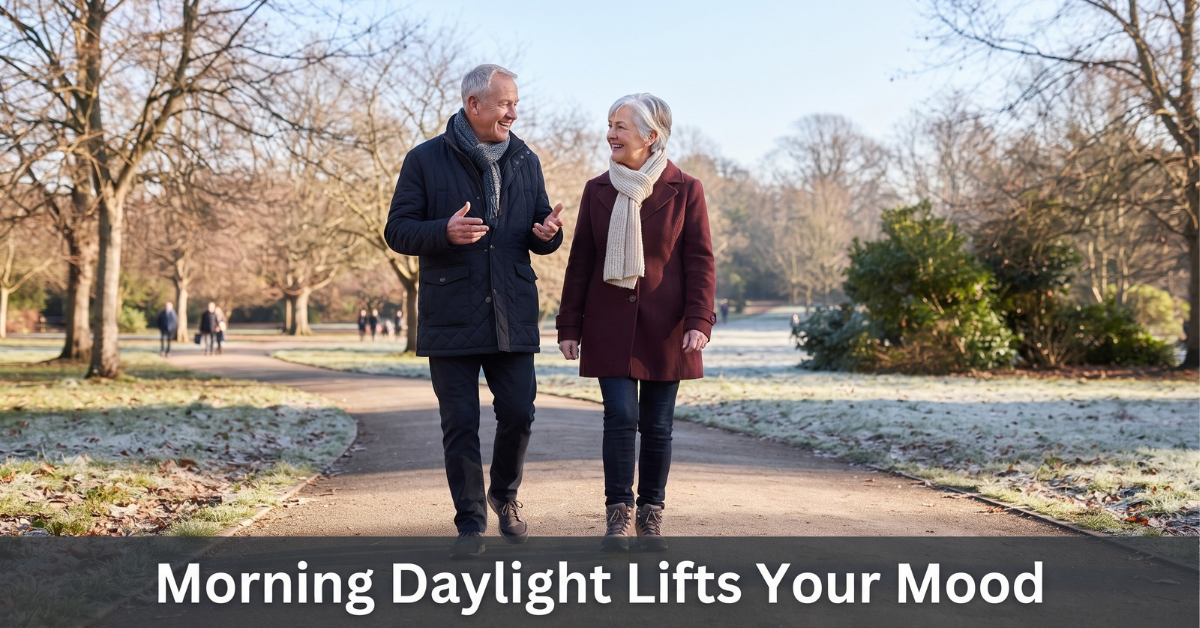
Even on an overcast winter day, the light outdoors is usually far brighter than the light inside your home. That means a short walk around the block before lunch can give your body clock a stronger signal than an entire afternoon in your favorite armchair. Pair that daylight with movement, and you get two mood helpers for the price of one, a simple combination for easing seasonal affective disorder in seniors.
Catch the Morning Light
Morning and midday light are the most helpful for winter mood. Try to get outside within a few hours of waking, even for 15 to 20 minutes. If the weather or your mobility makes that hard, there are still good options:
- Move your breakfast table or favorite reading chair right next to your brightest south- or east-facing window.
- Open every curtain and blind first thing in the morning, and trim any shrubs blocking the windows.
- Sit on a covered porch or sunroom with a warm blanket and a hot drink.
- Take a slow drive or ride during daylight hours instead of running errands after dark.
- Choose light-colored walls, mirrors, and brighter bulbs in the rooms where you spend the most time.
Why Movement Matters So Much
Regular physical activity is one of the best-studied natural supports for mood at any age. It can ease feelings of tension, improve sleep quality, raise energy, and give your day a sense of accomplishment. For older adults, it also protects balance, muscle strength, and independence, which all become even more important when sidewalks turn slippery.
The CDC’s guidelines for older adults suggest working toward about 150 minutes of moderate activity each week, such as brisk walking, along with muscle-strengthening activities on at least two days and activities that improve balance. That may sound like a lot, but broken into small pieces, it is just over 20 minutes a day. And any amount is better than none. If you are just starting, five minutes counts.
Winter-Friendly Activities for Every Ability
- Mall or museum walking: Many shopping centers open early for walkers. It is warm, flat, well lit, and has benches and restrooms.
- Chair exercises: Seated marching, arm circles, and ankle rolls can be done while watching the morning news.
- Resistance bands: Light, inexpensive, and easy to store, they make strength training possible right in your living room.
- Water aerobics: Indoor heated pools are gentle on joints and wonderful for winter.
- Tai chi or gentle yoga: These slow, flowing practices support balance, flexibility, and a calmer mind.
- Dancing in your kitchen: Put on the music you loved at 25 and move. Nobody is grading you.
- Senior fitness classes: Many community centers and some Medicare Advantage plans offer free or low-cost programs. Ask your plan what fitness benefits you have.
Staying Safe on Winter Walks
Falls are a serious concern for older adults, and winter adds ice, early darkness, and bulky clothing to the mix. A few precautions make outdoor time much safer:
- Wear shoes or boots with good, non-slip treads, and consider slip-on ice grips for snowy areas.
- Walk in daylight, on cleared and well-lit paths. Avoid shortcuts across grass or parking lots that may hide ice.
- Take shorter, flatter steps on slick surfaces, a bit like a penguin, keeping your weight over your feet.
- Use your cane or walking poles, and keep your hands free rather than in your pockets.
- Carry your phone and let someone know your route.
- Dress in warm layers, a hat, and gloves, and wear something bright or reflective.
Energy is often the first thing to slip when winter mood dips. Many people find that a predictable morning ritual of light, a glass of water, a few stretches, and a nourishing breakfast helps set the tone for the whole day.
SPONSORED · AFFILIATE LINK
Looking for a Morning Ritual Boost?
Struggling with low winter energy in the mornings? Some seniors add a maca-based morning drink to their routine. The Morning Motivator from The MACA Team is an organic maca product that some people find may support their daily energy alongside good sleep, sunlight, and movement. As with any supplement, please check with your doctor or pharmacist first, especially if you take prescription medications.
See the Morning Motivator →Eating for a Brighter Winter: Nutrition and Vitamin D

No single food can cure depression or seasonal affective disorder in seniors, and you should be wary of anyone who claims otherwise. But what you eat every day shapes your energy, your blood sugar, your sleep, and how well your brain and body function. In winter, when cravings for sweets and starches run high, a little planning goes a long way.
Vitamin D: The “Sunshine Vitamin”
As we discussed, older adults are more likely to run low on vitamin D in winter. Researchers are still studying exactly how vitamin D relates to mood, and the evidence that supplements treat SAD is mixed. But vitamin D is clearly important for bone and muscle health, and low levels are common and easy to check.
According to the NIH Office of Dietary Supplements, the recommended daily amount is 600 IU for adults up to age 70 and 800 IU for adults over 70. More is not always better: very high doses over time can cause harm, including dangerously high calcium levels. The safest approach is to ask your doctor for a simple blood test and follow their recommendation for your situation.
Good food sources of vitamin D include:
- Fatty fish such as salmon, trout, sardines, and mackerel
- Egg yolks
- Fortified milk, plant milks, orange juice, and some cereals (check the label)
- Mushrooms exposed to UV light, which are labeled as such in many grocery stores
Omega-3 Fats for Brain Health
Omega-3 fatty acids, found mainly in fatty fish, walnuts, chia seeds, and ground flaxseed, play a role in brain cell health. Some research suggests they may support mood, though results vary. Aiming for fish twice a week is a heart-healthy habit that may benefit your brain as well. If you are thinking about fish oil capsules, check with your doctor first, especially if you take blood thinners.
Many seniors also worry when winter brings more “senior moments,” such as misplaced glasses or a name on the tip of the tongue. As we discussed earlier, low mood, poor sleep, and low vitamin levels can all affect memory, which is why any new or worsening forgetfulness deserves a conversation with your doctor.
SPONSORED · AFFILIATE LINK
Worried About Everyday Forgetfulness?
The makers of this memory-support program share a hopeful message for older adults: “It’s NOT Dementia. It’s NOT Even A Required Part of Aging.” Some seniors find that brain-support routines may support everyday focus and recall. Only a doctor can tell what is behind memory changes, so please have any new forgetfulness checked and review any supplement with your doctor or pharmacist first.
Learn More →Taming the Carbohydrate Cravings
That strong pull toward cookies and white bread is a classic sign of winter-pattern SAD. Sugary foods give a quick lift, then a crash that can leave you more tired and low than before. Instead of fighting cravings with willpower alone, try swapping in slow-burning, satisfying choices:
- Steel-cut or old-fashioned oatmeal topped with berries and walnuts instead of sweet pastries
- Whole-grain bread and brown rice instead of white
- Hearty soups and stews made with beans, lentils, and vegetables
- Baked sweet potatoes for natural sweetness and fiber
- Protein at every meal, such as eggs, Greek yogurt, chicken, fish, or tofu, to keep energy steady and protect muscle
- A square of dark chocolate with a cup of tea when you truly want a treat
Watch the Alcohol and Stay Hydrated
A glass of wine or a holiday cocktail can feel cozy, but alcohol is a depressant. It can worsen low mood, disrupt sleep, interact with many medications, and raise the risk of falls. If you notice you are drinking more in winter to cope, that is worth mentioning to your doctor.
Many older adults also drink less water in cold weather because they feel less thirsty. Mild dehydration can cause fatigue, headaches, and fuzzy thinking that you might blame on the season. Keep a glass of water or a mug of herbal tea within reach throughout the day.
Kitchen tip: Cook a big pot of soup or chili on Sunday and freeze it in single portions. On low-energy days, a warm, nourishing meal is just a few minutes away, and you will be far less tempted by crackers and cookies for dinner.
Connection Is Powerful Medicine: Beating Holiday Loneliness

When winter mood dips, the natural instinct is to pull inward. You cancel the lunch date, skip the club meeting, and tell yourself you will catch up in spring. Unfortunately, isolation tends to make low mood worse, and low mood makes isolation more tempting. Breaking that cycle is one of the kindest things you can do for yourself.
Health experts increasingly recognize loneliness as a serious risk to physical and mental health in later life. The good news is that connection does not have to be big or elaborate to make a difference. Regular, small contacts add up.
Put Connection on the Calendar
In winter, we cannot rely on chance encounters at the mailbox or the garden fence. Instead, schedule your social life the way you schedule doctor’s appointments. A standing weekly phone call with your sister every Tuesday, lunch with a friend every other Thursday, or a Sunday video chat with the grandchildren gives you something to look forward to and makes it harder to quietly cancel.
Ideas to Stay Connected This Winter
- Visit your local senior center. Most offer meals, classes, games, and outings, often at little or no cost.
- Volunteer. Reading to children, helping at a food bank, or welcoming visitors at a hospital gives a powerful sense of purpose.
- Join a class. Libraries, community colleges, and churches offer everything from watercolor to genealogy.
- Start a small tradition. Host a monthly soup supper, puzzle afternoon, or old-movie night for two or three neighbors.
- Learn video calling. Ask a grandchild to set it up and practice with you. Seeing a familiar face is very different from hearing a voice.
- Consider a pet, or volunteer to walk dogs at a shelter. Animals provide companionship, routine, and a reason to get outside.
- Write letters. A handwritten card to an old friend often brings one back.
When the Holidays Feel Heavy
The holiday season can bring joy, but also grief, especially if you have lost a spouse, a friend, or the traditions you once shared. It is okay if the season feels different now. Give yourself permission to simplify. You do not need to bake twelve kinds of cookies or host the whole family. Choose one or two traditions that matter most, and let the rest go without guilt.
Some people find comfort in creating a new ritual to honor a loved one, such as lighting a candle, cooking their favorite dish, or sharing stories about them at dinner. Others find that serving a holiday meal at a shelter or church gives the day new meaning. If grief feels overwhelming, grief support groups through hospices, churches, and community centers can be a lifeline.
Where to Find Local Help
Not sure where to start? The Eldercare Locator, a public service of the U.S. Administration for Community Living, can connect you to your local Area Agency on Aging. They can point you toward senior centers, transportation help, meal programs, friendly-visitor and phone-buddy programs, and caregiver support in your area. You can also reach them by phone at 1-800-677-1116.
Holiday stress, disrupted routines, and long gray stretches can also leave the mind feeling tense and scattered. Alongside connection and professional care, some seniors look for gentle daily support for a calmer, clearer outlook.
SPONSORED · AFFILIATE LINK
Support for a Calmer, Clearer Mind
CogniCare Plus is a brain-support supplement that some seniors find may support calm focus, a more relaxed mood, and restful sleep during stressful seasons. It is not a substitute for medical care or treatment for depression. Please review the ingredients with your doctor or pharmacist before trying it, particularly if you take prescription medications.
Learn More About CogniCare Plus →Sleep, Routine, and the End of Daylight Saving Time
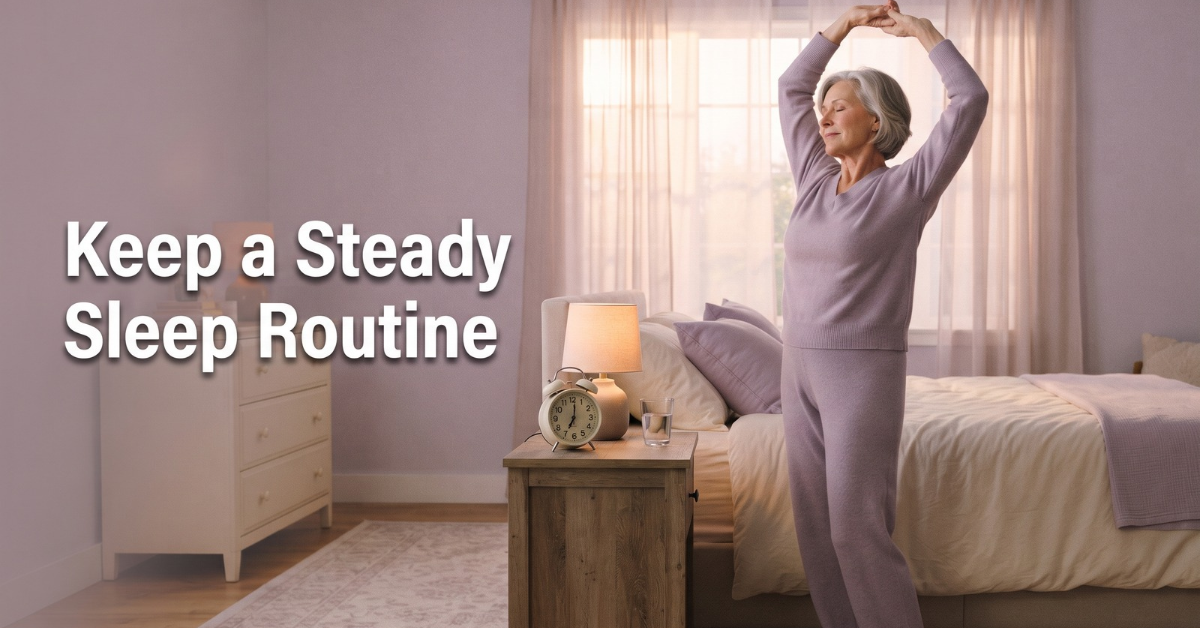
Sleep and mood are close partners. When one struggles, the other usually follows. In winter, many people with SAD sleep far more than usual yet still wake up exhausted, while others toss and turn at 3 a.m. Both patterns can be a sign that your body clock has drifted out of step.
Sleep also changes naturally with age. Many older adults find they get sleepy earlier in the evening, wake earlier in the morning, and sleep more lightly. Add in nighttime bathroom trips, aches, and medications, and good rest can feel elusive. The goal is not perfect sleep. It is steady, refreshing sleep that supports your days.
Preparing for “Fall Back” on November 1, 2026
In most of the United States, Daylight Saving Time ends at 2 a.m. on Sunday, November 1, 2026, when clocks move back one hour. Hawaii and most of Arizona do not observe the change. That extra hour of sleep sounds like a gift, but the sudden shift means sunset arrives an hour earlier in the evening, often before 5 p.m. For many people, this is the week winter mood really begins.
A little preparation can soften the transition:
- Shift gradually. In the four or five days before the change, move your bedtime and wake time about 15 minutes later each day.
- Get morning light right away. On the Sunday and Monday after the change, step outside or use your light box soon after waking.
- Keep meals on schedule. Eating at regular times helps your body clock adjust faster.
- Plan for earlier darkness. Schedule walks, errands, and driving for the late morning and early afternoon.
- Brighten your evenings safely. Add night lights in hallways and bathrooms, since earlier darkness raises fall risk.
Build a Steady Daily Rhythm
The single most powerful sleep habit is surprisingly simple: get up at the same time every day, including weekends. Your wake time anchors your entire body clock. When it stays steady, your bedtime, appetite, and energy tend to fall into line around it.
- Morning: Wake at your set time, open the curtains, and get bright light within the first hour.
- Midday: Get outdoors or move your body. Eat a balanced lunch.
- Afternoon: If you nap, keep it to 20 to 30 minutes and finish before about 3 p.m.
- Evening: Dim the lights, switch to calm activities, and limit caffeine after lunchtime.
- Bedtime: Keep the bedroom cool, dark, and quiet, and reserve the bed for sleep.
A Calming Evening Wind-Down
An hour before bed, signal to your body that the day is ending. Turn off the TV news, which can be stimulating or upsetting. Instead, try a warm shower, a cup of caffeine-free herbal tea, soft music, a few gentle stretches, a prayer or gratitude list, or a chapter of a comforting book. Screens from phones and tablets give off bright light that can delay sleepiness, so set them aside or use night mode.
If you lie awake for more than about 20 minutes, get up, go to another dimly lit room, and do something quiet until you feel sleepy. Lying in bed frustrated tends to make insomnia worse.
A Word About Sleep Aids
Many over-the-counter sleep aids contain antihistamines such as diphenhydramine, which can cause next-day grogginess, confusion, constipation, and a higher risk of falls in older adults. Melatonin is popular, but timing and dose matter, and it can interact with some medications. Before trying any sleep product, review it with your doctor or pharmacist. If you snore loudly or wake up gasping, ask about a sleep apnea evaluation, since untreated sleep apnea can drain energy and mood.
For people who prefer a simple evening ritual, a warm, calming drink before bed can become a pleasant cue that the day is done.
SPONSORED · AFFILIATE LINK
A Drinkable Evening Wind-Down Ritual
Sleep Breakthrough by BiOptimizers is a drinkable mix that you stir into a glass of water about one hour before bedtime. The makers say many people notice their nervous system beginning to settle within about 30 to 45 minutes. Some seniors find it may support a more relaxed transition into sleep as part of a consistent bedtime routine. Please ask your doctor or pharmacist before use, especially if you take other sleep or prescription medications.
Explore Sleep Breakthrough →Professional Treatment: When and How to Get Help
Self-care habits are powerful, but they are not always enough, and that is nothing to be ashamed of. If your symptoms are making daily life hard, lasting more than two weeks, or coming back every winter, it is time to involve a professional. Treatment for seasonal affective disorder in seniors works well, and getting help early often means feeling better sooner.
Start With Your Primary Care Doctor
Your regular doctor is an excellent first stop. They can ask a few screening questions, review your medications, and order blood tests to check for thyroid problems, anemia, vitamin deficiencies, and other conditions that can look like depression. Good news for people with Medicare: Medicare Part B covers one depression screening per year in a primary care setting, and there is generally no cost to you if your provider accepts assignment.
To make the most of a short appointment, bring:
- Your self-check notes from earlier in this guide
- A list of all medications, vitamins, and supplements you take
- When your symptoms began, and whether they happened in past winters
- Specific examples, such as “I’ve stopped going to my Wednesday bridge club”
- A family member or friend, if you would like support or a second set of ears
Talk Therapy
Cognitive behavioral therapy, often called CBT, is a practical, structured form of talk therapy. It helps you notice discouraging thought patterns and gently replace them with more balanced ones, while scheduling activities that bring meaning and pleasure. A version adapted specifically for SAD has been studied, and some research suggests its benefits may last into future winters. Many therapists now offer sessions by phone or video, which can be especially helpful when the roads are icy. Medicare Part B covers outpatient mental health services from eligible providers, though your usual costs may apply.
Medication
For some people, antidepressant medication is an important part of treatment. Certain antidepressants are commonly used for SAD, and one, an extended-release form of bupropion, is approved by the FDA to help prevent seasonal depressive episodes when started before symptoms typically begin. Your doctor will consider your other health conditions and medications carefully, since older adults can be more sensitive to side effects and drug interactions. Never start, stop, or change a medication on your own.
Combining Approaches
Most people do best with a combination of strategies. For example, light therapy each morning, a daily walk, regular social plans, and a few sessions of talk therapy, with medication added if needed. Think of it like a sturdy table: the more legs it stands on, the steadier it will be.
A Guide for Family Members and Caregivers
If you are reading this because you are worried about a parent, spouse, or friend, thank you. Your attention matters more than you may realize. Older adults with depression often do not ask for help, so a loving, observant family member can make all the difference.

Signs to Watch For
- The house, laundry, or mail piling up in a way that is unusual for them
- Spoiled or very little food in the refrigerator
- Skipped medications, appointments, or bills
- Staying in pajamas, skipping showers, or letting grooming slip
- Declining invitations they once loved
- More complaints about aches, fatigue, or memory
- Comments like “What’s the point?” or “I’m just a burden”
How to Start the Conversation
Choose a calm, private moment. Lead with love and specific observations rather than labels. Instead of “I think you’re depressed,” try “Mom, I’ve noticed you haven’t been going to your quilting group, and you seem really tired lately. I’m worried about you. How are you feeling?”
Listen more than you talk. Avoid quick fixes like “Just cheer up” or “Everybody gets down in winter.” Let them know that depression is a common medical condition, not a character flaw, and that it is very treatable. Many people of this generation respond well to framing a doctor’s visit as a general “winter check-up.”
Practical Ways to Help
- Offer to schedule and drive them to a doctor’s appointment, and go in with them if they wish.
- Help set up a light box and join them for a cup of coffee during the first few sessions.
- Make a standing date for a midday walk, errand run, or lunch.
- Set up easy video calling so grandchildren can check in regularly.
- Drop off healthy frozen meals, or arrange grocery delivery.
- Check that walkways are clear, hallways have night lights, and the home is bright.
- Take care of yourself too. Caregiver burnout is real, and your local Area Agency on Aging may offer caregiver support programs.
If your loved one talks about death, says they want to disappear, or gives away belongings, take it seriously. Call or text 988 for guidance, and call 911 if you believe they are in immediate danger.
Your 7-Step Winter Wellness Action Plan
Knowledge is only useful when it becomes action. Here is a simple, step-by-step plan for managing seasonal affective disorder in seniors to carry you from late October through the first green shoots of spring. You do not have to do everything perfectly. Start with Step 1 this week, and add the rest one at a time.
Step 1: Schedule a Winter Check-Up (This Week)
Call your doctor and ask for an appointment that includes a depression screening and blood work for vitamin D, thyroid, B12, and anemia. If you plan to use a light box, ask whether it is safe for your eyes and medications. Book an eye exam if it has been more than a year.
Step 2: Set Your Anchor Wake Time
Pick a wake-up time you can keep seven days a week, such as 7:00 a.m. Set an alarm, and prepare for the November 1 clock change by shifting gradually in the days before it.
Step 3: Get Bright Light Every Morning
Within an hour of waking, either spend 20 to 30 minutes outdoors or sit with a 10,000-lux light box, once your doctor approves. Open every curtain in the house as soon as you get up.
Step 4: Move Your Body Daily
Aim for at least 20 minutes of movement most days. Choose activities that fit your ability and the weather: a daylight walk, mall walking, chair exercises, resistance bands, or a gentle class.
Step 5: Plan Nourishing Meals
Include protein at every meal, eat fish twice a week, choose whole grains over sweets, drink water throughout the day, and keep alcohol to a minimum. Batch-cook soups for low-energy days.
Step 6: Put People on Your Calendar
Write down at least three standing social commitments for the week, such as a phone call, a lunch, and a class or volunteer shift. Treat them as appointments you keep.
Step 7: Track Your Mood and Adjust
Each evening, rate your mood and energy from 1 to 10 in a small notebook. After two weeks, look for patterns. If your scores stay low or are falling, call your doctor. That record will also help them choose the right next step.
A Sample Winter Day
Here is how these steps might come together in a single, ordinary day. Adjust the times to suit your own life.
| Time | Activity |
|---|---|
| 7:00 a.m. | Wake up, open the curtains, drink a glass of water |
| 7:15 a.m. | Breakfast and coffee with 30 minutes of light therapy |
| 8:00 a.m. | Ten minutes of gentle stretching or chair exercises |
| 10:30 a.m. | Daylight walk, errands, or a senior center class |
| 12:30 p.m. | Balanced lunch, ideally with a friend or by a sunny window |
| 2:00 p.m. | Hobby time, volunteering, or an optional 20-minute nap |
| 4:00 p.m. | Phone or video call with family; turn on hallway night lights |
| 6:00 p.m. | Light, nourishing dinner |
| 8:30 p.m. | Dim lights, herbal tea, reading, or music; note today’s mood score |
| 10:00 p.m. | Lights out in a cool, dark, quiet bedroom |
Embracing the Season: Finding Joy in Winter
Managing SAD is not only about fighting the dark. It is also about rediscovering what winter can offer. In Denmark, there is a word, hygge, for the cozy contentment of candlelight, warm socks, good food, and good company. Many Scandinavians, who live with far longer winters than most Americans, have learned to treat the season as a time for comfort and closeness rather than something to merely survive.
Consider what might make this winter feel special for you. Perhaps it is finally starting that family history project, learning to bake bread, knitting blankets for a local hospital, or planning a spring trip you can look forward to. Having something meaningful to work on, and something joyful on the horizon, gives the darker months a sense of direction.
And remember this: every day after the winter solstice on December 21, the light returns a little more. Spring is always on its way.
A Warm Closing Thought
If winter has felt heavy in years past, please hear this: it does not have to stay that way. Seasonal affective disorder in seniors is common, it is real, and most of all, it is treatable. The darker months may ask a little more of us as we age, but with more light, more movement, more connection, and the right support, you can meet them with confidence.
Start small. Open the curtains tomorrow morning. Call one friend this week. Make that doctor’s appointment. Each small step is a way of telling yourself that your well-being matters, because it does.
We are cheering you on, every step of the way.
Prefer to Watch and Listen?
For more friendly video guides on healthy aging, retirement life, and staying well through every season, visit our YouTube channel, SeoulcastUSA. Subscribe so you never miss a new episode.
💡 Frequently Asked Questions (FAQ)
Q1. Can seasonal affective disorder start for the first time after age 60?
Yes. Although SAD often begins earlier in life, it can appear or become noticeable later, especially after changes such as retirement, moving, losing a spouse, reduced mobility, or vision changes. Any new, persistent low mood in an older adult deserves a check-up, because it can also be linked to other treatable health conditions.
Q2. Is a light therapy box safe for seniors?
For most older adults, a UV-filtered 10,000-lux light box used for 20 to 30 minutes in the morning is considered safe. However, check with your doctor first if you have macular degeneration, glaucoma, diabetic retinopathy, bipolar disorder, or take medications that increase sensitivity to light.
Q3. Does Medicare cover depression screening and treatment?
Medicare Part B covers one depression screening per year in a primary care setting, generally at no cost if your provider accepts assignment. Part B also covers outpatient mental health services such as counseling from eligible providers, though your usual deductible and coinsurance may apply. Check with your plan for details.
Q4. How much vitamin D should older adults take in winter?
The NIH recommends 600 IU daily for adults up to age 70 and 800 IU for those over 70. Because needs vary and very high doses can be harmful, ask your doctor for a blood test before starting a supplement, and follow their advice for your personal dose.
Q5. How can I tell the winter blues from seasonal affective disorder?
The winter blues are mild and come and go without disrupting daily life. SAD involves symptoms such as low mood, oversleeping, cravings, and withdrawal on most days for two weeks or more, returning around the same time each year. If your daily routine, relationships, or self-care are slipping, talk to your doctor.
Q6. How can seniors stay safe walking outdoors in winter?
Walk during daylight on cleared, well-lit paths, wear non-slip footwear or ice grips, take short flat steps, use your cane or walking poles, keep your hands free, and carry a phone. On icy days, indoor options such as mall walking or chair exercises are safer choices.
Recommended Tags
seasonal affective disorder in seniors, winter depression older adults, light therapy for seniors, senior mental health, healthy aging winter tips
🌿 Weekly wellness, health & beauty insights — straight to your inbox
Free subscription · Cancel anytime