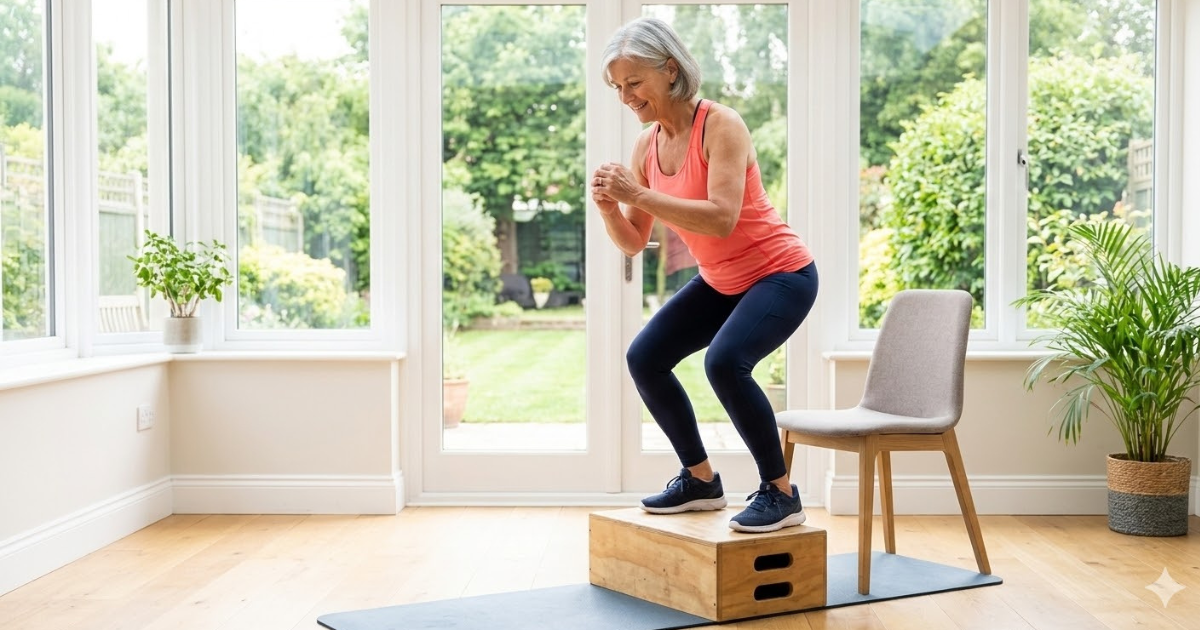
Zone 2 Cardio Workouts for Over 55: The Complete, Gentle Guide to a Stronger Heart
Reviewed for accuracy | Updated September 2026 | 14 min read
This guide focuses specifically on Zone 2 cardio workouts for over 55, because the right intensity, pacing, and precautions genuinely do shift as we age. If you’ve spent any time on YouTube or scrolling health articles lately, you’ve probably run into the term “Zone 2.” It sounds technical — almost like something reserved for elite marathoners or Tour de France cyclists. But here’s the good news: Zone 2 training may actually be one of the gentlest, most sustainable, and most rewarding forms of exercise available to adults over 55.
At SeniorJourney, we believe that taking care of your body in your 50s, 60s, 70s, and beyond deserves the same thoughtful planning you’d put into your retirement savings or your next family trip. This guide will walk you — step by step — through what Zone 2 cardio actually is, why it matters more as we age, how to calculate your own personal Zone 2, which workouts fit best into a senior-friendly routine, and how to avoid the common mistakes that trip up so many well-meaning beginners.
Whether you’re completely new to structured exercise, easing back in after a long break, or already active but curious about training smarter rather than harder, this guide is written for you. There’s no single “right” starting point. What matters is meeting your body exactly where it is today, and building from there, one comfortable, sustainable step at a time.
Grab a cup of tea, get comfortable, and let’s walk through this together.
What Exactly Is Zone 2 Training?
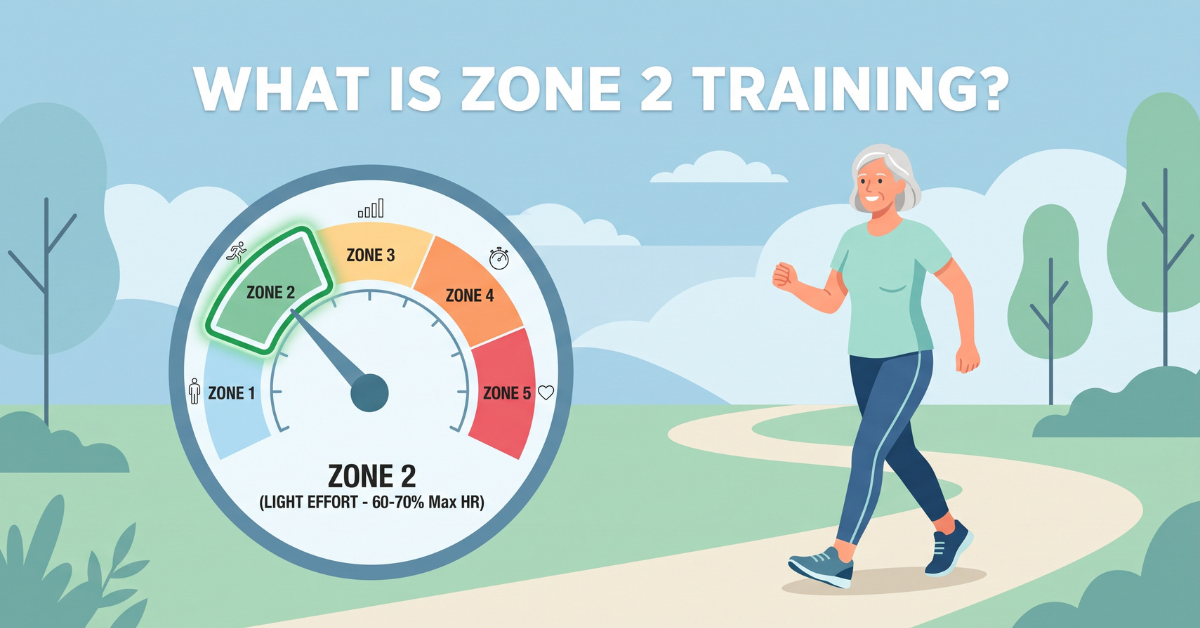
To understand Zone 2, it helps to picture your heart rate as a dial with five settings, or “zones,” ranging from very light effort (Zone 1) to maximum effort (Zone 5). Each zone corresponds to a percentage of your maximum heart rate, and each one trains your body in a slightly different way.
- Zone 1 (50–60% of max heart rate): Very light activity — a slow stroll, light stretching.
- Zone 2 (60–70% of max heart rate): Comfortable, conversational effort. This is our focus today.
- Zone 3 (70–80%): Moderately hard — you can still talk, but in shorter sentences.
- Zone 4 (80–90%): Hard effort, breathing heavily.
- Zone 5 (90–100%): All-out, maximum sprint effort.
Zone 2 sits right in that comfortable middle-low range. It’s often described using the “talk test”: if you can hold a full conversation while exercising — a little breathless, but not gasping — you’re likely in Zone 2. Many exercise physiologists also describe it as the pace at which your body primarily burns fat for fuel rather than quickly-depleted sugar stores, because at this intensity, your muscles have enough oxygen available to use slower, more sustainable energy pathways.
In simple terms: Zone 2 is exercise that feels “easy enough to keep going,” yet is still doing meaningful, measurable work for your cardiovascular system. It’s the opposite of the “no pain, no gain” mentality many of us grew up with — and that’s exactly why it tends to be so sustainable for people in their 50s and beyond.
A Little Bit of the Science, Explained Simply
Deep inside every muscle cell, you have tiny structures called mitochondria, often nicknamed the “power plants” of the cell. Their job is to convert the food you eat and the oxygen you breathe into usable energy. Exercise physiologists who study endurance training, including researchers who popularized the term “Zone 2,” have observed that sustained, moderate-intensity training appears to encourage the body to build more of these mitochondria and to make them more efficient at using fat as a fuel source.
Why does that matter for someone in their 50s or 60s? Because a more efficient internal “energy engine” translates into everyday benefits that have nothing to do with athletic performance: climbing a flight of stairs without feeling winded, keeping up with grandchildren at the park, carrying groceries in from the car, or enjoying a full day of sightseeing on vacation without needing to sit down every twenty minutes. Zone 2 training, in other words, is really an investment in your everyday quality of life, not just a number on a chart.
Zone 2 vs. HIIT: Which Should You Choose After 55?
High-Intensity Interval Training (HIIT) has gotten a great deal of attention in recent years, and it does offer real benefits, even for older adults, when performed under proper guidance. But HIIT also places a much greater sudden demand on your cardiovascular system, joints, and connective tissue, and it typically requires longer recovery time between sessions than Zone 2 work does.
Our general recommendation for most people over 55, especially those newer to structured exercise or returning to activity after a long break, is to build a solid Zone 2 “aerobic base” first, over a period of roughly two to three months, before even considering the addition of occasional higher-intensity intervals. Think of Zone 2 as the sturdy foundation of a house: it is not the flashiest part of the structure, but nothing else stands securely without it. If you become curious about HIIT further down the road, that is a conversation worth having with your doctor once your aerobic base is well established.
The Emotional and Mental Side of Steady Cardio
We often talk about cardio purely in physical terms, but many of our readers tell us the emotional benefits are just as meaningful. A steady, rhythmic walk or bike ride can be genuinely meditative. It gives you uninterrupted time to think, to listen to a favorite podcast or audiobook, to process the day, or simply to enjoy quiet. Regular moderate exercise is also widely associated with improved mood and better sleep quality, both of which tend to become more precious, and sometimes more elusive, as we age.
If you have experienced restless nights or a bit of a foggy, low-energy afternoon slump, a consistent Zone 2 routine, especially one done outdoors in natural daylight, is one of the simplest, most natural tools available to help support a steadier sleep-wake rhythm.
Why Zone 2 Cardio Workouts for Over 55 Matter So Much

As we move past our 50s, our bodies undergo several natural changes: our maximum heart rate gradually declines, our joints may become more sensitive to high-impact stress, and recovery between hard workouts tends to take longer. This doesn’t mean exercise becomes less important — quite the opposite. It means the type of exercise we choose matters more than ever.
1. It Supports a Resilient Heart, Without Overloading It
Sustained, moderate-intensity cardio is one of the most consistently recommended forms of activity for cardiovascular health across the lifespan. Unlike high-intensity intervals, which place a sudden, sharp demand on the heart, Zone 2 work asks your cardiovascular system to perform steadily over a longer period. Over time, this kind of training is associated with a stronger, more efficient heart muscle and healthier blood pressure patterns — while keeping the immediate strain on your body relatively low.
2. It’s Remarkably Gentle on Joints
Many Zone 2 activities — brisk walking, cycling, swimming, rowing — are low-impact by nature. That means less pounding on your knees, hips, and lower back compared to running or high-intensity plyometric workouts. For anyone managing mild arthritis, previous joint injuries, or simply wanting to protect the joints they still have in great shape, this is a major advantage.
3. It Supports Healthy Metabolism and Energy Levels
Regular moderate-intensity aerobic activity is well-documented to support healthy blood sugar regulation and metabolic function, both of which become increasingly important with age, as our bodies naturally become somewhat less efficient at processing carbohydrates over time. Many people also report a noticeable, steady increase in daily energy after a few weeks of consistent Zone 2 training, likely because the body becomes more efficient at converting fuel into usable energy, rather than experiencing the sharper energy peaks and crashes associated with less trained metabolic systems.
This also tends to support healthier body composition over time. Zone 2’s fat-burning emphasis, combined with consistent frequency, can gently support the maintenance of a healthy weight, particularly when paired with adequate protein intake and, ideally, some form of light strength training a couple of times per week.
4. It Builds a Sustainable Habit, Not a Burnout Cycle
Perhaps the most underrated benefit of Zone 2 training is psychological. Because the effort level is comfortable, it’s far easier to stick with three, four, or five sessions a week without dreading them. Consistency, not intensity, is what produces long-term results, and Zone 2 is designed specifically for consistency.
Contrast this with the common pattern many of us have experienced: starting an ambitious, high-intensity program in January with great enthusiasm, only to feel exhausted, sore, and discouraged within two or three weeks, and quietly abandoning it by February. Zone 2’s comfortable pace sidesteps that entire cycle. It asks for far less willpower on any given day, which paradoxically is exactly what makes it possible to sustain for years rather than weeks.
5. It Can Support Better Balance and Lower Fall Risk
Falls are one of the most significant concerns for independence and safety as we age, and regular walking-based cardio contributes to this in a few important ways. Consistent walking helps maintain leg strength and ankle stability, both of which play a direct role in balance. Additionally, many Zone 2 walking routines naturally incorporate varied terrain, such as slight inclines, curbs, or uneven sidewalks, which gently challenges your proprioception, your body’s sense of where it is in space, over time. While Zone 2 cardio alone isn’t a substitute for dedicated balance training, it works as a valuable complement to it.
Modifying Zone 2 for Arthritis, Joint Replacements, or Balance Concerns
One of the most common questions we hear is some version of: “This all sounds great, but what if I have arthritis, a knee or hip replacement, or I’m just a little nervous about my balance?” These are completely valid concerns, and the good news is that Zone 2 training is remarkably flexible.
- If you have knee or hip arthritis: Swimming, water aerobics, and stationary cycling with a properly adjusted seat height are usually the most comfortable starting points, since they minimize joint compression.
- If you’ve had a joint replacement: Always follow your surgeon’s and physical therapist’s specific timeline and restrictions first. Once cleared for general cardio, a recumbent stationary bike (the kind with a backrest and a lower seat) is often especially comfortable.
- If you’re managing balance concerns: A stationary bike, recumbent bike, or seated rowing machine removes the fall risk entirely, while still delivering a genuine Zone 2 workout. If walking outdoors is important to you, consider using walking poles for added stability, sticking to flat, even paths, and walking with a companion when possible.
There is no single “correct” way to do Zone 2 cardio. The right modality is simply the one that lets you move consistently, comfortably, and safely within your own body’s current capabilities.
Isn’t Being Active Around the House Basically the Same Thing?
This is a wonderful question, and the honest answer is: it helps, but it isn’t quite the same thing. Gardening, light housework, and errands around town are genuinely valuable and absolutely count toward general daily movement. However, these activities tend to be intermittent, stopping and starting in short bursts rather than sustaining a steady heart rate for a continuous stretch of time. Zone 2 training specifically asks your cardiovascular system to sustain a moderate effort continuously for 20 minutes or more, which is what drives the specific adaptations we discussed earlier, like improved mitochondrial efficiency and a stronger heart muscle.
Think of it this way: everyday movement keeps the engine from rusting, while a dedicated Zone 2 session actively tunes it up. Both matter, but they serve different purposes, and neither fully replaces the other.
How to Calculate Your Personal Zone 2 Heart Rate
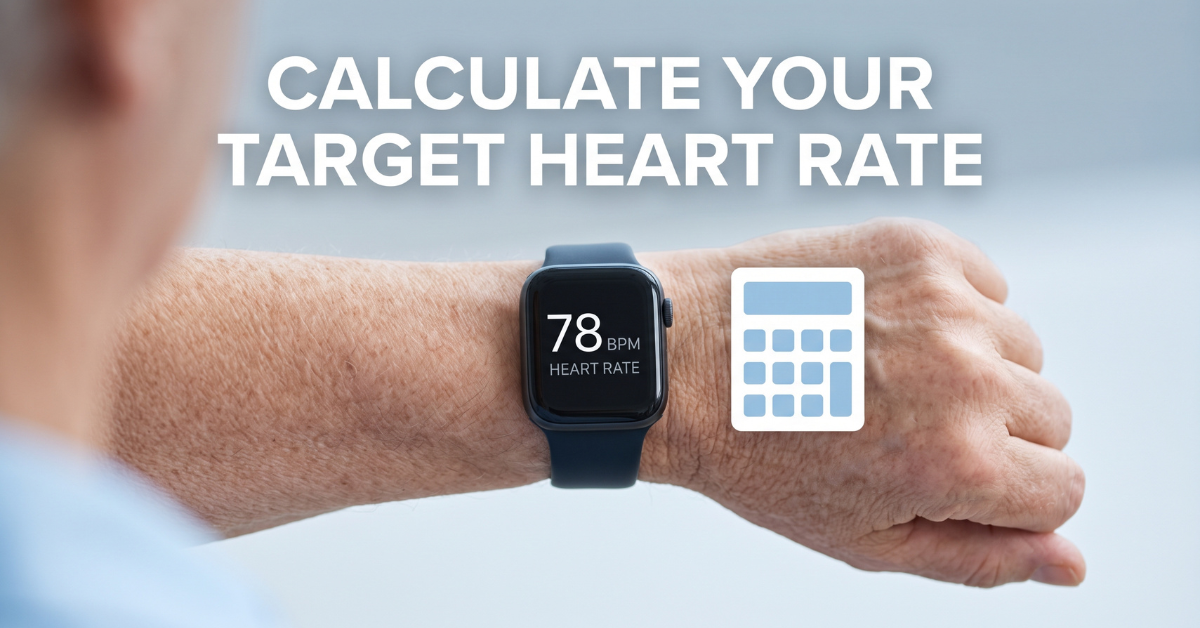
Let’s turn this into something practical. Here’s a simple, three-step action plan you can complete in the next five minutes.
Step 1: Estimate Your Maximum Heart Rate
The classic formula many of us learned — “220 minus your age” — is popular, but research suggests it tends to be less accurate for adults over 50. A more refined formula, developed specifically with older adults in mind, is the Tanaka formula:
Estimated Max Heart Rate = 208 − (0.7 × your age)
For example, a 60-year-old would calculate: 208 − (0.7 × 60) = 208 − 42 = 166 beats per minute (bpm) as an estimated maximum.
Step 2: Calculate Your Zone 2 Range
Zone 2 is generally defined as 60–70% of your maximum heart rate. Using our 60-year-old example (max HR of 166):
- Lower bound: 166 × 0.60 = 100 bpm
- Upper bound: 166 × 0.70 = 116 bpm
So this person’s Zone 2 target would be roughly 100–116 bpm. You can do this same calculation with your own age in just a few seconds.
A Note on Individual Variation
It’s worth remembering that any age-based formula, including the ones above, is an estimate based on population averages, not a precise measurement of your unique physiology. Genetics, years of training history, and overall health status can all cause your true numbers to differ somewhat from the formula’s prediction. If you’d like a more precise reading, some cardiologists and sports medicine clinics offer supervised fitness or stress testing that can measure your actual maximum heart rate directly. For most people simply building a home routine, though, the estimated formulas above, combined with the talk test, are more than sufficient to get started safely and effectively.
Step 3: Use the “Talk Test” as a Backup (Especially If You Take Heart Medication)
Here’s something important that many online guides skip over: if you take beta-blockers or certain other blood pressure medications, your heart rate numbers may not reflect your true effort level, since these medications intentionally keep your heart rate lower. In that case, don’t rely on numbers alone. Instead, use the talk test — you should be able to speak in full sentences, but not comfortably sing. If you’re only able to grunt out a few words, ease off the pace. This simple, no-equipment method has been used by exercise professionals for decades and works well alongside — or instead of — a heart rate monitor.
Don’t Skip the Warm-Up and Cool-Down
A complete Zone 2 session is really made up of three parts, not just one. Building this simple structure into every workout dramatically reduces your risk of strain and helps your body transition smoothly in and out of exercise.
- Warm-up (5 minutes): Begin at a slow, easy pace, well below your Zone 2 target, and include a few gentle range-of-motion movements for your ankles, hips, and shoulders.
- Main set (20–45 minutes): Gradually ease into your Zone 2 heart rate range and hold it steady for the bulk of your session.
- Cool-down (5 minutes): Slow your pace gradually rather than stopping abruptly, allowing your heart rate to ease back down, followed by two or three gentle static stretches for your calves, hamstrings, and lower back.
The Best Time of Day for Your Zone 2 Workout
There’s no single “correct” time of day to train, and the honest answer is that the best time is whichever one you’ll actually stick with. That said, a few patterns are worth knowing about. Morning sessions tend to have the highest completion rates for most people, largely because they happen before the day’s inevitable distractions and interruptions pile up. Morning exercise, particularly outdoors, also exposes you to natural light early in the day, which can help support a healthy sleep-wake cycle.
That said, some people genuinely feel stiffer or less coordinated first thing in the morning and perform noticeably better with a mid-morning or early-afternoon session, once their body has had time to loosen up. If you take blood pressure medication, ask your doctor whether the timing of your dose should influence when you exercise, since some medications affect heart rate and blood pressure response differently depending on how recently they were taken.
A More Precise Option: The Karvonen (Heart Rate Reserve) Method
If you’d like an even more personalized calculation, the Karvonen method factors in your resting heart rate as well, which accounts for individual differences in fitness level that the basic percentage-of-max method doesn’t capture. Here’s how it works:
- Find your resting heart rate by checking your pulse first thing in the morning, before getting out of bed, for three mornings in a row, then average the results.
- Subtract your resting heart rate from your estimated max heart rate to get your “heart rate reserve.”
- Multiply your heart rate reserve by 0.60 and by 0.70 for your Zone 2 range, then add your resting heart rate back to each result.
For example, if our 60-year-old from earlier (max HR 166) has a resting heart rate of 70: heart rate reserve = 166 − 70 = 96. Zone 2 lower bound = (96 × 0.60) + 70 = 128. Zone 2 upper bound = (96 × 0.70) + 70 = 137. Notice this range, 128–137 bpm, is meaningfully different from the simple percentage-of-max method’s 100–116 bpm range for the same person. Neither method is “wrong,” but the Karvonen method tends to be more personalized, particularly for people who are already fairly active. If you’re unsure which to use, the basic method is a perfectly reasonable starting point, and you can always refine it later.
Special Considerations for Common Health Conditions
Many of our readers are managing one or more common health conditions alongside their fitness goals. Here are a few general points, though your doctor’s specific guidance should always take priority:
- Type 2 diabetes: Moderate aerobic activity is widely recognized as a valuable part of blood sugar management. If you take insulin or other glucose-lowering medication, ask your doctor about monitoring your blood sugar before and after exercise, since physical activity can affect glucose levels.
- COPD or other respiratory conditions: Zone 2’s gentle, sustainable pace is often well suited to people managing breathing conditions, but always follow any activity restrictions or pacing strategies your pulmonologist has provided, and keep any prescribed rescue inhaler with you during sessions.
- Osteoporosis or low bone density: Weight-bearing activities like brisk walking can be beneficial for bone health, but always discuss specific movement precautions with your doctor, particularly around any bending, twisting, or fall risk during your chosen activity.
- Recent surgery of any kind: Always obtain explicit clearance from your surgeon before resuming any cardio program, and follow their specific timeline rather than any general recommendation in this article.
The Best Zone 2 Cardio Workouts for Over 55
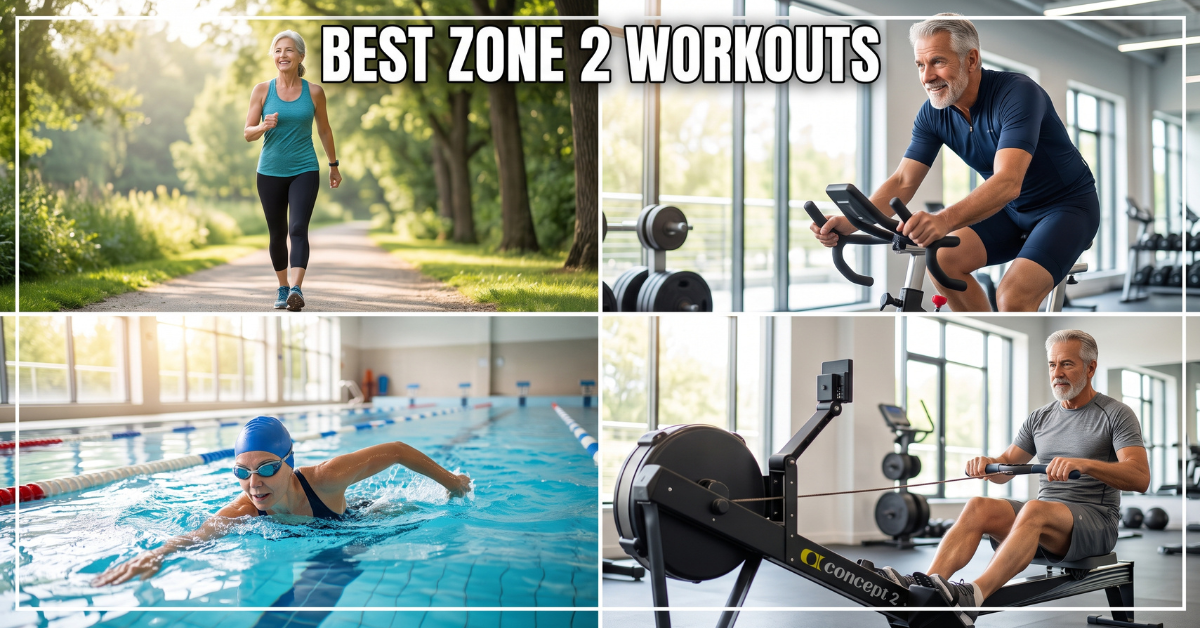
Not every cardio workout is created equal when it comes to comfort, joint safety, and long-term sustainability. Here are the four options we recommend most often.
🚶 Brisk Walking
Simple, free, and endlessly adaptable, brisk walking is often the easiest entry point into Zone 2 training. Aim for a pace that’s noticeably faster than a casual stroll — enough that you feel your breathing pick up, but you can still chat with a walking partner. Outdoor walking has the added bonus of fresh air, sunlight (great for vitamin D and mood), and social opportunities if you walk with friends or a local walking group.
Technique tip: Keep your posture tall, let your arms swing naturally at your sides, and try to land midfoot rather than heavily on your heel. If you find flat routes boring, gently rolling terrain adds variety and a bit of extra effort without tipping you out of Zone 2.
🚴 Stationary or Outdoor Cycling
Cycling is exceptionally joint-friendly because your body weight is supported by the seat rather than your legs and feet. A stationary bike also gives you precise control over resistance, which makes it easier to stay locked into your target heart rate zone regardless of weather or terrain.
Technique tip: Adjust your seat height so your knee has a slight bend at the bottom of the pedal stroke. Start with a light-to-moderate resistance and increase gradually rather than jumping to a high resistance setting, which can push you into Zone 3 or 4 more quickly than you’d expect.
🏊 Swimming or Water Aerobics
Water provides natural resistance while almost completely eliminating impact on your joints, making swimming one of the gentlest full-body cardio options available. It’s an excellent choice for anyone managing arthritis, past joint replacements, or general joint sensitivity.
Technique tip: If continuous lap swimming feels tiring on your shoulders, water walking or water aerobics classes deliver very similar Zone 2 benefits with far less upper-body strain, and many community pools offer senior-specific class times.
🚣 Rowing
Rowing machines engage both your upper and lower body simultaneously, offering an efficient, low-impact, full-body cardio session. It’s a wonderful option for building light muscular endurance alongside your cardiovascular work — just be mindful of using proper form to protect your lower back.
Technique tip: Drive the movement with your legs first, then lean back slightly and pull with your arms last, reversing the order on the return. Keep your back straight rather than rounded throughout the stroke, and consider asking a staff member at your gym for a quick form check the first time you try it.
The best workout, ultimately, is the one you genuinely enjoy and will return to consistently. Many of our readers find it helpful to rotate between two or three of these options throughout the week to keep things interesting and to work slightly different muscle groups.
Your Weekly Zone 2 Action Plan
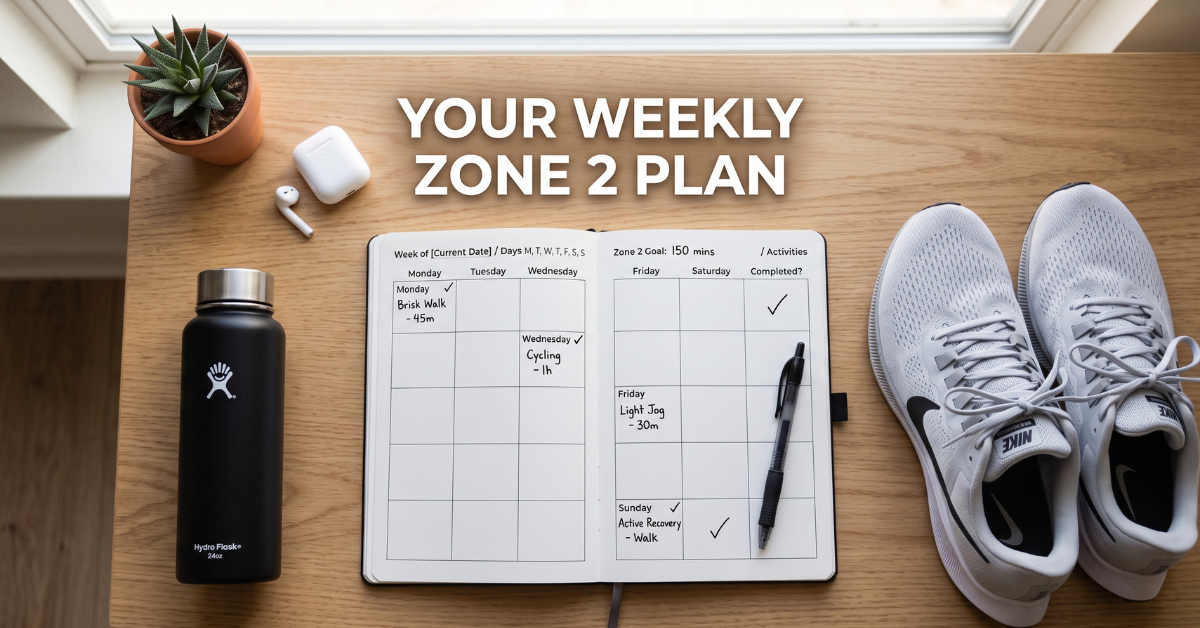
Here is a simple, beginner-friendly weekly framework. Feel free to adjust the days to fit your schedule — consistency matters far more than perfection.
| Day | Activity | Duration |
| Monday | Brisk walk | 25–30 min |
| Tuesday | Rest or light stretching | — |
| Wednesday | Stationary cycling | 30 min |
| Thursday | Rest or gentle yoga | — |
| Friday | Swimming or water aerobics | 30 min |
| Saturday | Brisk walk with a friend | 35–40 min |
| Sunday | Full rest | — |
A realistic 12-week roadmap:
Weeks 1–2 — Establish the Habit: Your only real goal in these first two weeks is showing up. Aim for 20-minute sessions, three times per week, and don’t worry at all about distance, speed, or calories. The entire purpose of this phase is teaching your body, and your calendar, that this is simply “what we do now.” Many people quit in week one because they expect dramatic results immediately — resist that urge and trust the process.
Weeks 3–4 — Extend Gradually: Stretch your sessions to 25–30 minutes, still three to four times per week. You may notice your Zone 2 heart rate now corresponds to a slightly faster pace than it did in week one — a genuinely encouraging early sign that your cardiovascular efficiency is improving.
Weeks 5–8 — Build Toward Consistency: Work up to four to five sessions per week, with most lasting 30–40 minutes. This is also a good phase to introduce a second activity type, for example, adding one swimming or cycling session alongside your regular walks, both to protect against overuse and to keep things mentally fresh.
Weeks 9–12 — Reach a Sustainable Rhythm: By this stage, many people comfortably reach a total of 150–180 minutes of Zone 2 activity per week, spread across four to six sessions, a widely cited general benchmark for cardiovascular health in adults. From here, the goal simply shifts to maintaining this rhythm long-term, adjusting session length or frequency as needed around travel, weather, or how your body is feeling week to week.
How to Stay Motivated for the Long Run
Motivation naturally rises and falls, even for people who genuinely love their routine. A few strategies our readers find helpful for staying consistent through the inevitable low-motivation weeks:
- Schedule it like an appointment. Put your Zone 2 sessions directly on your calendar, at a consistent time, the same way you would a doctor’s appointment or a haircut.
- Find an accountability partner. A spouse, friend, neighbor, or even a walking group at a local community center makes it far harder to skip a session, and far more enjoyable to keep it.
- Celebrate consistency, not just intensity. Give yourself real credit for a slow, easy 20-minute walk on a tired day. Showing up counts every bit as much as a strong session.
- Revisit your “why.” Whether it’s keeping up with grandchildren, staying independent longer, or simply feeling more like yourself, reconnecting with your personal reason on harder days can carry you through.
Indoor vs. Outdoor: Choosing What Works Each Season
One of the quiet advantages of having several Zone 2-friendly activities in your toolkit is the flexibility to adapt with the seasons. In the warmer months, outdoor walking, cycling, or a community pool can be wonderfully refreshing, with the added bonus of sunshine and social interaction. When winter weather, extreme heat, or icy sidewalks make outdoor activity riskier, a stationary bike, indoor pool, treadmill, or mall-walking route becomes a safer, equally effective substitute. Building comfort with at least one reliable indoor option, alongside your favorite outdoor activity, helps protect your consistency all year round.
A Real-World Example: Barbara’s First Three Months
To make this feel a little more concrete, consider a composite example based on stories many of our readers have shared. Barbara, 62, hadn’t done any structured exercise in almost a decade and felt intimidated by the idea of “working out” again. She started with 20-minute walks around her neighborhood three times a week, using the talk test rather than a heart rate monitor at first. By week four, she noticed she could walk a slightly longer loop in the same amount of time without feeling any more winded than before. By week eight, she’d added one weekly session on a stationary bike at her local recreation center, partly for variety and partly to give her knees an occasional break from pavement. By week twelve, Barbara was walking four times a week and cycling once, totaling around 160 minutes weekly, and reported sleeping more soundly and feeling noticeably steadier on her feet. Nothing about her journey was dramatic. It was simply consistent, gradual, and sustainable, exactly the point of Zone 2 training.
A reliable heart rate monitor takes the guesswork out of your workouts and helps you stay honestly in Zone 2 instead of accidentally drifting into Zone 3. We’ve rounded up a curated selection of senior-friendly fitness monitors and wellness tools that our readers have found genuinely useful.
View Recommended Fitness Trackers →Tracking Your Progress: A Simple Journal Method
One habit that separates people who stick with Zone 2 training for years from those who quietly drop it after a few weeks is simple tracking. You don’t need a fancy app or spreadsheet. A basic notebook, or even a note on your phone, works perfectly well. After each session, jot down four quick details:
- Date and activity (e.g., “Tuesday, brisk walk”)
- Duration (e.g., “28 minutes”)
- Average heart rate or effort level (e.g., “108 bpm” or “comfortable, could talk easily”)
- One-word feeling (e.g., “energized,” “tired,” “sore knee”)
After a month, flip back through your notes. You’ll likely notice your resting effort feels easier at the same pace, or that you can now sustain your target heart rate for longer than when you started. That visible proof of progress is often the single best motivator for staying consistent through month two, three, and beyond.
Myths About Cardio After 55, Debunked
Myth: “I’m too old to start now.” The truth is that the human body responds to consistent aerobic training at nearly any age. Countless people begin structured cardio routines for the very first time in their 60s, 70s, and even 80s, and go on to see genuine improvements in stamina, strength, and independence.
Myth: “If I’m not sweating heavily and out of breath, it isn’t doing anything.” As we’ve covered throughout this guide, Zone 2’s entire value lies in its moderate, comfortable intensity. Feeling only lightly winded is exactly the point, not a sign that the workout “isn’t working.”
Myth: “I need expensive equipment to do this properly.” A reliable pair of walking shoes and, ideally, a simple heart rate monitor are genuinely all you need to begin. Everything else, from a stationary bike to a pool membership, is a helpful option, not a requirement.
Common Mistakes to Avoid — and How to Exercise Safely

Even a gentle, low-risk activity like Zone 2 cardio can go wrong if a few key details are overlooked. Here are the mistakes we see most often.
Mistake #1: Going Too Hard, Too Soon
It’s tempting to push the pace once you start feeling stronger, but consistently drifting into Zone 3 or 4 defeats the purpose. If you can’t hold a conversation, slow down — even if that means walking rather than jogging for another few weeks.
Mistake #2: Skipping the Warm-Up
A five-minute warm-up of slow walking or gentle joint mobility work helps prepare your muscles, tendons, and heart for increased effort, reducing the risk of strain — particularly important as we age and tissues become slightly less elastic.
Mistake #3: Ignoring Hydration and Weather
Older adults can be more susceptible to dehydration and heat-related strain. Always bring water, dress in breathable layers, and consider exercising indoors on extremely hot or humid days.
Mistake #4: Neglecting Digital Safety While Exercising in Public
This one surprises many readers, but it’s worth taking seriously. Many of us now use fitness apps, wearables, and public Wi-Fi at the gym, community center, or local park to log our walks and rides. Unfortunately, seniors are disproportionately targeted by online scammers — industry reports consistently show that a large share of phishing and scam victims are older adults, precisely because retirement savings and pension deposits sitting in their bank accounts make an appealing target. Every time your phone, laptop, or tablet connects to an open public network, that connection can potentially be exposed to people looking to intercept your data.
Over 70% of scam and phishing victims are estimated to be seniors — and public Wi-Fi at gyms, cafes, and community centers is one of the easiest places for scammers to find a way in. Your monthly pension or retirement deposits are exactly the kind of “quiet, steady” accounts they look for. A trusted VPN app encrypts your connection on your phone, laptop, or tablet, helping keep your personal and financial information private while you’re out logging your Zone 2 workouts.
Protect Your Devices Now →Mistake #5: Ignoring Pain Signals
There’s an important difference between the normal mild fatigue of a good workout and genuine pain, especially sharp, localized, or joint pain. General muscle tiredness after a session is expected and normal. Sharp pain, swelling, or pain that lingers well past your workout is your body’s way of asking you to slow down, modify your activity, or check in with a healthcare provider. Pushing through real pain “for the sake of consistency” tends to backfire, often leading to a longer, more frustrating break than simply resting for a few days would have.
Mistake #6: Neglecting Posture and Form
Slouched shoulders, a forward-leaning head, or a rounded lower back during walking or cycling can quietly create discomfort over time, even if the cardiovascular effort itself is perfectly appropriate. Every few minutes during your session, do a quick mental “posture check”: shoulders relaxed and down, chest open, core gently engaged, and eyes looking forward rather than down at your feet.
Mistake #7: Exercising Alone Without Telling Anyone Your Plan
This is a simple but often overlooked safety habit. If you regularly walk, cycle, or hike outdoors alone, let a family member or friend know your general route and expected return time, and consider carrying your phone with you. Many smartwatches and phones also include a “fall detection” or emergency SOS feature that can automatically alert a contact if something goes wrong. This isn’t meant to introduce fear into an activity that should feel enjoyable and empowering; it’s simply a smart, low-effort precaution, similar to wearing a seatbelt.
Nutrition and Hydration Basics for Your Zone 2 Routine
You don’t need a complicated nutrition plan to support a Zone 2 habit, but a few simple guidelines go a long way:
- Hydrate before, not just during. Drink a glass of water 30–60 minutes before your session, especially in warmer weather, rather than waiting until you already feel thirsty.
- A light snack can help. If your workout falls more than three or four hours after your last meal, a small, easily digestible snack, such as half a banana or a few crackers, about 30 minutes beforehand can prevent low energy mid-session.
- Protein supports recovery. Including a source of protein in your post-workout meal helps support the ongoing maintenance of muscle mass, which naturally becomes more important to prioritize as we age.
- Don’t forget electrolytes on longer or hotter sessions. For workouts beyond 45 minutes or in warm, humid conditions, a beverage with a bit of sodium and potassium can help you avoid the fatigue and light-headedness that sometimes come with excessive sweating.
Essential Gear and Recovery Support
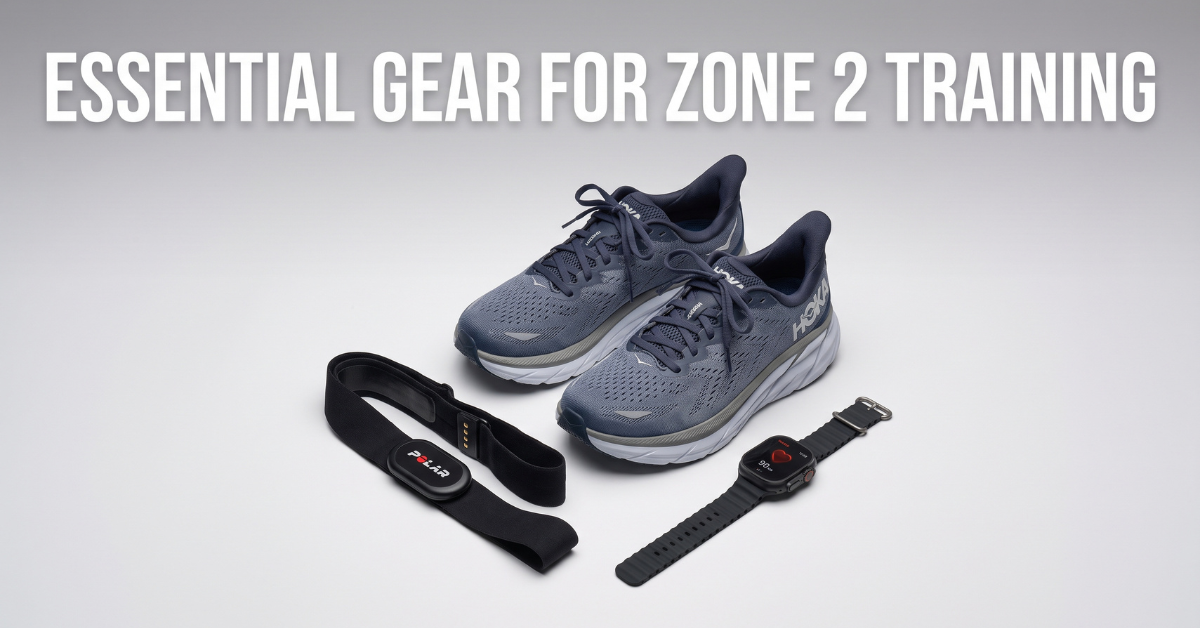
Heart Rate Monitors: Chest Strap vs. Wrist Sensor
Chest strap monitors tend to be more accurate, especially during activities with a lot of arm movement, like swimming or rowing, because they measure the heart’s electrical activity directly rather than detecting blood flow through the skin. Wrist-based optical sensors, built into most smartwatches and fitness bands, are more convenient for everyday wear and are generally accurate enough for walking and cycling, though they can be thrown off by a loose fit, tattoos, cold hands, or very fast arm movement.
If budget is a consideration, you don’t need the newest or most expensive device on the market. A simple, budget-friendly chest strap paired with a basic app on your phone can be just as effective for Zone 2 purposes as a premium smartwatch costing several times more. The goal is consistent feedback you trust, not the most feature-rich gadget available.
Supportive Footwear
If walking is your primary Zone 2 activity, invest in a well-cushioned, properly fitted walking or cross-training shoe. Worn-out or ill-fitting shoes are one of the most common, and most preventable, causes of foot, knee, and hip discomfort in older walkers. Many specialty running or walking shoe stores offer a free gait analysis, watching how you walk to recommend a shoe shape and support level suited to your specific foot and stride.
As a general rule of thumb, walking shoes should be replaced roughly every 300 to 500 miles, or every six to twelve months for a regular walker, since cushioning and support break down gradually and often invisibly over time, well before the shoe looks visibly worn out.
Clothing and Weather Protection
Comfortable, moisture-wicking clothing helps regulate your body temperature far better than cotton, which tends to hold sweat against your skin. Dressing in light layers lets you shed a piece as you warm up and add it back during your cool-down. For outdoor sessions, a wide-brimmed hat and sunscreen protect against sun exposure, and in cooler weather, a light hat and gloves help retain warmth without adding real bulk. If you exercise near dawn, dusk, or in low light, reflective or brightly colored clothing meaningfully improves your visibility to drivers and cyclists.
Building a Support Community Around Your Routine
Exercise habits are far more durable when they’re woven into your social life rather than treated as a solitary chore. Many community centers, senior centers, and local parks departments offer free or low-cost walking groups, water aerobics classes, and cycling clubs specifically for older adults. Beyond the accountability benefit, these communities often become a genuine source of friendship and connection, addressing another well-documented pillar of healthy aging: staying socially engaged. If a formal group isn’t available near you, even inviting one neighbor or family member to join you for a weekly walk can make the habit feel considerably lighter and more enjoyable.
Making the Most of Your Medicare OTC Benefit
Here’s something many of our readers don’t realize: if you’re enrolled in a Medicare Advantage plan, you may already have an over-the-counter (OTC) benefit allowance sitting unused. Many plans provide a quarterly or monthly credit that can be applied toward eligible health monitoring items, such as blood pressure cuffs and other approved wellness products, directly through your plan’s OTC benefit catalog. It’s always worth checking your specific plan’s benefit list, since eligible items and amounts vary by provider and plan.
If you’re a Medicare Advantage member, your plan may already include an unused OTC allowance that can help cover everyday health and wellness products. This platform makes it simple to check your available balance and browse eligible items before your credit resets or expires.
Check Your OTC Benefit →Supporting Recovery with Magnesium
Recovery is just as important as the workout itself. Magnesium is an essential mineral involved in muscle relaxation, nerve function, and restful sleep, all of which support a consistent training routine. Many adults, particularly as they age, don’t get quite enough magnesium through diet alone, which is why some of our readers choose to add a well-absorbed form, like magnesium glycinate, to their evening routine.
Beyond supplementation, a few simple recovery habits go a long way after a Zone 2 session: gentle stretching of the muscles you used most, staying well hydrated for the rest of the day, and prioritizing a consistent bedtime, since quality sleep is when much of your body’s genuine physical recovery and repair actually takes place. None of these habits need to be complicated or time-consuming; even five to ten minutes of attention after each workout can meaningfully support how your body adapts and rebuilds between sessions.
NOW Foods Magnesium Glycinate is a gentle, well-absorbed form of magnesium that many people use to support post-workout muscle relaxation and quality sleep — a simple addition to your evening wind-down routine.
View on iHerb →Please consult your doctor or pharmacist before adding any new supplement, especially if you take prescription medications.
What If You Miss a Few Days, or Even a Few Weeks?
Life happens. Travel, illness, family obligations, or simply a stretch of low motivation will, at some point, interrupt even the best-laid routine. The single most important thing to know is this: missing time does not erase your progress, and it does not mean starting over from zero. If you’re away from your routine for a week or less, simply pick back up where you left off. If it’s been closer to a month or more, ease back in at roughly 70–80% of your previous duration and frequency for the first week or two, then build back up from there. The goal is always progress over the long arc of months and years, not a perfect, unbroken streak.
Setting Realistic Expectations: What You Might Notice, Month by Month
Everyone’s timeline looks a little different, but here is a general pattern many of our readers describe as they build a consistent Zone 2 habit:
- Weeks 1–2: Mostly logistical wins, remembering to schedule sessions, finding a comfortable pace, getting used to a heart rate monitor if you’re using one.
- Weeks 3–4: The same pace starts to feel a bit easier; some people notice slightly better sleep.
- Month 2: Noticeably more everyday energy; stairs and errands that once felt tiring feel more manageable.
- Month 3: Many people can comfortably sustain longer sessions at the same heart rate that used to feel more effortful; the habit starts to feel automatic rather than like a chore.
- Months 4–6 and beyond: This is typically when more measurable markers, such as resting heart rate or blood pressure, may show gradual, favorable changes, best confirmed with your doctor at a regular check-up.
Individual results vary based on starting fitness level, consistency, medications, and overall health, and this timeline is meant only as a general guide, not a guarantee.
How This Fits Into Your Bigger Wellness Picture
At SeniorJourney, we think about health holistically, the same way a good retirement plan considers savings, income, healthcare, and lifestyle together rather than in isolation. Your Zone 2 cardio habit works hand in hand with the other pillars of healthy aging we cover across our network, including sleep quality and stress management on WellBeingPrime.com, and practical, everyday wellness products on Gmartus.com. None of these pieces work in isolation. A strong cardio habit supports better sleep; better sleep supports more consistent exercise; and both support the kind of steady, independent lifestyle most of us hope to enjoy well into our 70s, 80s, and beyond.
Your Quick-Reference Cheat Sheet
Bookmark this section. It’s the fastest way to review the core numbers behind Zone 2 cardio workouts for over 55 whenever you need a quick refresher.
Estimated Max Heart Rate: 208 − (0.7 × age)
Zone 2 Range (basic method): 60–70% of estimated max heart rate
Talk Test Check: You can speak in full sentences, but not sing comfortably
Session Length Goal: 20–45 minutes per session, 4–6 times per week
Weekly Total Goal: 150–180 minutes of Zone 2 activity
💡 Frequently Asked Questions (FAQ)
Here are the questions we hear most often about Zone 2 cardio workouts for over 55, covering safety, timing, and practical logistics.
Q1: Is Zone 2 cardio safe for someone with high blood pressure or a heart condition?
For many people with well-managed hypertension, moderate-intensity aerobic exercise is often recommended as part of a heart-healthy lifestyle. However, anyone with an existing heart condition should get personalized clearance and guidance from their physician before starting, since individual circumstances vary widely.
Q2: How long does it take to see real health benefits from Zone 2 training?
Many people report noticeable improvements in stamina and everyday energy within 3–4 weeks of consistent training. Measurable cardiovascular improvements typically build over 8–12 weeks of regular sessions, three to five times per week.
Q3: My smartwatch heart rate seems inaccurate — what should I do?
Wrist-based sensors can be thrown off by loose fit, cold hands, or heavy arm movement. Try wearing the watch snugly, about a finger’s width above your wrist bone, or switch to a chest strap monitor for more reliable readings — especially during swimming or rowing.
Q4: Can I use my Medicare OTC benefit to help pay for a heart rate monitor or fitness device?
It depends entirely on your specific Medicare Advantage plan and its approved OTC catalog. Some plans include basic health monitoring devices, while others focus on medication and everyday health items. Always check your plan’s current OTC benefit list or call your provider directly to confirm.
Q5: Is it dangerous to use fitness apps and public Wi-Fi at the gym?
Public Wi-Fi networks are generally less secure than your home network, which can leave your personal data more exposed to interception. It’s not necessarily “dangerous” for a single walk, but using a VPN app is a simple, low-effort habit that adds meaningful protection any time you connect to a network you don’t control.
Q6: I get out of breath much faster than I used to. Is that normal, or should I be concerned?
A gradual decline in cardiovascular fitness is a normal part of aging, especially after long periods of inactivity, and it’s exactly what a consistent Zone 2 routine is designed to help improve over time. However, a sudden or dramatic change in your breathing, especially alongside chest discomfort, dizziness, or swelling, is different from gradual deconditioning and warrants a prompt conversation with your doctor.
Q7: Should I do Zone 2 cardio on the same day as strength training?
Both can be done on the same day if your energy allows, ideally with your strength training first while you’re freshest, followed by a lighter Zone 2 session. Many people over 55 find it more comfortable to alternate days instead, for example strength training on Monday, Wednesday, and Friday, with Zone 2 cardio on Tuesday, Thursday, and Saturday, allowing full recovery between different types of demand on the body.
Q8: What’s a realistic first goal if I haven’t exercised in years?
Rather than fixating on a specific heart rate number right away, a wonderful first goal is simply three 15 to 20-minute walks per week for two full weeks, at whatever comfortable pace feels manageable. Once that becomes routine, you can layer in heart rate tracking and the progression plan outlined earlier in this guide.
Q9: Do I need to see a doctor before starting, even if I feel generally healthy?
If you have any diagnosed heart, lung, or joint condition, take medication that affects heart rate or blood pressure, or have been sedentary for a long stretch of time, a check-in with your doctor before starting is a wise precaution. If you feel generally healthy and active already, starting with gentle, low-intensity walks is typically very low-risk, though mentioning your new routine at your next regular check-up is still a good habit.
Q10: Can Zone 2 cardio help with weight management after 55?
Zone 2 training can be a helpful part of a broader approach to healthy weight management, particularly because its fat-utilizing nature and sustainability make it easier to maintain consistently over months and years. That said, weight management is influenced by many factors, including nutrition, sleep, stress, and overall activity level, so it works best as one piece of a more complete, personalized approach rather than a standalone solution.
Bringing It All Together
Let’s recap the essentials of Zone 2 cardio workouts for over 55 one more time. Zone 2 cardio is a comfortable, conversational-pace form of aerobic exercise, generally 60 to 70% of your estimated maximum heart rate, that supports heart health, joint-friendly movement, healthy metabolism, better sleep, and greater everyday energy. It works especially well for adults over 55 because it’s sustainable, low-risk, and genuinely enjoyable once it becomes a habit, rather than something you have to grit your teeth through.
You now have a simple formula to estimate your target heart rate, a menu of joint-friendly workout options to choose from, a realistic week-by-week and month-by-month roadmap, a list of common mistakes to sidestep, and a clear sense of the gear and recovery habits that support long-term success. Most importantly, you have permission to start small, stay patient with yourself, and trust that consistency, not intensity, is what will carry you forward.
A Warm Final Word
Zone 2 cardio isn’t flashy. It won’t leave you gasping on the floor or aching for three days afterward. But that quiet, steady, sustainable quality is precisely its power — it’s the kind of habit that compounds, week after week, year after year, into a stronger heart, more energy, and more good years ahead.
Start where you are. A 20-minute walk this week is a wonderful place to begin. We’ll be right here cheering you on.
There will be easy weeks and harder ones, sessions that feel effortless and others that feel like a genuine effort just to lace up your shoes. Both kinds of days belong in a real, sustainable routine. What matters most, far more than any single workout, is the pattern you build over months and years, one comfortable, conversational-pace session at a time.
🎥 Want to see these routines demonstrated step by step?
Visit our SeoulcastUSA YouTube channel for full video guides, real workout walkthroughs, and more senior-friendly wellness content.
### Recommended Tags
Zone 2 Cardio, Senior Fitness, Heart Health Over 55, Low Impact Exercise, Healthy Aging
This article is provided for general educational and informational purposes only and does not constitute medical, financial, or insurance advice. Always consult your physician before beginning any new exercise program, and confirm specific Medicare or insurance benefit details directly with your plan provider. Individual results from any exercise, supplement, or wellness product will vary.
🌿 Weekly wellness, health & beauty insights — straight to your inbox
Free subscription · Cancel anytime