Assisted Living vs. Nursing Home: What’s the Real Difference in 2026?
Medically and financially reviewed for accuracy | Updated for 2026
If you’ve landed on this page, chances are you’re standing at one of the hardest crossroads a family ever faces. Maybe Mom has started forgetting to take her medication. Maybe Dad had a fall last month and hasn’t quite bounced back. Or maybe you’re the one doing the planning for yourself, because you’d rather make this decision on your own terms than leave it to someone else later.
Wherever you’re starting from, you’ve probably already run into two terms that get thrown around like they mean the same thing: assisted living and nursing home. They don’t. And understanding the real difference between them — not the marketing-brochure version, but the practical, day-to-day, dollars-and-cents version — is the single most useful thing you can do before making this decision.
What Is Assisted Living, Really?
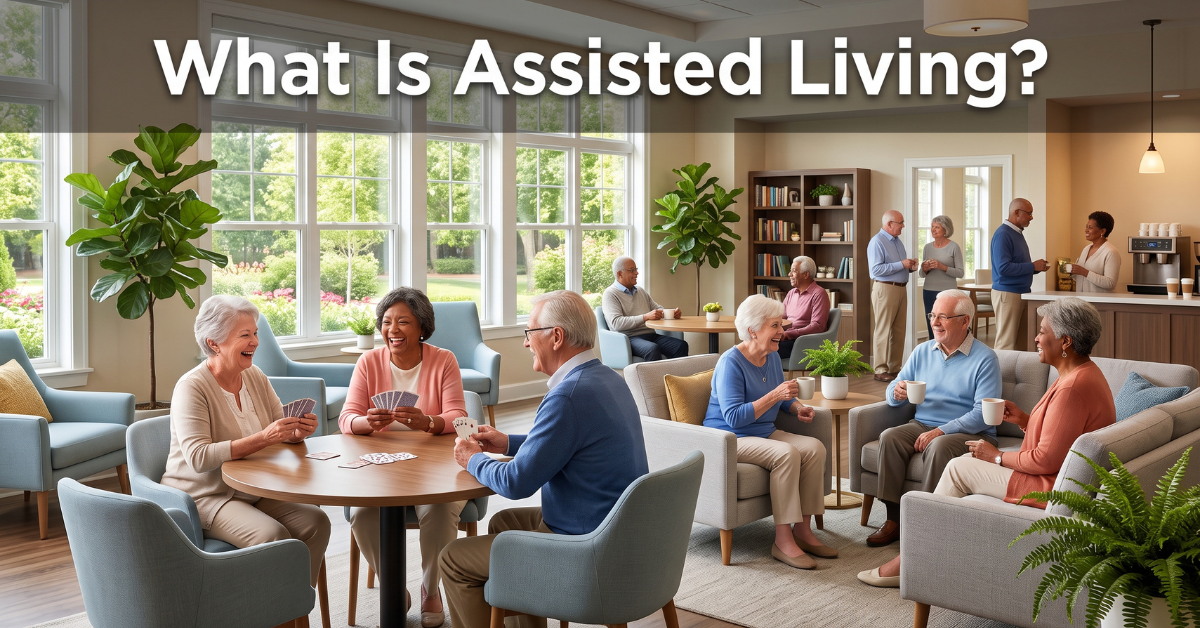
Think of assisted living as a bridge between fully independent living and round-the-clock medical care. Residents typically live in their own private apartment or suite — often with a small kitchenette — inside a community that also offers shared dining rooms, activity centers, and communal spaces designed for socializing.
The support offered usually includes help with what professionals call “activities of daily living” (ADLs): bathing, dressing, grooming, medication reminders, and mobility assistance. Staff are on-site, often around the clock, but they are not typically providing hands-on skilled nursing care. Instead, think of it as a supportive, social, apartment-style environment with a safety net built in.
Assisted living tends to be the right fit for someone who:
- Can still manage most daily tasks but needs help with a few specific ones
- Wants more social interaction and structured activities
- Doesn’t require daily skilled nursing or complex medical monitoring
- Values privacy and independence but no longer feels safe living entirely alone
What Is a Nursing Home, Really?

A nursing home — sometimes called a skilled nursing facility — is a different level of care entirely. These are licensed medical facilities staffed with registered nurses and certified nursing assistants around the clock, and often a physician on-call or on-site. Nursing homes are built for people who need consistent medical supervision: managing chronic conditions, administering IV medications, wound care, physical or occupational therapy after surgery, or full assistance with nearly every daily task.
Nursing homes tend to be the right fit for someone who:
- Has a chronic illness or complex medical condition requiring daily nursing oversight
- Is recovering from surgery, a stroke, or a serious injury and needs rehabilitation
- Needs help with nearly all activities of daily living, not just a few
- Requires 24/7 access to medical staff, not just supportive staff
The core distinction, in plain English: assisted living supports independence with a safety net, while nursing homes provide hands-on medical care. One is closer to “apartment living with help.” The other is closer to “hospital-level care in a residential setting.”
⚠️ A Growing Threat to Seniors: Online Scams
Here’s something that doesn’t get talked about enough during this transition: adults over 60 lose more money to scams and fraud than any other age group in the United States. Whether you’re researching senior living options online, managing finances remotely, or simply browsing, scammers increasingly target seniors specifically because they assume less familiarity with digital security. Protecting your personal and financial information while you search, compare, and apply to communities isn’t optional anymore — it’s essential.
A trusted VPN service encrypts your connection and hides your personal data from prying eyes, whether you’re on hotel Wi-Fi during a facility tour or filling out sensitive financial paperwork online.
Protect Your Identity Online →How Much Does Each Option Really Cost in 2026?

This is usually where the conversation gets real. According to 2026 industry cost surveys, here’s roughly where the national numbers land:
- Assisted living: national median around $5,900–$6,200 per month (roughly $71,000–$75,000 per year)
- Nursing home (semi-private room): national median around $9,300–$10,000+ per month (well over $110,000 per year)
- Nursing home (private room): often runs several hundred to a couple thousand dollars higher per month than a semi-private room
These are national medians, and your actual local cost can swing significantly — sometimes by close to double — depending on your state. Coastal and metro areas like California, New York, and Massachusetts tend to sit well above the median, while many parts of the South and Midwest trend lower.
Here’s the part that surprises a lot of families: Medicare generally does not cover the ongoing cost of assisted living, because it’s considered “custodial care” rather than medical care. Medicare also doesn’t cover long-term custodial stays in a nursing home. What Medicare typically does cover is short-term skilled nursing care — for example, rehabilitation after a hospital stay — usually for a limited number of days and only under specific conditions.
So how do families actually pay for this? Most rely on a combination of sources: personal savings, long-term care insurance, VA Aid and Attendance benefits for eligible veterans and spouses, and — once assets are sufficiently spent down — Medicaid, which does cover nursing home care in every state and covers assisted living costs in some states through Medicaid waiver programs. This is exactly the kind of planning where a conversation with an elder law attorney or certified financial planner pays for itself many times over.
Comparing the Level of Care, Side by Side
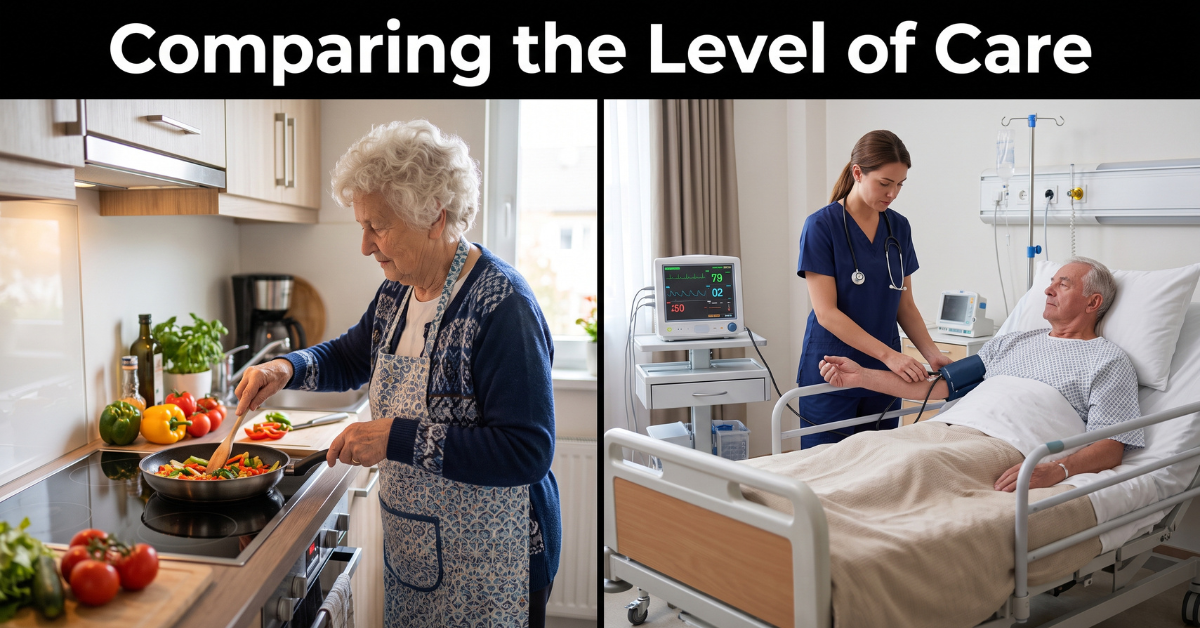
Medical Supervision
Assisted living communities typically have staff available for support and emergencies, but not licensed nurses providing hands-on clinical care around the clock. Nursing homes, by contrast, are required by law to have licensed nursing staff on-site 24 hours a day.
Daily Independence
Assisted living is built around preserving as much independence as possible — residents come and go, manage their own schedules, and often prepare simple meals themselves. Nursing home residents typically require more comprehensive assistance with most or all daily activities.
Social Environment
Assisted living communities usually emphasize social programming — group outings, classes, game nights, communal dining. Nursing homes offer activities too, but the overall environment leans more clinical, since the priority is medical stability and recovery.
Length of Stay
Assisted living is often a longer-term living arrangement, sometimes spanning several years. Nursing home stays are frequently shorter-term rehabilitation stints, though they can also become long-term for those with advanced medical or cognitive needs.
💪 Movement Is Medicine — At Any Stage of This Journey
Whether your loved one stays in their own home a little longer, transitions to assisted living, or is recovering in a nursing facility, one truth holds steady across every stage: staying physically active is one of the strongest predictors of independence and longevity in older adults. Even light resistance work and gentle mobility exercises done consistently at home can meaningfully reduce fall risk, preserve muscle mass, and support cardiovascular health.
You don’t need a gym membership or complicated equipment. Simple, compact home exercise tools designed specifically for seniors can make daily movement realistic — even for those with limited mobility.
Explore Easy At-Home Exercise Solutions →Your Action Plan: How to Actually Decide
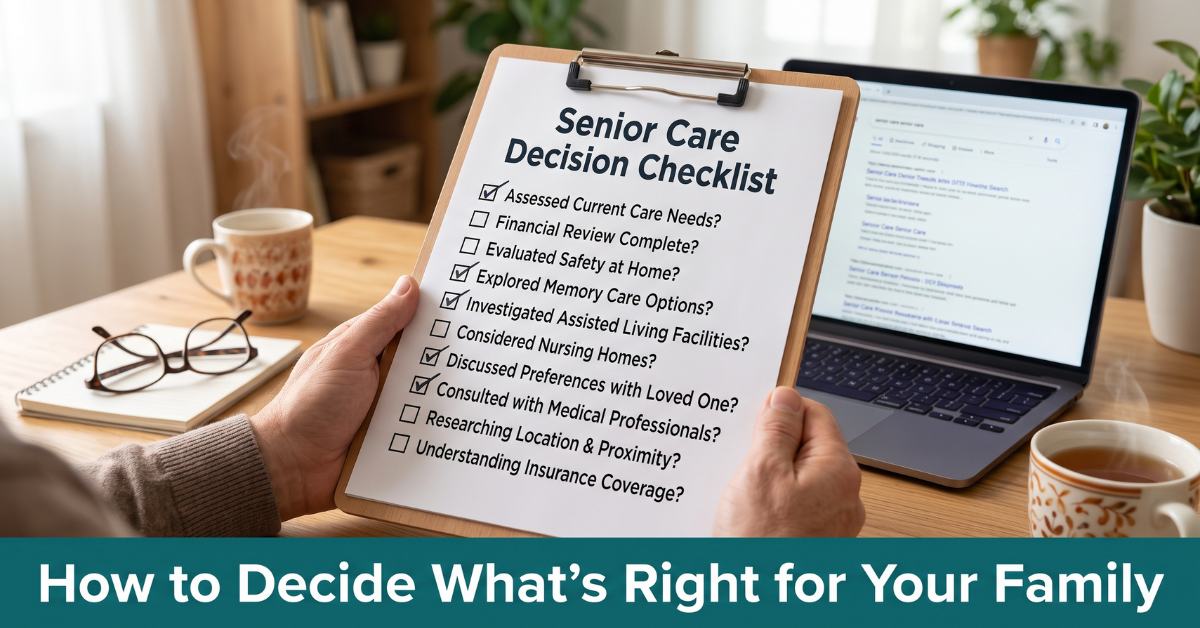
Reading about the differences is one thing. Actually making the decision is another. Here’s a practical, three-step framework to walk through with your family.
Step 1: Get an Honest Assessment of Daily Needs
Before touring a single facility, sit down and honestly evaluate how much help is actually needed with daily activities — bathing, dressing, medication management, mobility, and cognitive tasks like managing finances or remembering appointments. A primary care physician or geriatric care manager can help formalize this with a proper functional assessment, which will also matter later for insurance and Medicaid purposes.
Step 2: Tour, Compare, and Ask About Total Cost — Not Just the Sticker Price
Visit multiple communities in person if at all possible. Ask specifically what’s included in the base monthly rate versus what’s billed as an add-on (medication management, mobility assistance, laundry, and memory care support are common extra-cost items). Request a written breakdown, and ask how often rates have increased over the past few years so you can budget realistically.
Step 3: Bring in the Right Professionals Before You Commit
Loop in an elder law attorney to understand Medicaid planning and asset protection, a financial advisor to map out how the costs fit into the broader retirement picture, and — critically — have an honest family conversation that includes the person who will actually be living there. Their comfort and dignity should drive the final decision as much as the numbers do.
Supporting Brain Health Through the Transition
Big life transitions like this one are stressful for everyone involved, and stress, disrupted sleep, and the natural aging process can all take a toll on memory and cognitive clarity — for both the senior and the family members supporting them. While no supplement replaces medical care, good nutrition, or an active lifestyle, many families researching this topic ask about nutrients that support brain and nervous system function as part of a broader wellness routine.
One product that comes up often in our community discussions is Life Extension Neuro-Mag Magnesium L-Threonate. Unlike many standard magnesium supplements, this particular form was specifically studied for its ability to cross the blood-brain barrier more effectively, and magnesium itself plays a well-established role in normal nervous system signaling and cellular energy function. Some early research has explored its relationship to memory and cognitive performance in aging adults, though it’s important to be clear-eyed here: supplement research is ongoing, results vary by individual, and this should never be treated as a substitute for medical evaluation of memory concerns.
If you’re already having the conversation with a doctor about cognitive health — which we’d always encourage for any noticeable changes in memory — it may be worth asking whether a magnesium L-threonate supplement fits appropriately into that plan.
Product Spotlight: Life Extension Neuro-Mag® Magnesium L-Threonate, 90 vegetarian capsules, 48 mg per capsule.
View on iHerb →Disclaimer: This statement has not been evaluated by the FDA. This product is not intended to diagnose, treat, cure, or prevent any disease. Always consult your physician before starting any new supplement, especially if you take other medications.
A Final, Warm Word
If you’ve read this far, it’s because you love someone enough to do the hard research before the hard conversation. That matters more than you probably realize. There is no universally “right” choice between assisted living and a nursing home — only the choice that’s right for your family’s specific medical, financial, and emotional circumstances, made with clear eyes and good information.
Take it one step at a time. Get the assessment. Tour a few places. Ask the hard cost questions. Bring in professionals who do this for a living. And be gentle with yourself along the way — this is one of the most loving, difficult things a family can do together.
For more real, practical video guides on navigating senior living, caregiving, and healthy aging, we’d love for you to join us over on the SeoulcastUSA YouTube channel, where we walk through topics just like this one in more depth.
💡 Frequently Asked Questions (FAQ)
Does Medicare pay for assisted living?
Generally, no. Medicare classifies assisted living as custodial (non-medical) care and does not cover its ongoing costs. Medicare may cover short-term skilled nursing rehabilitation under specific conditions, but not long-term assisted living housing.
What is the average cost difference between assisted living and a nursing home in 2026?
Assisted living runs a national median of roughly $5,900–$6,200 per month, while a semi-private nursing home room typically runs $9,300–$10,000 or more per month — nearly double the cost, largely due to the higher level of medical staffing required.
How do I know if my parent needs assisted living or a nursing home?
The key question is whether they need help with a few daily tasks (assisted living) or require ongoing, hands-on medical supervision and nursing care (nursing home). A formal functional assessment from a physician or geriatric care manager is the most reliable way to determine this.
🌿 Weekly wellness, health & beauty insights — straight to your inbox
Free subscription · Cancel anytime